Skip to main content Explore View all products (200+) Microsoft Foundry Azure Copilot GitHub Copilot Azure Kubernetes Service (AKS) Azure Cosmos DB Azure Database for PostgreSQL Azure Arc Microsoft Fabric Linux virtual machines in Azure Foundry Models Foundry Agent Service Foundry IQ Foundry Tools Foundry Control Plane Observability in Foundry Control Plane Azure OpenAI in Foundry Models Azure Speech in Foundry Tools Azure Machine Learning View all databases Azure Cosmos DB Azure DocumentDB Azure SQL Azure Database for PostgreSQL Azure Managed Redis Microsoft Fabric Azure Databricks Linux virtual machines in Azure Windows Server on Azure Azure Functions Azure Virtual Machine Scale Sets Azure API Management Azure Container Apps Azure Kubernetes Service (AKS) Azure Kubernetes Fleet Manager Azure Container Registry Azure Red Hat OpenShift Azure Container Instances Azure Container Storage Azure Arc Azure Local Microsoft Defender for Cloud Azure Monitor Microsoft Sentinel Azure Migrate View all solutions (40+) Cloud solutions for small and medium businesses Cloud migration and modernization center Data analytics for AI Azure Databases AI apps and agents Microsoft Marketplace Microsoft Sovereign Cloud AI apps and agents Responsible AI with Azure AI Infrastructure Data analytics for AI Machine learning operations (MLOps) Low-code application development on Azure Integration Services Serverless computing DevOps Migration and modernization center .NET apps migration Databases on Azure Linux on Azure Oracle on Azure SAP on the Microsoft Cloud Adaptive cloud High-performance computing (HPC) Infrastructure as a service (IaaS) Resiliency Azure Essentials Frontier Accelerate for Azure FinOps on Azure Microsoft Marketplace Azure pricing overview Create an Azure account Free Azure services Flexible purchase options Pricing calculator FinOps on Azure Maximize ROI from AI Azure savings plans Azure reservations Azure Hybrid Benefit Virtual Machines Azure SQL Microsoft Foundry Microsoft Fabric Azure Kubernetes Service (AKS) Microsoft Defender for Cloud View more Software Development Companies Microsoft Marketplace Find a partner Resources for Azure partners Get started with Azure Customer stories Analyst reports, white papers, and e-books Videos Learn more about cloud computing Documentation Explore Azure portal Developer resources Quickstart templates Resources for startups Developer community Students Azure for partners Blog Events and Webinars Learn Support Contact Sales Get started with Azure Sign in

We are excited to announce the general availability of a new feature for Azure virtual machines (VMs) called Write Accelerator! Write Accelerator is a new disk capability that offers customers sub-millisecond writes for their disks. Write Accelerator is initially supported on M-Series VMs with Azure Managed Disks and Premium Storage. Write Accelerator is recommended for workloads that require highly performant updates, such as database transaction log writes. Write Accelerator is an exclusive functionality for Azure M-series virtual machines in recognition of the performance sensitive workload that is run with these types of high-end VMs. Technical details on enablement and restrictions can be found in our documentation.

Customer benefits

Low latency, high transaction workloads – Write Accelerator, in conjunction with M-Series VMs on Managed Disks, is targeted towards database platforms that benefit from highly performant, transactional updates like SQL Server, Oracle, and SAP HANA. Write Accelerator is ideally suited where log file updates are required to persist in disk in a highly performant manner for modern databases. Write Accelerator disks offer the same reliability as Azure Premium Disks. In tests, customers reported factors of higher speed for disk writes into the performance and scalability of critical transactions and redo logs of their mission critical databases. You can also cache the Write Accelerator disks so that reads are serviced from the cache for ultra-low latencies. Here is an example of IO performance with 4k writes on an M128s VM:
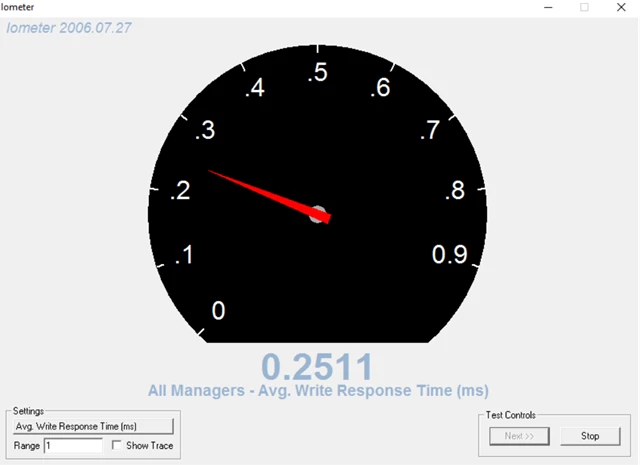
4k writes on an M128s VM

Enabling Write Accelerator

Write Accelerator can be enabled through the well-known Azure interfaces:

Write Accelerator needs to be applied per Azure disk. Applying Write Accelerator to a disk can be done:

  • While deploying a new disk to a VM
  • For a disk that is already deployed and attached to a VM

To verify that Write Accelerator is enabled for your VM disk, you can check in the disk status under Host Caching in the Azure portal as shown below.
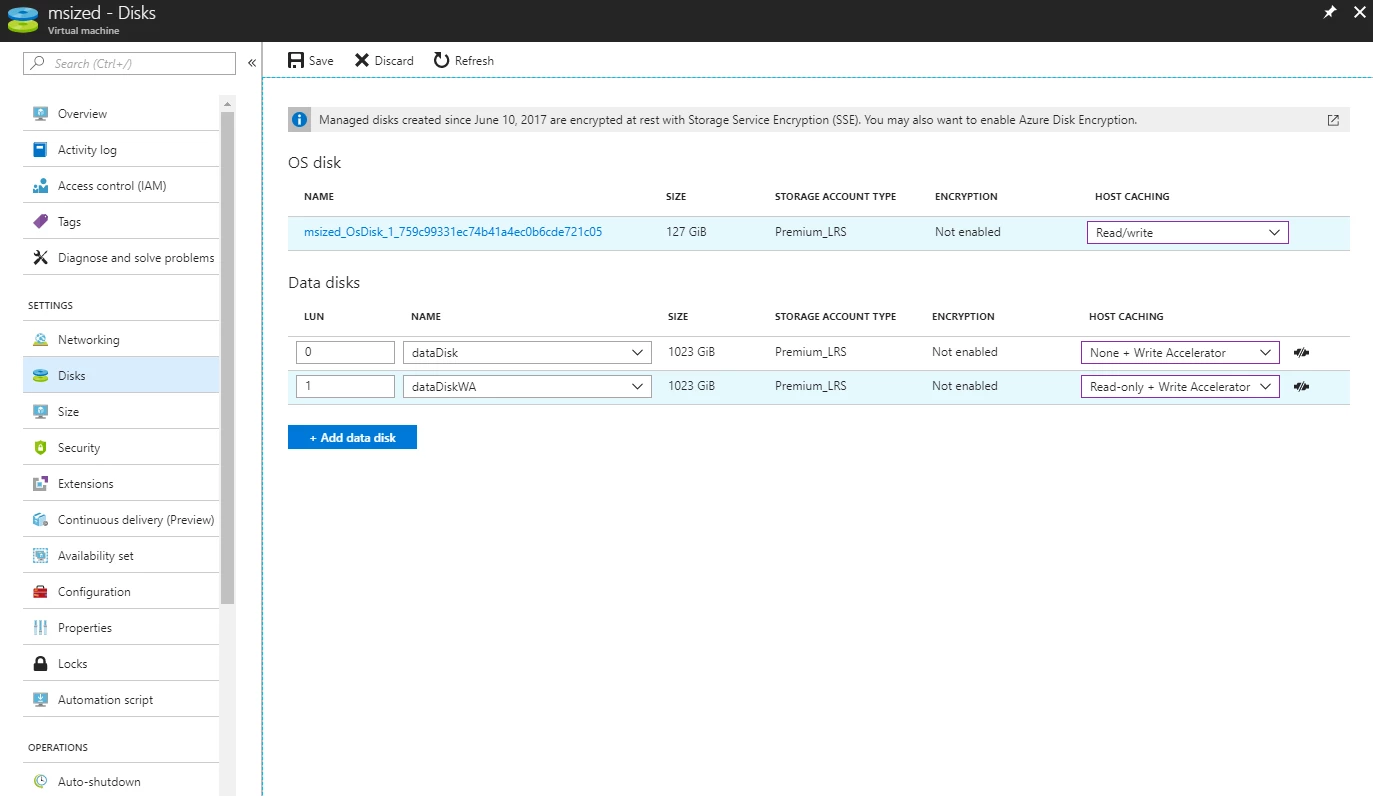
WA_scrnsht (003)

For more details, please see our technical documentation.

WE ARE MICROSOFT

Explore Microsoft Foundry

The future of AI starts here. Envision your next great AI app with the latest technologies. Get started with Azure.