Azure

Microsoft Azure Quantum Team articles

a close up of a logo
Microsoft Azure Quantum Team
1 min read

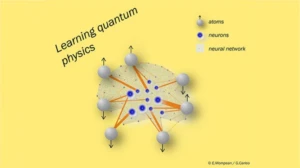
Solving the quantum many-body problem with artificial neural networks 

  Working together, ETH Zurich and Microsoft QuArC researchers have provided the first application of machine-learning techniques to solve outstanding problems in quantum physics. The neural networks used in their study developed a genuine intuition of the bizarre behavior of quantum particles.


1 min read

Design automation and design space exploration for quantum computers 

  A major hurdle for quantum algorithms for linear systems of equations, and for quantum simulation algorithms, is the difficulty to find simple circuits for arithmetic. Prior approaches typically led to a large overhead in terms of quantum memory, required operations, or implementation error.

1 min read

Common framework for scientific experiments: QCoDeS 

  QCoDeS is an open source data acquisition framework that was created by distilling the homegrown solutions used in Station Q’s experimental labs, and infused with all the best practices from the open source software world.

1 min read

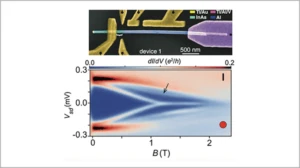
Transport signatures of quasiparticle poisoning in a Majorana island 

As its name implies, the poisoning of Majorana devices by normal electrons is fatal to topological computation, so much effort is now focused on characterizing the degree of poisoning either by the creation of quasiparticle pairs within the device, or by electrons entering the device through the leads. A recent experiment (see https://arxiv.org/abs/1612.

1 min read

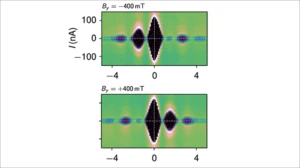
Anomalous Fraunhofer Interference in Epitaxial Superconductor-Semiconductor Josephson Junctions 

  Last year saw a materials breakthrough, with the realization of a two-dimensional heterostructure combining superconductor and semiconductor layers. (See journals.aps.org/prb/abstract/10.1103/PhysRevB.93.15540.) Now, as shown in a recent report, this material has been used to study interference effects controlled by magnetic fields in a Josephson junction made from this material.

1 min read

Verified compilation of space-efficient reversible circuits 

  Generation of reversible circuits from high-level code is an important problem in the compilation flow of quantum algorithms to lower-level hardware. The instantiation of quantum oracles in particular will require mapping classical circuits to a reversible implementation.

<1 min read

Double semions in arbitrary dimension 

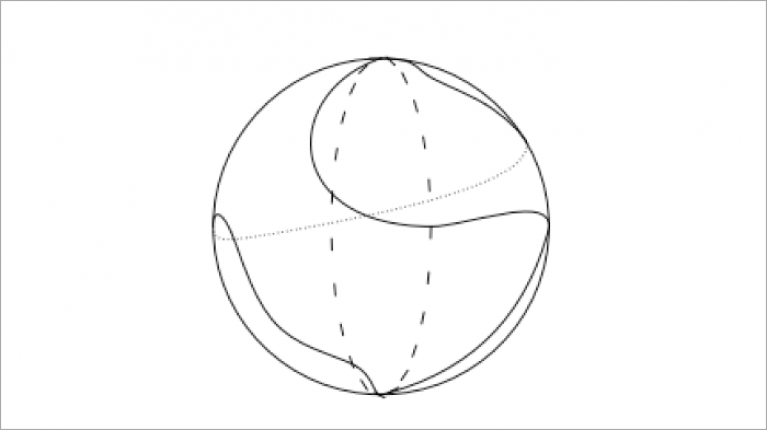
  In the paper, “Double semions in arbitrary dimension,” published in Communications in Mathematical Physics, Michael Freedman and Matthew Hastings present a new construction of topological phases of matter in higher dimensions, generalizing the double semion theory in two dimensions. This theory is distinct from the Dijkgraaf-Witten model and generalized toric code models. Read the published version.

<1 min read

Training a quantum optimizer 

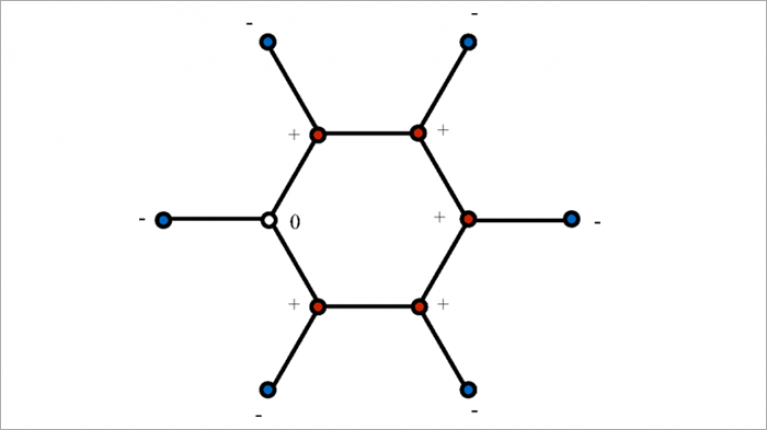
  In this paper, published in Physical Review A, we show how to greatly improve success at solving Constraint Satisfaction Problems on a quantum computer by using a learned schedule, instead of the standard linear ramps.

<1 min read

Triple point topological metals 

  Topological materials can yield quasiparticles that behave in a manner similar to elementary particles that are part of the standard model of particle physics. In this paper, published in Physical Review X, we report on a new class of such quasiparticles—triple point fermions—which represent fermions that have mixed properties of Dirac and Weyl fermions.