Skip to main content Explore View all products (200+) Microsoft Foundry Azure Copilot GitHub Copilot Azure Kubernetes Service (AKS) Azure Cosmos DB Azure Database for PostgreSQL Azure Arc Microsoft Fabric Linux virtual machines in Azure Foundry Models Foundry Agent Service Foundry IQ Foundry Tools Foundry Control Plane Observability in Foundry Control Plane Azure OpenAI in Foundry Models Azure Speech in Foundry Tools Azure Machine Learning View all databases Azure Cosmos DB Azure DocumentDB Azure SQL Azure Database for PostgreSQL Azure Managed Redis Microsoft Fabric Azure Databricks Linux virtual machines in Azure Windows Server on Azure Azure Functions Azure Virtual Machine Scale Sets Azure API Management Azure Container Apps Azure Kubernetes Service (AKS) Azure Kubernetes Fleet Manager Azure Container Registry Azure Red Hat OpenShift Azure Container Instances Azure Container Storage Azure Arc Azure Local Microsoft Defender for Cloud Azure Monitor Microsoft Sentinel Azure Migrate View all solutions (40+) Cloud solutions for small and medium businesses Cloud migration and modernization center Data analytics for AI Azure Databases AI apps and agents Microsoft Marketplace Microsoft Sovereign Cloud AI apps and agents Responsible AI with Azure AI Infrastructure Data analytics for AI Machine learning operations (MLOps) Low-code application development on Azure Integration Services Serverless computing DevOps Migration and modernization center .NET apps migration Databases on Azure Linux on Azure Oracle on Azure SAP on the Microsoft Cloud Adaptive cloud High-performance computing (HPC) Infrastructure as a service (IaaS) Resiliency Azure Essentials Frontier Accelerate for Azure FinOps on Azure Microsoft Marketplace Azure pricing overview Create an Azure account Free Azure services Flexible purchase options Pricing calculator FinOps on Azure Maximize ROI from AI Azure savings plans Azure reservations Azure Hybrid Benefit Virtual Machines Azure SQL Microsoft Foundry Microsoft Fabric Azure Kubernetes Service (AKS) Microsoft Defender for Cloud View more Software Development Companies Microsoft Marketplace Find a partner Resources for Azure partners Get started with Azure Customer stories Analyst reports, white papers, and e-books Videos Learn more about cloud computing Documentation Explore Azure portal Developer resources Quickstart templates Resources for startups Developer community Students Azure for partners Blog Events and Webinars Learn Support Contact Sales Get started with Azure Sign in

We heard from several customers that you need a way to view your Azure Security Center alerts in your SIEM solution for a centralized view of your security posture across your organization. Today, we are excited to announce the public preview of a new feature called SIEM Export that allows you to export Azure Security Center alerts into popular SIEM solutions such as Splunk and IBM QRadar. We are continuing to invest in the number of partners we support. This feature is part of our on-going commitment to provide unified security management and protection for your cloud and on-premises workloads.

Security Center uses a variety of detection capabilities to alert you of potential threats to your environment. The alerts can tell you what triggered the alert, what in your environment was targeted, the source of the attack, and if necessary, remediation steps. You also have the flexibility to set up custom alerts to address specific needs in your environment.

Now you can take these alerts from Security Center and integrate them into your own SIEM solutions, so you can quickly view what needs your attention from one management place and take action.

To move your Azure Security Center alerts to a partner SIEM solution, you first need to complete a few steps of using Azure Monitor and then Event Hub. Azure Security Center alerts are published to the Azure Monitor Activity log, one of the log types available through Azure Monitor. From Azure Monitor, you export your logs using the Azure Monitoring single pipeline to an Event Hub. Finally, on the SIEM server, you need to install a partner SIEM connector. Then you can stream from the Event Hub your logs into the SIEM solution.

image

Figure 1 : High-level pipeline overview
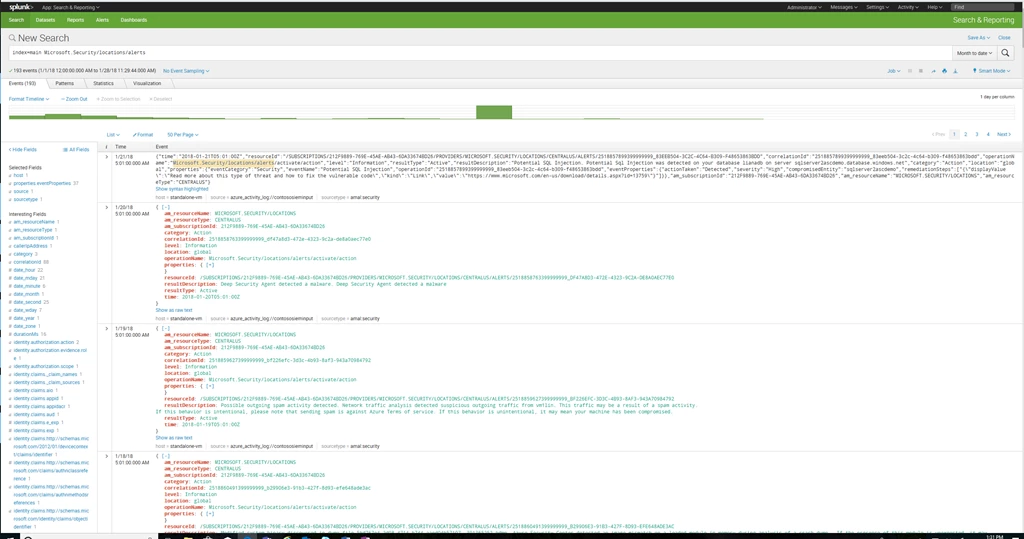
splunk

Figure 2: Azure Security Center alerts in Splunk

In this public preview version, due to customer feedback, we prioritized releasing security alerts. In upcoming releases, we will enrich the data set with security recommendations.

To get started with the integration of Azure Security Center alerts with your SIEM solutions, follow the detailed steps in our documentation.

For any feedback/additional information contact: ASC_SIEM@microsoft.com.

This feature is available for the standard Azure Security Center tier. Try Azure Security Center alerts for your SIEM solutions today.

WE ARE MICROSOFT

Explore Microsoft Foundry

The future of AI starts here. Envision your next great AI app with the latest technologies. Get started with Azure.