

Quantum Development Kit Update brings Q# to Jupyter Notebooks
Today, we’re bringing Q# programming directly to the world of Jupyter Notebooks.
Today, we’re bringing Q# programming directly to the world of Jupyter Notebooks.

To develop, test, debug and optimize quantum programs, we can work around this hurdle using quantum simulators to test quantum the execution of a quantum program on a classical computer and other tools that give the developer insight on their program.
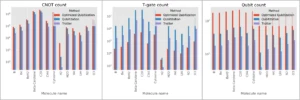
The Q# Microsoft Quantum Chemistry Library allows computational chemists using the Microsoft Quantum Development Kit to explore quantum algorithms without the need for a deep understanding of quantum physics.
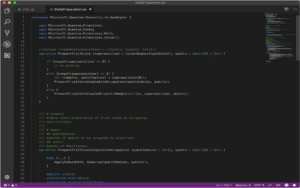
The latest version of our Quantum Development Kit now is available. It offers a new quantum chemistry library to advance computational chemistry research, an improved developer experience, and new Q# language capabilities.

Microsoft is pleased to announce the recent opening of our new Quantum Materials Laboratory in Copenhagen, Denmark, on September 21. We have high expectations for the new lab. It’s where the heart of our quantum computer—the topological qubit—will be developed under the direction of Scientific Director Peter Krogstrup.
This week marks one year since Microsoft announced our bold vision of developing a scalable, full stack quantum computing solution. During that period, we have delivered against our vision and achievement, including expanding our quantum investments across the globe and making our quantum research and technology accessible to a growing community of quantum developers.

Topological qubits will be one of the key ingredients in the Microsoft plan to bring a powerful, scalable quantum computing solution to the world. Providing increased resistance to outside interference, topological qubits create a more stable foundation than conventional qubits.
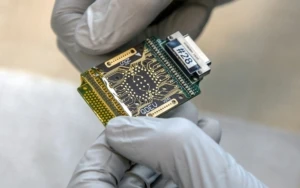
Learn what's involved in the journey to create a topological qubit, including different stages of development, first-of-their-kind fabrication approaches, and an overview of the many fields of knowledge that come together to make this vision a reality.
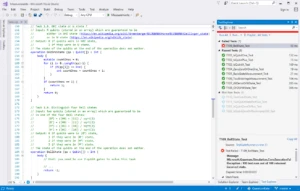
For those who want to explore quantum computing and learn the Q# programming language at their own pace, we have created the Quantum Katas - an open source project containing a series of programming exercises that provide immediate feedback as you progress.

If you’re thinking about getting into quantum development, you probably have a few questions. What can you do with it? How different is quantum compared to your current skills? And how steep is the learning curve? It might surprise you to find out that quantum development is easier to learn than you thought. This post covers the top questions we hear most from developers about to dive into the world of quantum computing.
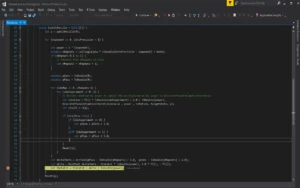
The latest update to the Microsoft Quantum Development Kit includes an enhanced debugging experience and faster simulations, as well as several contributions from the Q# community.

From development to deployment, Microsoft is empowering the quantum revolution with a complete approach to quantum systems. Highlighting our focus on scalability and outlining the full quantum stack—including control system, software, development tools, and Microsoft Azure integration—this post illustrates how our approach creates an integrated, streamlined environment for quantum processing.