Today we are pleased to announce that L3 Technologies, a leading provider of a broad range of communication, electronic and sensor systems and products used on military, homeland security and commercial platforms, has chosen Microsoft Azure Government as its primary cloud platform for expanding data analytics capabilities, optimizing IT operations, and delivering greater value to customers. With approximately 31,000 employees worldwide, L3 Technologies is delivering the latest in advanced solutions as a prime contractor in aerospace systems, security and detection systems, and pilot training.
“L3 is taking a very strategic approach to cloud, aggressively modernizing to drive current and future growth and open up new business opportunities. As part of our long-term collaborative relationship, they’ve already been successful using Microsoft Office 365 for US Government and Dynamics 365 Government. With their latest selection of Azure Government, they’re now tapping into the full breadth of Microsoft’s government cloud capabilities,” – said Judson Althoff, Executive Vice President of Worldwide Commercial Business at Microsoft.
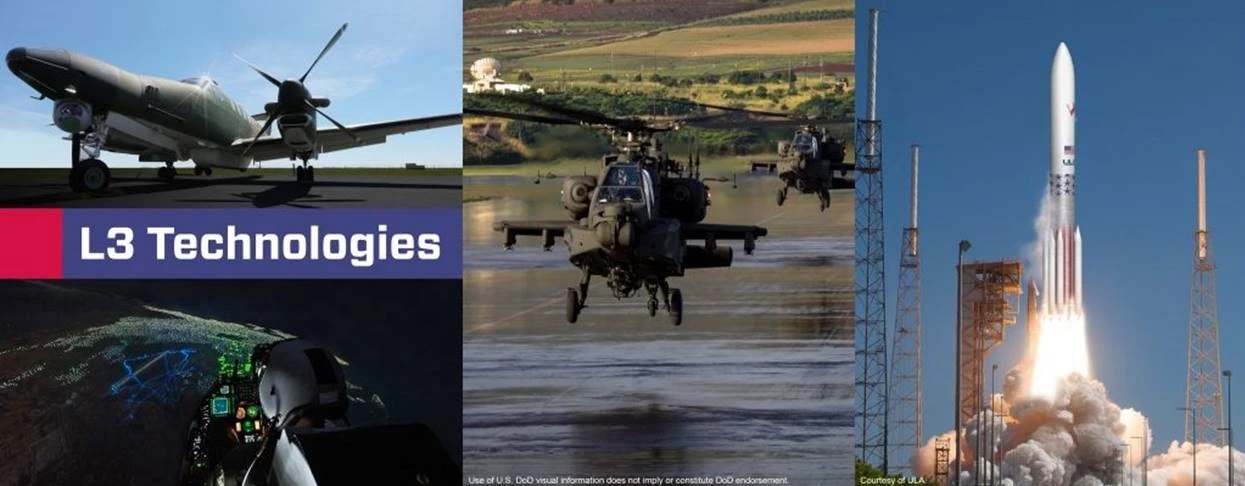
Azure Government meets L3’s highly dynamic demand for computing and storage power by providing hyperscale cloud capabilities and the highest compliance and security to enable them to compete globally in an evolving, data-driven environment. As the first aerospace and defense sector company to enter into a datacenter transformation agreement of this kind with Microsoft, L3 Technologies is focused on outpacing the competition with intelligent services tuned precisely for the needs of each of their government customers.
Examples of anticipated innovation resulting from this industry collaboration include:
- L3 Technologies’ expertise in electronics and sensor systems, combined with Azure services such as IoT Hub, HD Insight, and Stream Analytics offers government customers the ability to analyze and gain insight from increasing volumes of data coming from many different types of equipment.
- With Azure Stack coming soon to Azure Government, L3 Technologies can build on the hybrid capabilities of Azure to bring advanced compute capabilities to the edge, whether it’s a field office, aircraft, or tactical unit.
- L3 Technologies can use Azure Government for new predictive maintenance solutions to better ensure reliability, safety, and cost-efficiency in managing fleets of aircraft, ships, and land vehicles.
By entering this strategic cloud initiative, L3 Technologies gains the advantage of greater data-driven agility and speed in developing new aerospace and defense technologies. “With a hyperscale environment we can provision at will, we’re able to deliver tailored services to our customers more quickly in a cost-effective, pay-per-use model,” reports Ray DeLuke, L3’s Vice President and CIO. “Azure Government gives us almost unlimited compute capacity, so we can stay laser focused on rapid innovation and agile service delivery.
Read the L3 Technologies Press Release for more information and subscribe to the Azure Government blog to stay up to date an all things Azure Government.
Images for this blog post were provided by L3 Technologies