For the past several years, Microsoft and Red Hat have worked together to co-develop hybrid cloud solutions intended to enable greater customer innovation. In 2019, we launched Azure Red Hat OpenShift as a fully managed, jointly engineered implementation of Red Hat OpenShift running on Red Hat OpenShift 3.11 that is deeply integrated into the Azure control plane. With the release of Red Hat OpenShift 4, we announced the general availability of Azure Red Hat OpenShift on OpenShift 4 in April 2020.
Today we’re sharing that in collaboration with Red Hat, we are dropping the price of Red Hat OpenShift licenses on Azure Red Hat OpenShift worker nodes by up to 77 percent. We’re also adding the choice of a three-year term for Reserved Instances (RIs) on top of the existing one year RI and pay as you go options, with a reduction in the minimum number of virtual machines required. The new pricing is effective immediately. Finally, as part of the ongoing improvements, we are increasing the Service Level Agreement (SLA) to be 99.95 percent.
With these new price reductions, Azure Red Hat OpenShift provides even more value with a fully managed, highly-available enterprise Kubernetes offering that manages the upgrades, patches, and integration for the components that are required to make a platform. This allows your teams to focus on building business value, not operating technology platforms.
How can Red Hat OpenShift help you?
As a developer
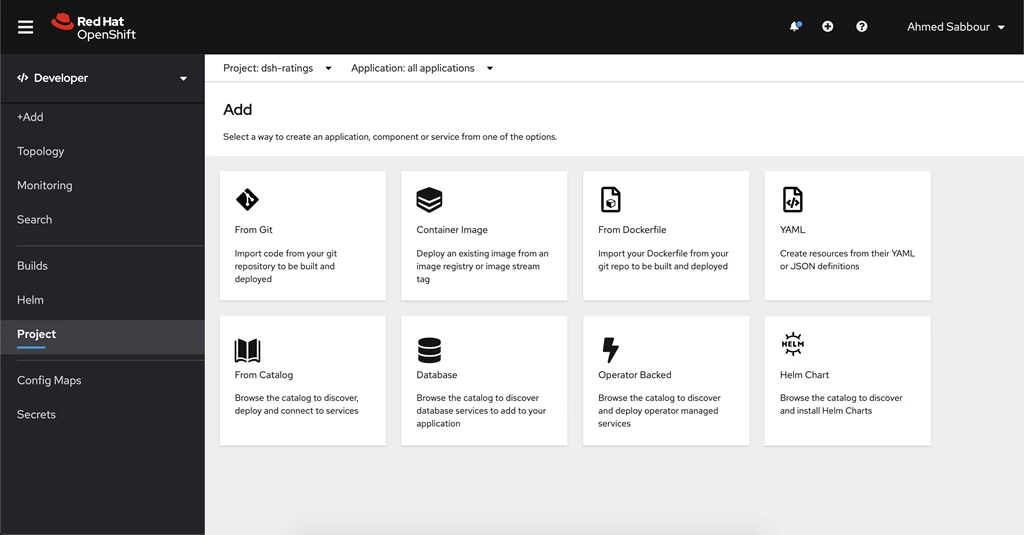
Kubernetes was built for the needs of IT Operations, not developers. Red Hat OpenShift is designed so developers can deploy apps on Kubernetes without needing to learn Kubernetes. With built-in Continuous Integration (CI) and Continuous Delivery (CD) pipelines, you can code and push to a repository and have your application up and running in minutes.
Azure Red Hat OpenShift includes everything you need to manage your development lifecycle; standardized workflows, support for multiple environments, continuous integration, release management, and more. Also included is the provision self-service, on-demand application stacks, and deploy solutions from the Developer Catalog such as OpenShift Service Mesh, OpenShift Serverless, Knative, and more.
Red Hat OpenShift provides commercial support for the languages, databases, and tooling you already use, while providing easy access to Azure services such as Azure Database for PostgreSQL and Azure Cosmos DB, to enable you create resilient and scalable cloud native applications.
As an IT operator
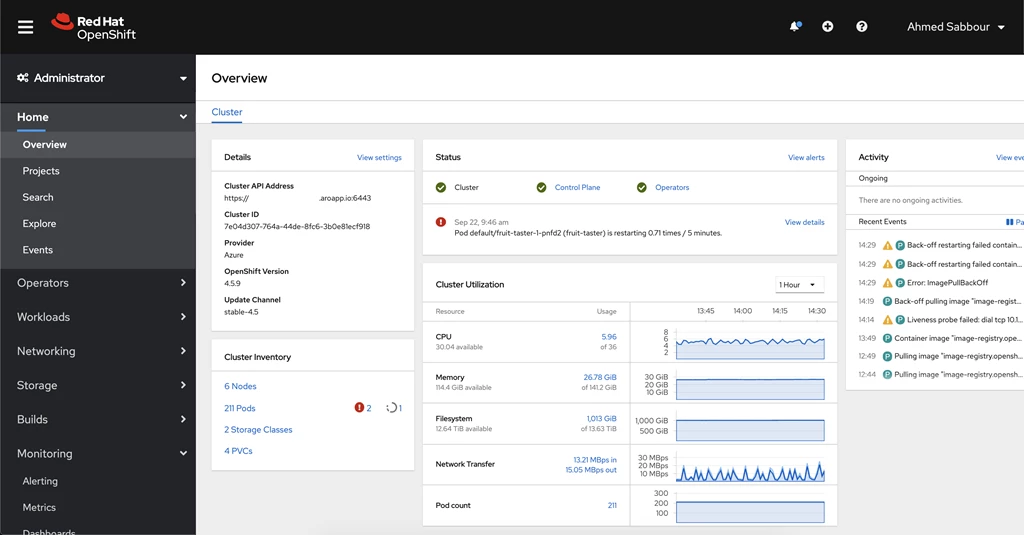
Adopting a container platform lets you keep up with application scale and complexity requirements. Azure Red Hat OpenShift is designed to make deploying and managing the container platform easier, with automated maintenance operations and upgrades built right in, integrated platform monitoring—including Azure Monitor for Containers, and a support experience directly from the Azure support portal.
With Azure Red Hat OpenShift, your developers can be up and running in minutes. You can scale on your terms, from ten containers to thousands, and only pay for what you need. With one-click updates for platform, services, and applications, Azure Red Hat OpenShift monitors security throughout the software supply chain to make applications more stable without reducing developer productivity. You can also leverage built-in vulnerability assessment and management tools in Azure Security Center to scan images that are pushed to, imported, or pulled from an Azure Container Registry.
Discover Operators from the Kubernetes community and Red Hat partners, curated by Red Hat. You can install Operators on your clusters to provide optional add-ons and shared services to your developers, such as AI and machine learning, application runtimes, data, document stores, monitoring logging and insights, security, and messaging services.
Regional availability
Azure Red Hat OpenShift is available in 27 regions worldwide, and we’re continuing to expand that list. Over the past few months, we have added support for Azure Red Hat OpenShift in a number of regions, including West US, Central US, North Central US, Canada Central, Canada East, Brazil South, UK West, Norway East, France Central, Germany West Central, Central India, UAE North, Korea Central, East Asia, and Japan East.
Industry compliance certifications
To help you meet your compliance obligations across regulated industries and markets worldwide, Azure Red Hat OpenShift is PCI DSS, FedRAMP High, SOC 1/2/3, ISO 27001 and HITRUST certified. Azure maintains the largest compliance portfolio in the industry, both in terms of the total number of offerings and also the number of customer-facing services in assessment scope. For more details, check the Microsoft Azure Compliance Offerings, as well as the number of customer-facing services in the assessment scope.
Next steps
Try Azure Red Hat OpenShift now. We are excited about these new lower prices and how this helps our customers build their business on a platform that enables IT operations and developers to collaborate effectively, develop, and deploy containerized applications rapidly with strong security capabilities.