Skip to main content Explore View all products (200+) Microsoft Foundry Azure Copilot GitHub Copilot Azure Kubernetes Service (AKS) Azure Cosmos DB Azure Database for PostgreSQL Azure Arc Microsoft Fabric Linux virtual machines in Azure Foundry Models Foundry Agent Service Foundry IQ Foundry Tools Foundry Control Plane Observability in Foundry Control Plane Azure OpenAI in Foundry Models Azure Speech in Foundry Tools Azure Machine Learning View all databases Azure Cosmos DB Azure DocumentDB Azure SQL Azure Database for PostgreSQL Azure Managed Redis Microsoft Fabric Azure Databricks Linux virtual machines in Azure Windows Server on Azure Azure Functions Azure Virtual Machine Scale Sets Azure API Management Azure Container Apps Azure Kubernetes Service (AKS) Azure Kubernetes Fleet Manager Azure Container Registry Azure Red Hat OpenShift Azure Container Instances Azure Container Storage Azure Arc Azure Local Microsoft Defender for Cloud Azure Monitor Microsoft Sentinel Azure Migrate View all solutions (40+) Cloud solutions for small and medium businesses Cloud migration and modernization center Data analytics for AI Azure Databases AI apps and agents Microsoft Marketplace Microsoft Sovereign Cloud AI apps and agents Responsible AI with Azure AI Infrastructure Data analytics for AI Machine learning operations (MLOps) Low-code application development on Azure Integration Services Serverless computing DevOps Migration and modernization center .NET apps migration Databases on Azure Linux on Azure Oracle on Azure SAP on the Microsoft Cloud Adaptive cloud High-performance computing (HPC) Infrastructure as a service (IaaS) Resiliency Azure Essentials Frontier Accelerate for Azure FinOps on Azure Microsoft Marketplace Azure pricing overview Create an Azure account Free Azure services Flexible purchase options Pricing calculator FinOps on Azure Maximize ROI from AI Azure savings plans Azure reservations Azure Hybrid Benefit Virtual Machines Azure SQL Microsoft Foundry Microsoft Fabric Azure Kubernetes Service (AKS) Microsoft Defender for Cloud View more Software Development Companies Microsoft Marketplace Find a partner Resources for Azure partners Get started with Azure Customer stories Analyst reports, white papers, and e-books Videos Learn more about cloud computing Documentation Explore Azure portal Developer resources Quickstart templates Resources for startups Developer community Students Azure for partners Blog Events and Webinars Learn Support Contact Sales Get started with Azure Sign in

This blog post was co-authored by Anitha Adusumilli, Principal Program Manager, Azure Networking.

Today we are announcing the general availability of Firewalls and Virtual Networks (VNets) for Azure Storage along with Virtual Network Service Endpoints. Azure Storage Firewalls and Virtual Networks uses Virtual Network Service Endpoints to allow administrators to create network rules that allow traffic only from selected VNets and subnets, creating a secure network boundary for their data. These features are now available in all Azure public cloud regions and Azure Government. As part of moving to general availability it is now backed by the standard SLAs. There is no additional billing for virtual network access through service endpoints. The current pricing model for Azure Storage applies as is today.

Customers often prefer multiple layers of security to help protect their data. This includes network-based access control protections as well as authentication and authorization-based protections. As part of the general availability of Firewalls and Virtual Networks for Storage and VNet Service Endpoints we enable network-based access control. These new network focused features allow the customer to define network access-based security ensuring that only requests coming from approved Azure VNets or specified public IP ranges will be allowed to a specific storage account. Customers can combine existing authorization mechanisms with the new network boundaries to better secure their data.
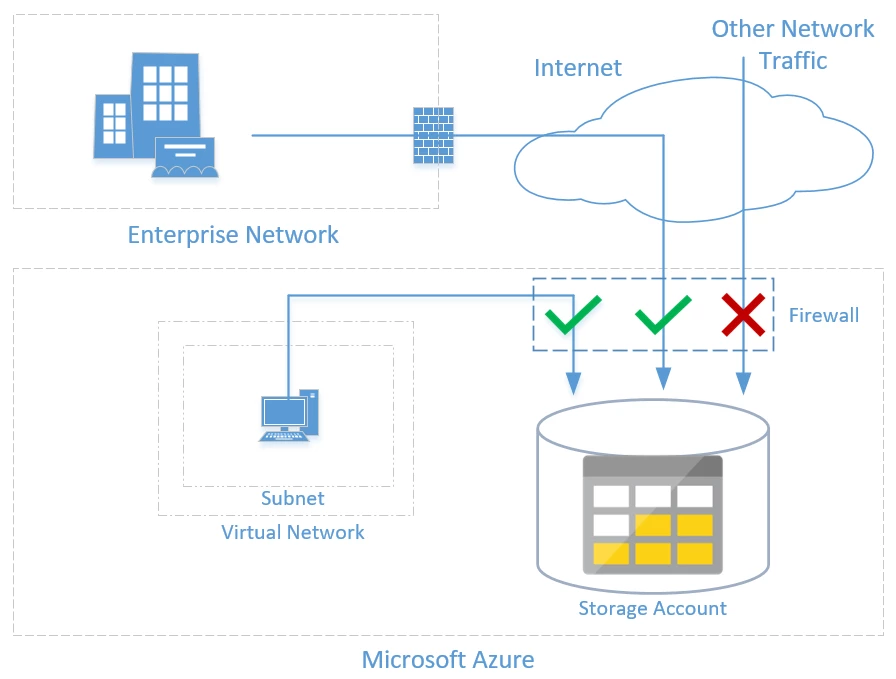
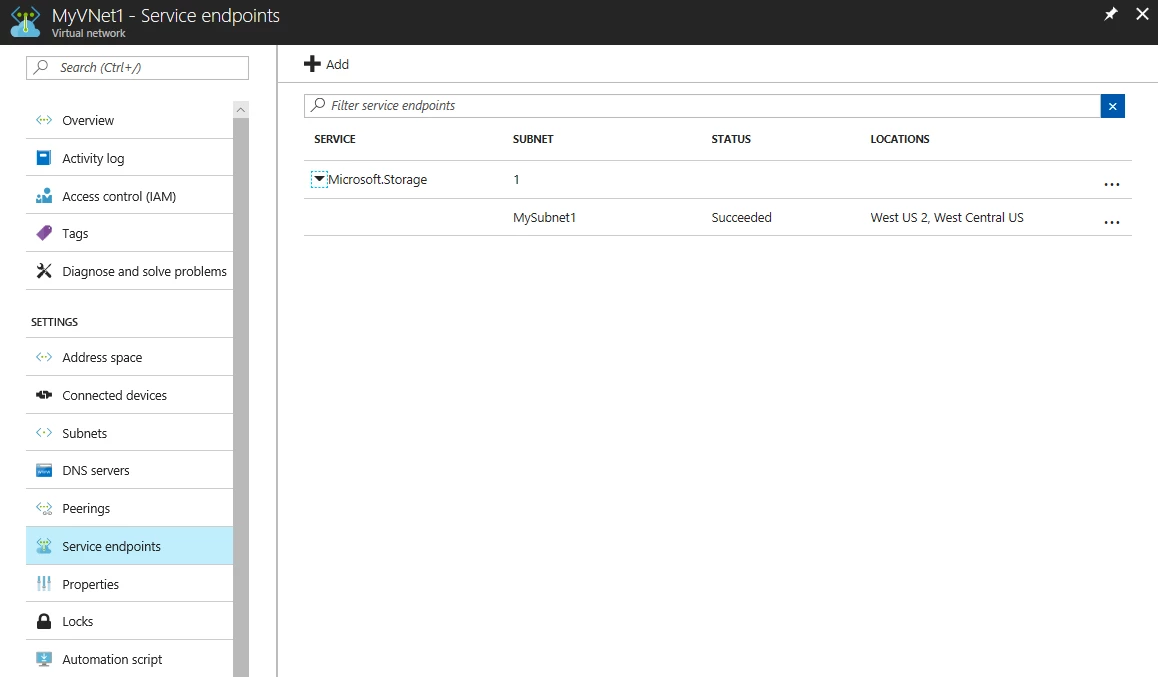
To enable VNet protection, first enable service endpoints for storage in the VNet. Virtual Network Service Endpoints allow you to secure your critical Azure service resource to only your virtual network. Service endpoints also provide optimal routing for Azure traffic over the Azure backbone in scenarios where Internet traffic is routed through virtual appliances or on-premises.
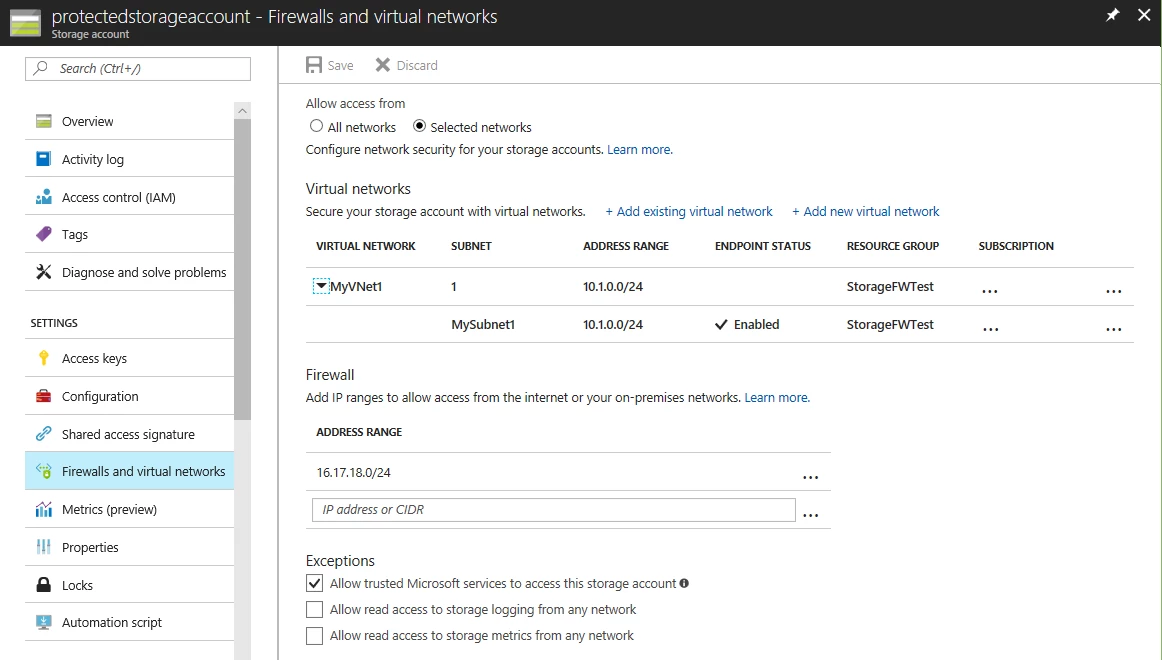
On the storage account you can select to allow access to one or more VNets. You may also configure to allow access to one or more public IP ranges. A detailed explanation on how to enable the network functionality can be found at Configure Azure Storage Firewalls and Virtual Networks.
Next steps

To get started, refer to the documentation Virtual Network Service Endpoints and Configure Azure Storage Firewalls and Virtual Networks.

To allow access from on-premises networks and support for various Azure services to your secured storage accounts, refer to our documentation.

For feature details and scenarios please watch the Microsoft Ignite session, “Network security for applications in Azure”.


WE ARE MICROSOFT

Explore Microsoft Foundry

The future of AI starts here. Envision your next great AI app with the latest technologies. Get started with Azure.