We recently announced the Premium Tier for Azure App Service which brought expanded scaling options and Biztalk Services with Premium Connectors to app developers. Today we’re pleased to introduce the public preview of an additional exclusive Premium service plan option: App Service Environment.
An App Service Environment provides a fully isolated and dedicated environment for securely running all of your apps including Web Apps, Mobile Apps, API Apps and Logic Apps. An App Service Environment is always created inside of a regional virtual network. This enables apps to securely connect to other endpoints accessible only inside of a virtual network, including endpoints connected via Site-to-Site and ExpressRoute connections. It also enables an App Service Environment to be secured behind upstream appliances, firewalls and network SaaS providers.
Apps running in an App Service Environment also have even more scaling options, including the ability to run on up to fifty (50) compute instances and the new P4 compute resource.
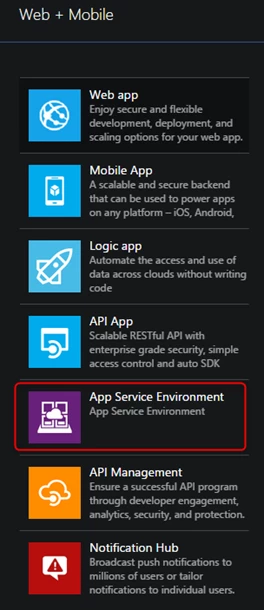
Customers can quickly get started with an App Service Environment from the Create menu in the portal:
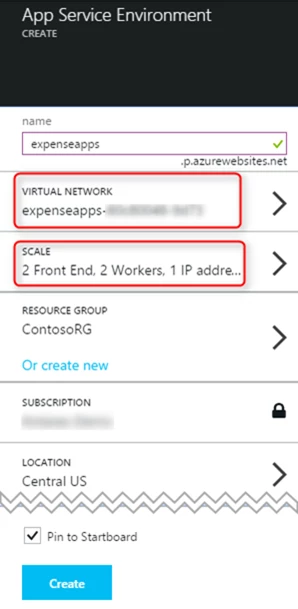
During App Service Environment creation, default selections are made for the virtual network and scale configurations. The example below shows creating an App Service Environment named expenseapps with a default configuration.
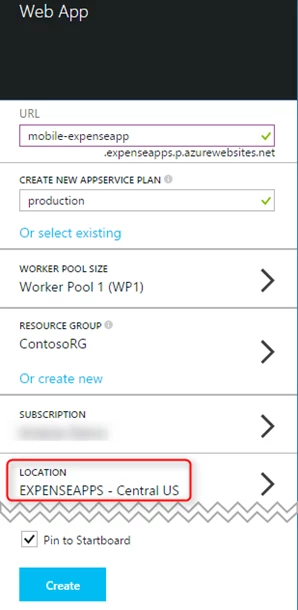
Once an App Service Environment has been created, new apps can easily be configured in it. The following shows the portal experience for creating a new app (mobile-expenseapp) in the expenseapps App Service Environment. Notice how the Location selection indicates that the app will be created in the expenseapps App Service Environment.
With mobile-expenseapp running inside of the App Service Environment, it can now access internal corporate resources connected to the same virtual network. The app can also be secured to only allow access from upstream services and firewalls.
Getting Started
App Service Environments are available in preview starting today. The App Service Environment option is part of the Azure App Service Premium Tier, and for a limited time Premium tier pricing is available at the existing Standard tier pricing! For help getting started see: What is an App Service Environment and How to Create an App Service Environment.
Additional Resources
For more details on creating and working with an App Service Environment, as well as securing network communications with an App Service Environment, explore App Service Environment further in the following documentation:
- How to Create an App Service Environment
- How to Create a Web App in an App Service Environment
- How to Scale a Web App in an App Service Environment
- How to Configure an App Service Environment
- How to Secure Inbound Traffic to an App Service Environment
- How to Securely Connect to Backend Resources from an App Service Environment