Skip to main content Get to know Azure Microsoft as Customer Zero View all products (200+) Microsoft Foundry Azure Copilot GitHub Copilot Azure Kubernetes Service (AKS) Azure Cosmos DB Azure Database for PostgreSQL Azure Arc Microsoft Fabric Linux virtual machines in Azure Foundry Models Foundry Agent Service Foundry IQ Foundry Tools Foundry Control Plane Observability in Foundry Control Plane Azure OpenAI in Foundry Models Azure Speech in Foundry Tools Azure Machine Learning View all databases Azure Cosmos DB Azure DocumentDB Azure SQL Azure Database for PostgreSQL Azure Managed Redis Microsoft Fabric Azure Databricks Linux virtual machines in Azure Windows Server on Azure Azure Functions Azure Virtual Machine Scale Sets Azure API Management Azure Container Apps Azure Kubernetes Service (AKS) Azure Kubernetes Fleet Manager Azure Container Registry Azure Red Hat OpenShift Azure Container Instances Azure Container Storage Azure Arc Azure Local Microsoft Defender for Cloud Azure Monitor Microsoft Sentinel Azure Migrate View all solutions (40+) Cloud solutions for small and medium businesses Cloud migration and modernization center Data analytics for AI Azure Databases AI apps and agents Microsoft Marketplace Microsoft Sovereign Cloud AI apps and agents Responsible AI with Azure AI Infrastructure Data analytics for AI Machine learning operations (MLOps) Low-code application development on Azure Integration Services Serverless computing DevOps Migration and modernization center .NET apps migration Databases on Azure Linux on Azure Oracle on Azure SAP on the Microsoft Cloud Adaptive cloud High-performance computing (HPC) Infrastructure as a service (IaaS) Resiliency Azure Essentials Frontier Accelerate for Azure FinOps on Azure Microsoft Marketplace Azure pricing overview Create an Azure account Free Azure services Flexible purchase options Pricing calculator FinOps on Azure Maximize ROI from AI Azure savings plans Azure reservations Azure Hybrid Benefit Virtual Machines Azure SQL Microsoft Foundry Microsoft Fabric Azure Kubernetes Service (AKS) Microsoft Defender for Cloud View more Software Development Companies Microsoft Marketplace Find a partner Resources for Azure partners Get started with Azure Customer stories Analyst reports, white papers, and e-books Videos Learn more about cloud computing Documentation Explore Azure portal Developer resources Quickstart templates Resources for startups Developer community Students Azure for partners Blog Events and Webinars Learn Support Contact Sales Get started with Azure Sign in

Choosing Azure for your applications and services allows you take advantage of a wide array of security tools and capabilities. These tools and capabilities help make it possible to create secure solutions on Azure. Among these capabilities is Azure disk encryption, designed to help protect and safeguard your data to meet your organizational security and compliance commitments. It uses the industry standard BitLocker Drive Encryption for Windows and DM-Crypt for Linux to provide volume encryption for OS and data disks. The solution is integrated with Azure Key Vault to help you control and manage disk encryption keys and secrets, and ensures that all data on virtual machine (VM) disks are encrypted both in-transit and at rest while in Azure Storage.

Beyond securing your applications, it is important to have a disaster recovery plan in place to keep your mission critical applications up and running when planned and unplanned outages occur. Azure Site Recovery helps orchestrate replication, failover, and recovery of applications running on Azure Virtual Machines so that they are available from a secondary region if you have any outages in the primary region.

Azure Site Recovery now supports disaster recovery of Azure disk encryption (V2) enabled virtual machines without Azure Active Directory application. While enabling replication of your VM for disaster recovery, all the required disk encryption keys and secrets are copied from the source region to the target region in the user context. If the user managing disaster recovery does not have the appropriate permissions, the user can hand over the ready-to-use script to the security administrator to copy the keys and secrets and proceed with configuration.
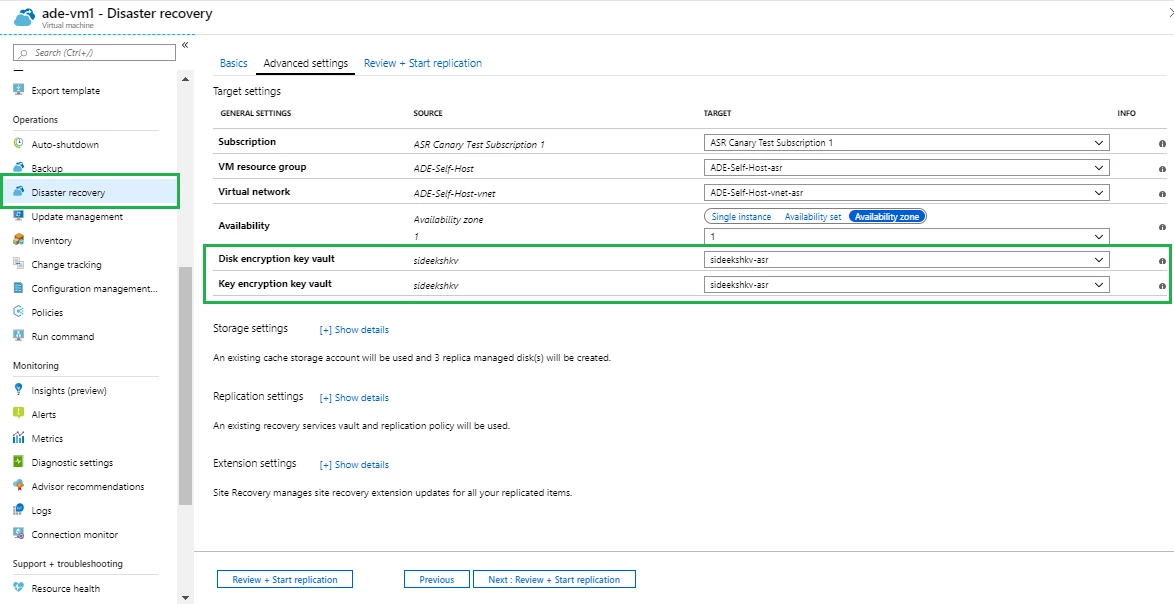
Configure disaster recovery for Azure disk encryption (V2) enabled virtual machines

This feature currently supports only Windows VMs using managed disks. The support for Linux VMs using managed disks will be available in the coming weeks. This feature is available in all Azure regions where Azure Site Recovery is available. Configure disaster recovery for Azure disk encryption enabled virtual machines using Azure Site Recovery today and become both secure and protected from outages.


WE ARE MICROSOFT

Explore Microsoft Foundry

The future of AI starts here. Envision your next great AI app with the latest technologies. Get started with Azure.