Leveraging Microsoft Azure OpenAI Service to make generative AI more accessible for everyday business
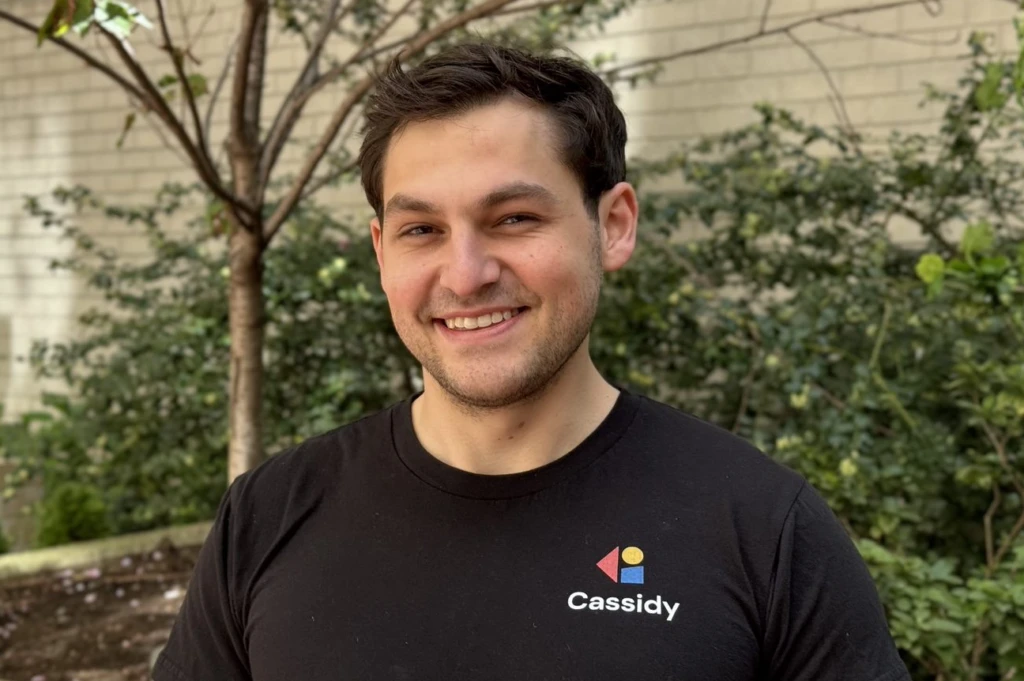
Justin Fineberg’s career trajectory took a pivotal turn when he encountered the transformative potential of AI. The year was 2020 and Fineberg had received early access to the beta version of OpenAI’s GPT-3:
“The moment I began working with GPT-3, I realized we were at the cusp of a new era in technology. It was like discovering a new language that could unlock endless possibilities.”
Justin Fineberg, CEO/Founder, Cassidy
Azure OpenAI Service
Build your own copilot and generative AI applications.

AI at the intersection of creativity and technology
Originally, Fineberg considered a career in film.
“I kind of saw myself as a filmmaker when I was younger: building a great product is in many ways about telling a great story. And that kind of ties back to my background in film.”
Justin Fineberg, CEO/Founder, Cassidy
In 2022, Fineberg decided to leave his job as a product manager at Blade to team up with his long-time collaborator and engineer, Ian Woodfill. Woodfill’s understanding of the no-code space and Fineberg’s passion for accessible AI solutions led them to start Cassidy, which provides easy ways to build custom generative AI for business organizations.
Today, Fineberg has more than 400,00 followers across social platforms—and that number is expected to grow. After all, AI is on the rise. A recent article in Forbes reported that AI market size is expected to reach $407 billion by 2027 with an annual growth rate of 37.3% from 2023 to 2030. With a growing contingent of individuals—and businesses—adopting AI, Fineberg is seeking to bridge the gap between complex AI technologies and practical business applications. By focusing on user-friendly interfaces and seamless integration, Cassidy aims to make AI an integral part of business workflows, empowering users to harness its potential without being AI experts themselves.
Leveraging Microsoft Azure OpenAI Service
Justin leveraged Azure OpenAI Service to bridge the gap between advanced AI technologies and practical, everyday applications. His mission with Cassidy is to put powerful AI tools in the hands of those who could benefit from them the most, regardless of their technical expertise. By leveraging Azure OpenAI Service, Cassidy simplifies the integration of advanced AI capabilities for companies, enabling them to automate tasks and enhance productivity without the need for coding or deep tech knowledge.
Azure OpenAI Service stands out for its comprehensive suite of AI models, which Fineberg utilizes to drive Cassidy’s capabilities.
“Azure OpenAI Service democratizes access to these powerful tools, making it easier for innovators across sectors to leverage AI in their projects.”
Justin Fineberg, CEO/Founder, Cassidy
The service’s breadth ensures that whether a user is looking to automate customer service, generate unique marketing content, or develop novel applications, they have the necessary tools at their disposal.
Ease of integration is at the heart of Cassidy—which aims to streamline the development process and allow creators to focus on their vision rather than the complexities of technology. The ability to integrate with Azure’s ecosystem was a game-changer for Cassidy, allowing Fineberg to scale and enhance the company’s offerings with greater ease.
Fineberg sees Azure OpenAI Service playing a pivotal role in shaping the AI landscape. Its continuous evolution, with updates and additions to its AI model offerings, ensures that users have access to the latest advancements in AI technology.
“Azure OpenAI Service is not just a platform for today; it’s a platform that’s evolving with the future of AI. Choosing Azure OpenAI Service wasn’t just about accessing advanced AI models; it was about ensuring reliability, scalability, and security for our users. As businesses grow and their needs evolve, the service’s infrastructure is designed to scale alongside them, ensuring that AI capabilities can expand in tandem with user requirements. The scalability of Azure OpenAI Service has been instrumental in supporting Cassidy’s growth. It ensures that as our user base expands, we can maintain performance and reliability without skipping a beat.”
Justin Fineberg, CEO/Founder, Cassidy

Four bits of AI advice from Justin Fineberg:
- Embrace curiosity: Approach AI with a mindset of curiosity. Since it’s still fresh for most, there’s no real “expertise” yet—just a wide-open space for exploration and discovery. Approach AI with an open mind and see where your curiosity leads you.
- Prioritize the low-hanging fruit: Focus on what AI can do easily and effectively right now. Don’t let the current limitations distract you—AI technology is advancing fast. Keep up to date with new developments while continuously prioritizing the most powerful opportunities available today.
- Prioritize user-friendly design: AI tools should be accessible and easy to use for everyone, not just experts.
- Share use cases: Don’t be shy about how you’re using AI in your work and business. Let’s learn together.
Learn more about Justin’s use of Azure OpenAI Service when he speaks at Build 2024.
Our commitment to responsible AI
At Microsoft, we‘re guided by our AI principles and Responsible AI Standard along with decades of research on AI, grounding, and privacy-preserving machine learning. A multidisciplinary team of researchers, engineers, and policy experts reviews our AI systems for potential harms and mitigations—refining training data; filtering to limit harmful content, query- and result-blocking sensitive topics; and applying Microsoft technologies like Azure AIContent Safety, InterpretML, and Fairlearn. We make it clear how the system makes decisions by noting limitations, linking to sources, and prompting users to review, fact-check, and adjust content based on subject matter expertise.
Get started with Azure OpenAI Service
- Apply for access to Azure OpenAI Service by completing this form.
- Learn about Azure OpenAI Service and the latest enhancements.
- Get started with GPT-4 in Azure OpenAI Service in Microsoft Learn.
- Read our partner announcement blog, empowering partners to develop AI-powered apps and experiences with ChatGPT in Azure OpenAI Service.
- Learn how to use the new Chat Completions API (in preview) and model versions for ChatGPT and GPT-4 models in Azure OpenAI Service.
- Learn more about Azure AI Content Safety.