Skip to main content Explore View all products (200+) Microsoft Foundry Azure Copilot GitHub Copilot Azure Kubernetes Service (AKS) Azure Cosmos DB Azure Database for PostgreSQL Azure Arc Microsoft Fabric Linux virtual machines in Azure Foundry Models Foundry Agent Service Foundry IQ Foundry Tools Foundry Control Plane Observability in Foundry Control Plane Azure OpenAI in Foundry Models Azure Speech in Foundry Tools Azure Machine Learning View all databases Azure Cosmos DB Azure DocumentDB Azure SQL Azure Database for PostgreSQL Azure Managed Redis Microsoft Fabric Azure Databricks Linux virtual machines in Azure Windows Server on Azure Azure Functions Azure Virtual Machine Scale Sets Azure API Management Azure Container Apps Azure Kubernetes Service (AKS) Azure Kubernetes Fleet Manager Azure Container Registry Azure Red Hat OpenShift Azure Container Instances Azure Container Storage Azure Arc Azure Local Microsoft Defender for Cloud Azure Monitor Microsoft Sentinel Azure Migrate View all solutions (40+) Cloud solutions for small and medium businesses Cloud migration and modernization center Data analytics for AI Azure Databases AI apps and agents Microsoft Marketplace Microsoft Sovereign Cloud AI apps and agents Responsible AI with Azure AI Infrastructure Data analytics for AI Machine learning operations (MLOps) Low-code application development on Azure Integration Services Serverless computing DevOps Migration and modernization center .NET apps migration Databases on Azure Linux on Azure Oracle on Azure SAP on the Microsoft Cloud Adaptive cloud High-performance computing (HPC) Infrastructure as a service (IaaS) Resiliency Azure Essentials Frontier Accelerate for Azure FinOps on Azure Microsoft Marketplace Azure pricing overview Create an Azure account Free Azure services Flexible purchase options Pricing calculator FinOps on Azure Maximize ROI from AI Azure savings plans Azure reservations Azure Hybrid Benefit Virtual Machines Azure SQL Microsoft Foundry Microsoft Fabric Azure Kubernetes Service (AKS) Microsoft Defender for Cloud View more Software Development Companies Microsoft Marketplace Find a partner Resources for Azure partners Get started with Azure Customer stories Analyst reports, white papers, and e-books Videos Learn more about cloud computing Documentation Explore Azure portal Developer resources Quickstart templates Resources for startups Developer community Students Azure for partners Blog Events and Webinars Learn Support Contact Sales Get started with Azure Sign in

This post was co-authored by Eliran Azulai, Principal Program Manager, Azure Networking.

Today, we are announcing new Azure Firewall capabilities as well as updates for August 2021.

  • Azure Firewall supports US West 3, Jio India West, and Brazil Southeast.
  • Auto-generated self-signed certificates for Azure Firewall Premium SKU.
  • Secure Hub now supports Availability Zones.
  • Deploy Azure Firewall without public IP in Forced Tunnel mode.
  • Configure pre-existing Azure Firewalls in Force Tunnel mode using stop or start commands.

Azure Firewall regional expansion

We expanded Azure Firewall service to three new public regions including US West 3, Jio India West, and Brazil Southeast. Both Standard and Premium Firewall SKUs are available in the new public regions. Firewall Policy support is planned to release shortly.

Azure Firewall Premium SKU support for self-signed certificates

For non-production deployments, you can use the Azure Firewall Premium certification auto-generation mechanism, which automatically creates for you the following three resources, ties them together, and sets up transport layer security (TLS) inspection with a single click of a button:

  1. Managed Identity.
  2. Key Vault.
  3. Self-signed intermediate CA certificate.
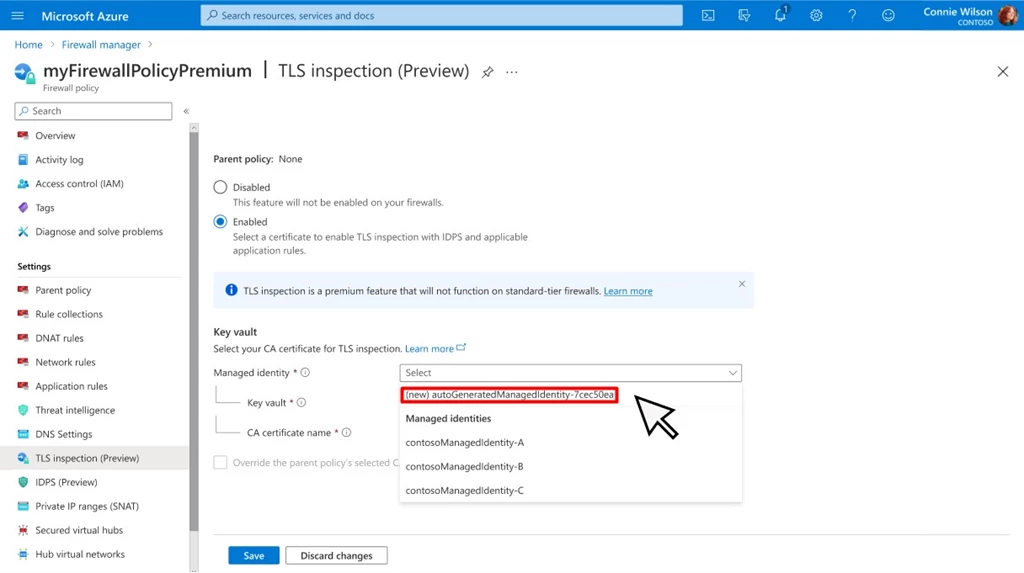
An image of Azure Firewall Premium SKU with a drop down menu for the new auto-generated certification mechanism.

Secure Hub now supports Availability Zones

With Availability Zones, your availability increases to 99.99 percent uptime. A secured virtual hub can now be configured during deployment to span multiple Availability Zones for increased availability.
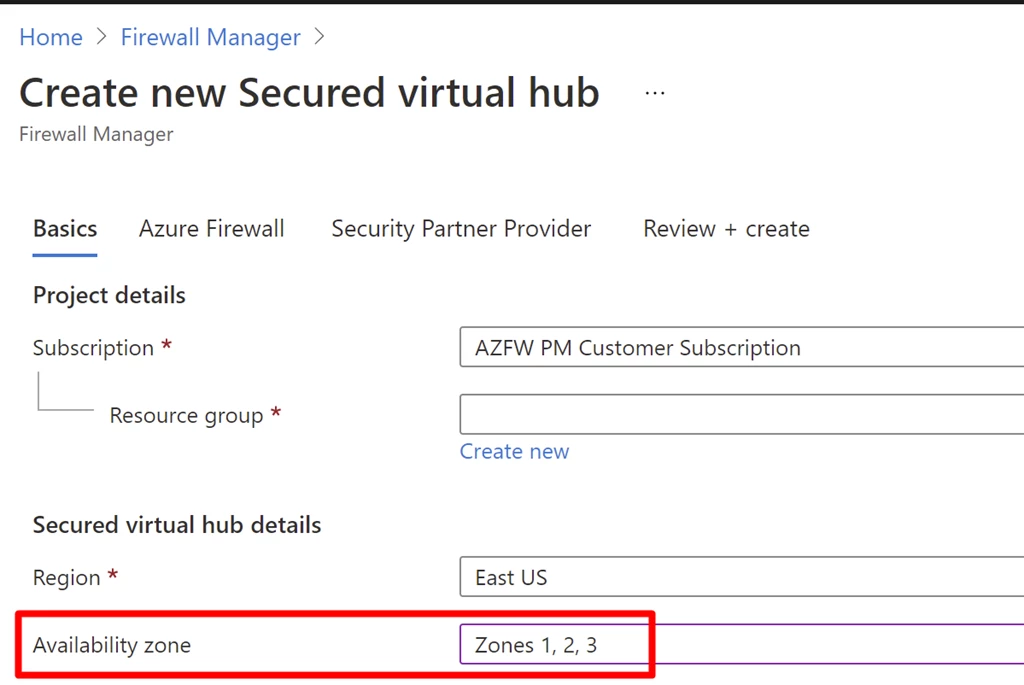
An image of creating a new secured virtual hub with a new option to include Availability Zones.

Deploy Azure Firewall without public IP in Forced Tunnel mode

Azure Firewall service requires public IP for its operational purposes. While secure, some deployments don’t prefer exposing public IP directly to the internet. In such cases, customers can deploy Azure Firewall in Forced Tunnel mode. This configuration creates a management NIC which is used by Azure Firewall for its operations. The Tenant Datapath network can be configured without a public IP, and internet traffic can be forced tunneled to another Firewall or completely blocked.

Note that Forced Tunnel mode cannot be configured at Run Time. You can either redeploy the Firewall or use the stop and start facility to reconfigure existing Azure Firewalls in Forced Tunnel mode. Secure Hub Firewalls are always deployed in Forced Tunnel mode.
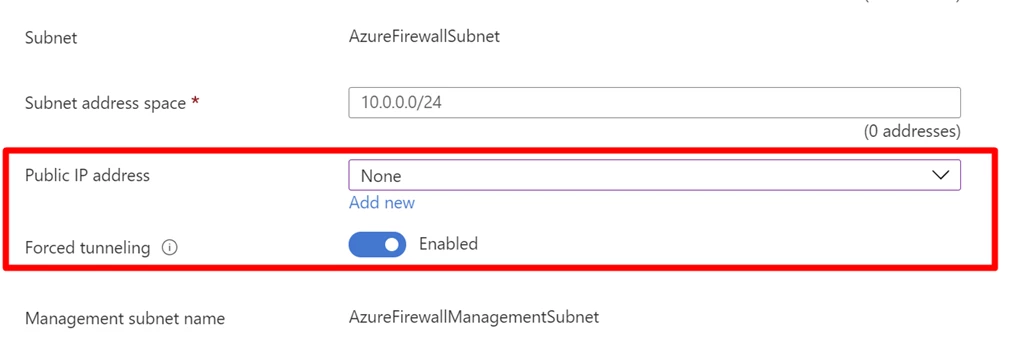
An image of Azure Firewall that now includes new options for public IP address and forced tunneling.

Next steps

For more information on everything we covered above, see the following documentation:

WE ARE MICROSOFT

Explore Microsoft Foundry

The future of AI starts here. Envision your next great AI app with the latest technologies. Get started with Azure.