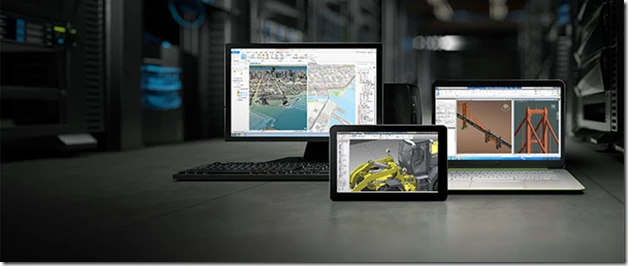
Professional graphics users in every industry count on an immersive, photorealistic, responsive environment to imagine, design, and build everything from airplanes to animated films. Traditionally, these high-powered workstations were tethered to physical facilities and shared among professional users such as designers, architects, engineers, and researchers. But today’s enterprises find themselves operating in multiple geographies, with distributed teams needing to collaborate in real-time.
Hence, last year we released Azure’s first GPU offerings targeting high-end graphics applications. NV based instances are powered by the NVIDIA GRID virtualization platform and NVIDIA Tesla M60 GPUs that provide 2048 CUDA cores per GPU and 8GB of GDDR5 memory per GPU as well. These instances provide over 2x performance increase in graphics-accelerated applications as compared to the previous generations.
Targeting the high-end workstation user, you can run NVIDIA Quadro GPU optimized applications such as Dassault Systems CATIA or Siemens PLM per user directly on the NV instances without the need to deal with the complexity of licensing. Additionally, with up to 4 GPUs via NV24 you’re able to run up to 4 concurrent users utilizing these Quadro applications with features such as multiple displays, larger maximum resolutions and certified Quadro software features from hundreds of software vendors.
Furthermore, if your organization has a need to run Virtual Apps or Virtual Desktops using solutions like RDS, Citrix XenApp Essentials, VMware Horizon, or Workspot, you’re now able to run up to 25 concurrent RDSH users per GPU. Office workers and professionals who don’t require Quadro optimized applications, can finally enjoy virtual desktops with a high-quality user experience that’s optimized for productivity applications. It’s all the performance of a physical PC, where and when you need it. You can now dramatically lower IT operational expense and focus on managing the users instead of PCs.
|
NV6 |
NV12 |
NV24 | |
|
Cores |
6 |
12 |
24 |
|
GPU |
1 x M60 GPU |
2 x M60 GPUs |
4 x M60 GPUs |
|
Memory |
56 GB |
112 GB |
224 GB |
|
Disk |
380 GB SSD |
680 GB SSD |
1.44 TB SSD |
|
Network |
Azure Network |
Azure Network |
Azure Network |
|
Virtual Workstations |
1 |
2 |
4 |
|
RDSH Virtual Apps and Virtual Desktops |
25 |
50 |
100 |
“Because so many of today’s modern applications and operating systems require GPU acceleration, organizations are seeking greater flexibility in their deployment and cost options,” says John Fanelli, VP NVIDIA GRID. “With NVIDIA GRID software and NVIDIA Tesla M60s running on Azure, Microsoft is delivering the benefits of cloud-based RDSH virtual apps and desktops to enable broad-scale, graphics-accelerated virtualization in the cloud that meets the needs of any enterprise.”
These new updates will go a long way to making sure that you have the best infrastructure whether you’re running the most graphics demanding CAD application that require Quadro optimization or if you’re just running office productivity applications on the go.
Azure N-Series VMs are now generally available in multiple regions. To launch these VMs please visit the Azure Portal.