Climate experts across the globe agree: if we can’t drastically reduce carbon emissions, our planet will face catastrophic consequences. Microsoft has operated carbon neutral since 2012, and in January 2020 Brad Smith announced our commitment to going carbon negative by 2030. This isn’t a goal we can reach in one easy swoop—it will take time, dedication, and many small steps that coalesce into something greater.
As the cloud business grows, our datacenter footprint grows. In our journey toward carbon negative, Microsoft is taking steps to roll back the effect datacenters have on the environment. Reaching this goal will take many steps, along with the implementation of innovative technologies that have yet to be developed.
Many companies are reaching for net zero emissions, but we’re taking it even further. We’re not just reducing our output to zero. We’re committed to reducing our emissions by half, and then removing the carbon we’ve emitted since 1975, to truly go carbon negative.
The journey to carbon negative
A big part of going carbon negative means completely changing the way datacenters operate. Datacenters have adopted some sustainable methods around cooling, including open-air and adiabatic cooling. These methods have helped to drastically reduce the water and energy consumption of datacenters, but they’re not enough. Currently, datacenters and the backup that powers them in peak load times depend on fossil fuels like diesel. Microsoft is working to change that.
Our ambitious goals to cut down our carbon footprint have necessitated exploration into various technologies. With each kind of technology, we’re determining the best combination to implement based on our overall goal as well as the specific datacenter locations and their local needs.
Liquid immersion cooling
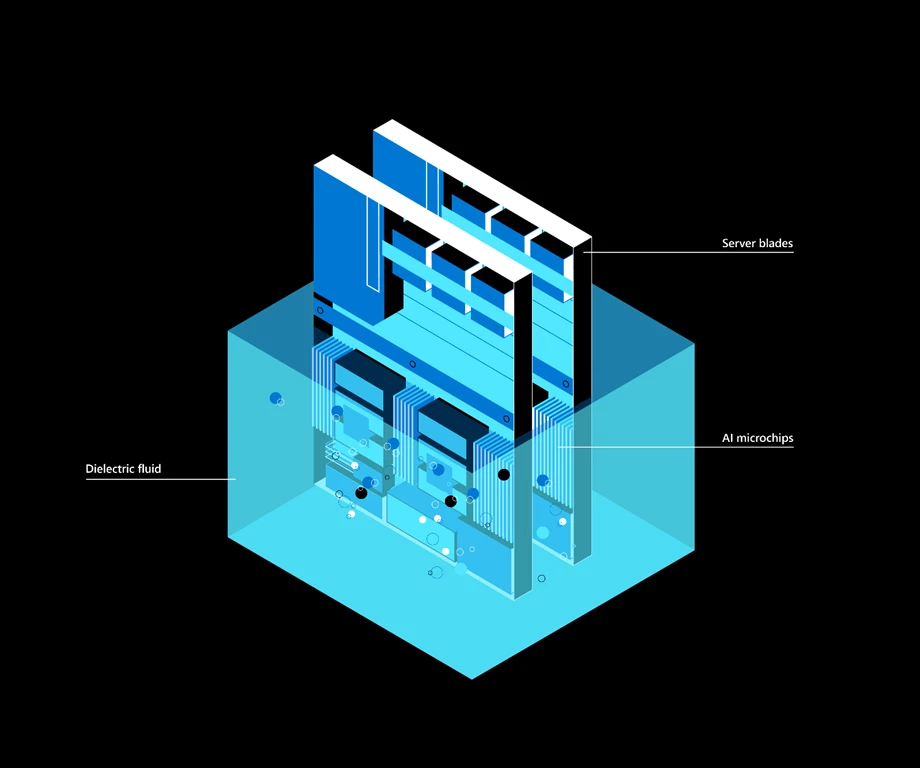
Liquid immersion cooling is predicted to not only help eliminate water consumption but to lower energy consumption, at a minimum, by 5 to 15 percent. As a further benefit, this closed-loop cooling system leads to fewer server racks and smaller datacenter configurations. Datacenters take up a massive amount of space in their current configuration, making this a huge advantage.
Learn more using liquid immersion.
Grid-interactive UPS batteries
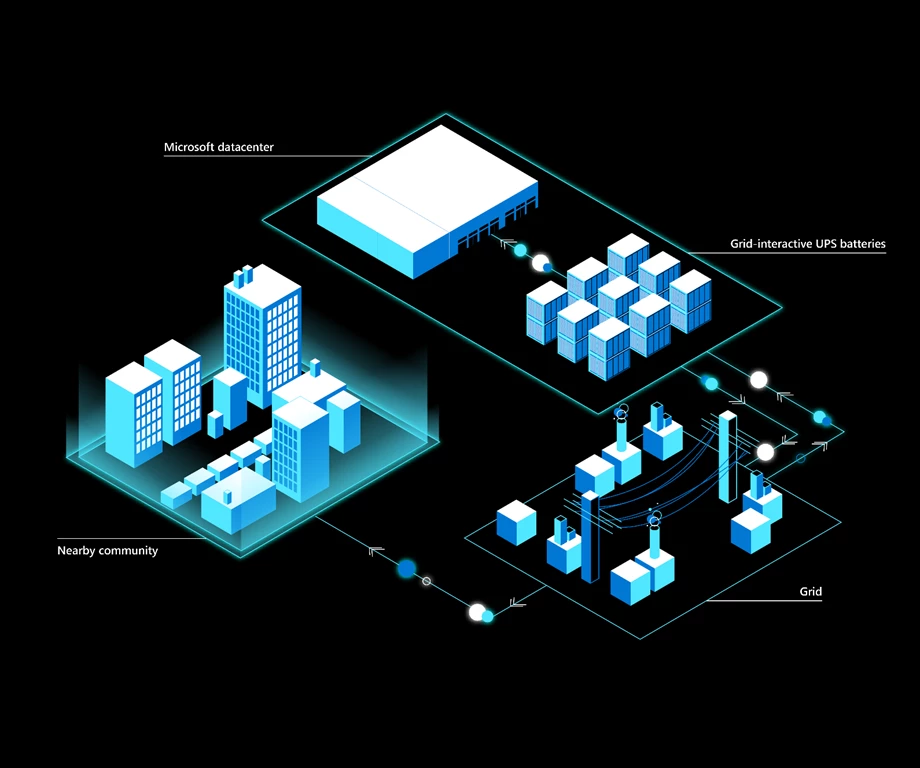
Grid-interactive Uninterruptible Power Supply (UPS) batteries help to balance supply and lower energy demand on the grid by directing microbursts of electricity to datacenters or the grid as needed. These batteries store energy at close to 90 percent efficiency and smooth out intermittency from renewables. As we continue to explore this technology further, we could potentially extend the duration of the batteries from a few minutes to several hours—potentially using these long-duration batteries as a replacement for traditional backup generators.
Learn more about powering sustainability goals.
Clean power backup
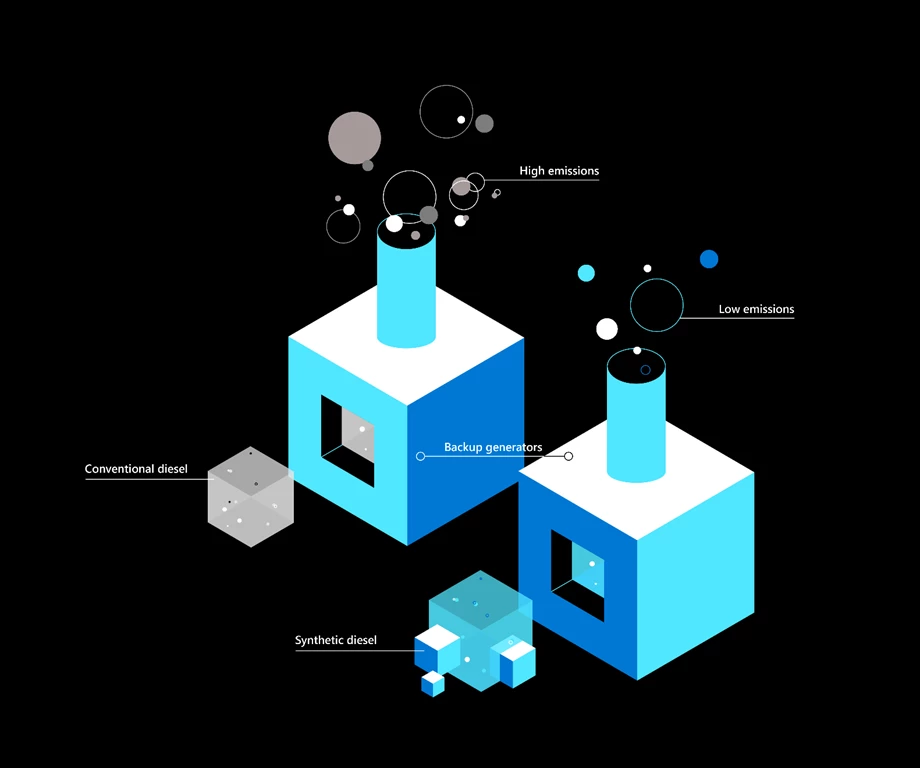
Clean power backup has the potential to easily replace conventional diesel with less harmful emissions. Synthetic diesel causes less harm to the environment and provides a much-needed bridge to using renewables. Synthetic diesel can even be used in diesel generators without any modifications, reducing emissions on the way to carbon negative.
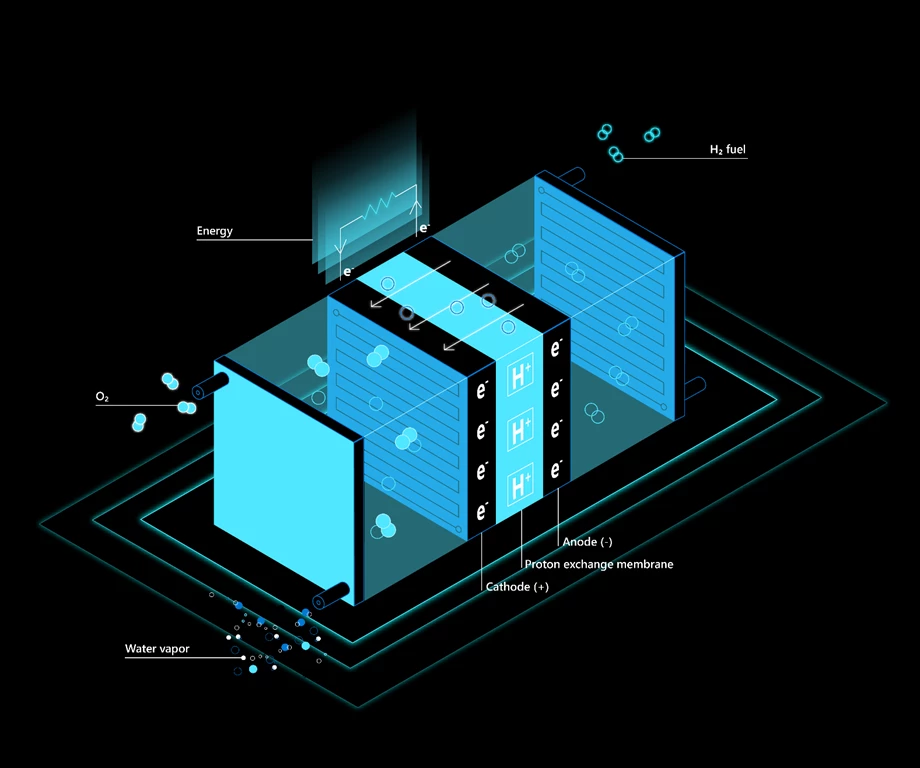
Hydrogen fuel cells provide another option for green backup energy to datacenters and are almost two times more efficient than combustion engines. The only output is food-grade steam that is then recaptured and reused.
Learn more about clean power generators.
Learn more about hydrogen innovations.
Power your sustainability goals
These small steps add up to something big. According to a 2018 study, workloads on Azure can be up to 98 percent more carbon-efficient than when running on traditional on-premises datacenters, and we’re making more investments in the future of sustainability. By moving your workloads to Azure, you’re ensuring that your workloads are powered by datacenters with reduced emissions and lowered energy consumption. We’re committed to not only reducing our own carbon footprint but also helping you reduce yours.
Work with us toward a carbon-negative future.
Visit Microsoft Sustainability.