Historically, data has been protected at rest through encryption in data stores, and in transit using network technologies, however as soon as that data is processed in the CPU of a computer it is decrypted and in plain text. New confidential computing technologies are game changing as they provide data protection, even when the code is running on the CPU, with secure hardware enclaves. Today, we are announcing that we are bringing confidential computing to Kubernetes workloads.
Confidential computing with Azure
Azure is the first major cloud platform to support confidential computing building on Intel® Software Guard Extensions (Intel SGX). Last year, we announced the preview of the DC-series of virtual machines that run on Intel® Xeon® processors and are confidential computing ready.
This confidential computing capability also provides an additional layer of protection even from potentially malicious insiders at a cloud provider, reduces the chances of data leaks and may help address some regulatory compliance needs.
Confidential computing enables several previously not possible use-cases. Customers in regulated industries can now collaborate together using sensitive partner or customers data to detect fraud scenarios without giving the other party visibility into that data. In another example customers can perform mission critical payment processing in secure enclaves.
How it works for Kubernetes
With confidential computing for Kubernetes, customers can now get this additional layer of data protection for their Kubernetes workloads with the code running on the CPU with secure hardware enclaves. Use the open enclave SDK for confidential computing in code. Create a Kubernetes cluster on hardware that supports Intel SGX, such as the DC-series virtual machines running Ubuntu 16.04 or Ubuntu 18.04 and install the confidential computing device plugin into those virtual machines. The device plugin (running as a DaemonSet) surfaces the usage of the Encrypted Page Cache (EPC) RAM as a schedulable resource for Kubernetes. Kubernetes users can then schedule pods and containers that use the Open Enclave SDK onto hardware which supports Trusted Execution Environments (TEE).
The following pod specification demonstrates how you would schedule a pod to have access to a TEE by defining a limit on the specific EPC memory that is advertised to the Kubernetes scheduler by the device plugin available in preview.
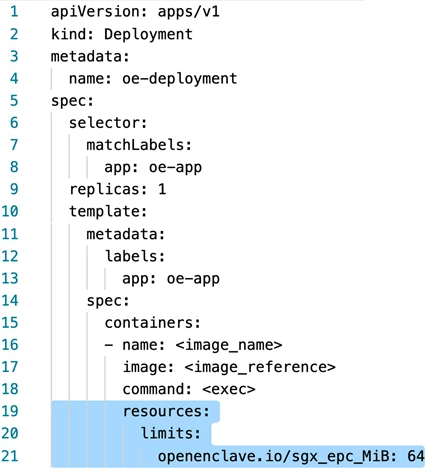
Now the pods in these clusters can run containers using secure enclaves and take advantage of confidential computing. There is no additional fee for running Kubernetes containers on top of the base DC-series cost.
The Open Enclave SDK was recently open sourced by Microsoft and made available to the Confidential Computing Consortium, under the Linux Foundation for standardization to create a single uniform API to use with a variety of hardware components and software runtimes across the industry landscape.
Try out confidential computing for Kubernetes with Azure today. Let us know what you think in our survey or on GitHub.