Skip to main content Explore View all products (200+) Microsoft Foundry Azure Copilot GitHub Copilot Azure Kubernetes Service (AKS) Azure Cosmos DB Azure Database for PostgreSQL Azure Arc Microsoft Fabric Linux virtual machines in Azure Foundry Models Foundry Agent Service Foundry IQ Foundry Tools Foundry Control Plane Observability in Foundry Control Plane Azure OpenAI in Foundry Models Azure Speech in Foundry Tools Azure Machine Learning View all databases Azure Cosmos DB Azure DocumentDB Azure SQL Azure Database for PostgreSQL Azure Managed Redis Microsoft Fabric Azure Databricks Linux virtual machines in Azure Windows Server on Azure Azure Functions Azure Virtual Machine Scale Sets Azure API Management Azure Container Apps Azure Kubernetes Service (AKS) Azure Kubernetes Fleet Manager Azure Container Registry Azure Red Hat OpenShift Azure Container Instances Azure Container Storage Azure Arc Azure Local Microsoft Defender for Cloud Azure Monitor Microsoft Sentinel Azure Migrate View all solutions (40+) Cloud solutions for small and medium businesses Cloud migration and modernization center Data analytics for AI Azure Databases AI apps and agents Microsoft Marketplace Microsoft Sovereign Cloud AI apps and agents Responsible AI with Azure AI Infrastructure Data analytics for AI Machine learning operations (MLOps) Low-code application development on Azure Integration Services Serverless computing DevOps Migration and modernization center .NET apps migration Databases on Azure Linux on Azure Oracle on Azure SAP on the Microsoft Cloud Adaptive cloud High-performance computing (HPC) Infrastructure as a service (IaaS) Resiliency Azure Essentials Frontier Accelerate for Azure FinOps on Azure Microsoft Marketplace Azure pricing overview Create an Azure account Free Azure services Flexible purchase options Pricing calculator FinOps on Azure Maximize ROI from AI Azure savings plans Azure reservations Azure Hybrid Benefit Virtual Machines Azure SQL Microsoft Foundry Microsoft Fabric Azure Kubernetes Service (AKS) Microsoft Defender for Cloud View more Software Development Companies Microsoft Marketplace Find a partner Resources for Azure partners Get started with Azure Customer stories Analyst reports, white papers, and e-books Videos Learn more about cloud computing Documentation Explore Azure portal Developer resources Quickstart templates Resources for startups Developer community Students Azure for partners Blog Events and Webinars Learn Support Contact Sales Get started with Azure Sign in

Since announcing the release of our Jobs feature during the Azure IoT Central general availability launch, we are excited to share how we are working to improve your device management workflow through additional jobs functionalities. Today, you are now able to copy an existing job you’ve created, save a job to continue working on later, stop or resume a running job, and download a job details report once your job has completed running. These additional Jobs functionalities make managing your devices at scale much easier.

In order to copy a job you’ve created, simply select a job from your main jobs list and select “Copy”. This will open a copy of the job where you can optionally update any part of the job configuration. If any changes have been made to your device set since its creation, your copied job will reflect those changes for you to edit.
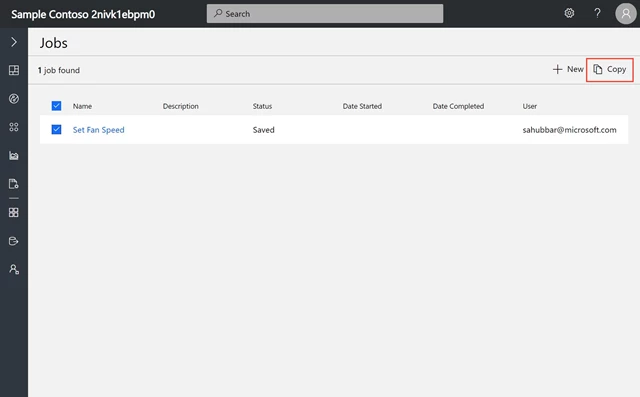
Copy an existing job created in Azure IoT Central

While you are editing your job, you now have the option to save the job to continue working on later by selecting “Save”. This saved job will appear on your main jobs list with a status of “Saved” and you can open it again at any time to continue editing.
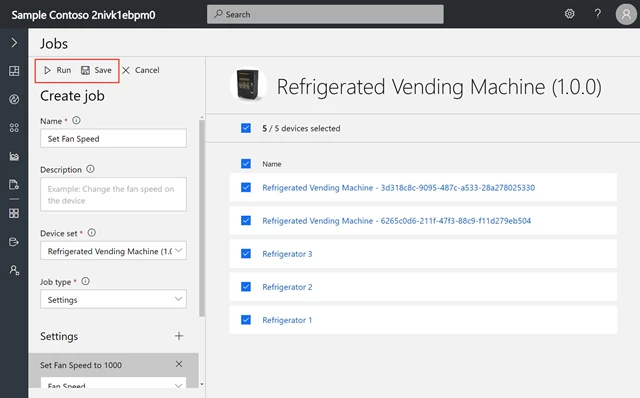
Save a job to continue working on later in Azure IoT Central

Once you have chosen to run your job, you can select the “Stop” button to stop the job from executing any further. You can open a stopped job from your list and select “Run” again at any time you’d like.

Whether your job has been stopped or is completed running, you can select “Download Device Report” near your device list in order to download a .csv file that lists the device ID, time the job was completed or stopped, status of the device, and the error message (if applicable). This can be used to troubleshoot devices or as a sorting tool.
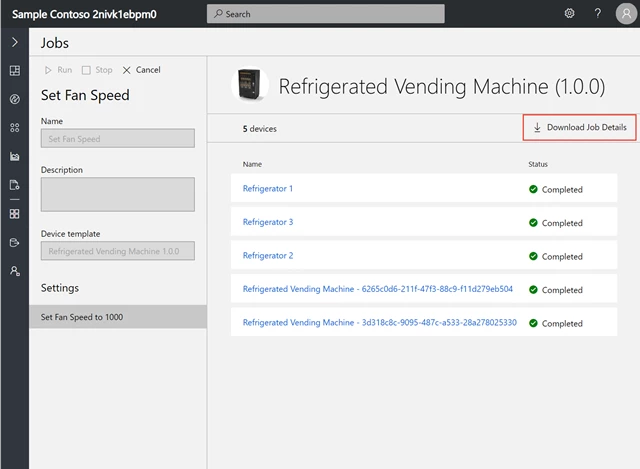
Download a job details report once your job has completed running

We are continually working on improving your device management experience to make managing devices at scale easier than ever. If you have any suggestions for the device management or Jobs functionalities you would find useful in your workflow, please leave us feedback.

Learn more about how to run a job in Azure IoT Central.

WE ARE MICROSOFT

Explore Microsoft Foundry

The future of AI starts here. Envision your next great AI app with the latest technologies. Get started with Azure.