For the recent IoT Signals report, commissioned by our Azure IoT team and conducted by Hypothesis Group, more than 3,000 decision makers at enterprise companies across the US, UK, Germany, France, China, and Japan who were currently involved in IoT, participated in a 20-minute online survey. Healthcare was one of the industries included in the research. Of the healthcare executives surveyed, 82 percent said they have at least one IoT project in either the learning, proof of concept, purchase, or use phase, with many reporting they have one or more projects currently in ‘use.’ The top use cases cited by the healthcare executives included:
- Tracking patient staff and inventory.
- Remote device monitoring and service.
- Remote health monitoring and assistance.
- Safety, security, and compliance.
- Facilities management.
Today we want to shed light on how two innovative companies are building upon this momentum and their own research to build IoT-enabled solutions with Azure IoT technologies that support medication management and adherence. These solutions address the safety, security, compliance, and inventory use cases highlighted in the report.
The Cost of Pharmaceutical Samples
According to a January 2019 article published by JAMA, Medical Marketing in the United States, 1997-2016, “Marketing to health care professionals by pharmaceutical companies accounted for [the] most promotional spending and increased from $15.6 billion to $20.3 billion, including $5.6 billion for prescriber detailing, $13.5 billion for free samples.”
Improving sample management
With billions of dollars on the line, one of our partners has developed an innovative way to ensure that pharmaceutical companies manage their samples in a cost-effective way. Using their own knowledge of the pharmaceutical industry and in-depth research, P360 (formerly Prescriber360), developed Swittons to 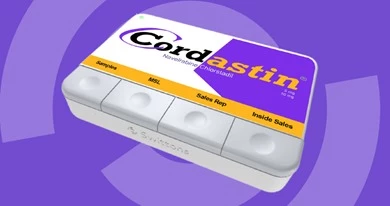 bridge the gap between pharmaceutical companies and physicians. Designed as a “virtual pharmaceutical representative,” this IoT-enabled device offers real-time, secure communications between the physician and the pharmaceutical company. With this single device, physicians can order a sample, request a visit from a medical science liaison (MSL) or sales rep, or connect with the pharmaceutical company’s inside sales rep (as shown in the graphic below).
Designed to be branded with each pharmaceutical company’s product, the device is a physician engagement tool that enables pharmaceutical companies to customize and manage a sales channel that remains fully authentic to their brand experience. Furthermore, it provides an audit trail to manage samples more economically, enabling pharmaceutical companies to penetrate market whitespace and extend efficient sampling in areas that were previously unreachable.
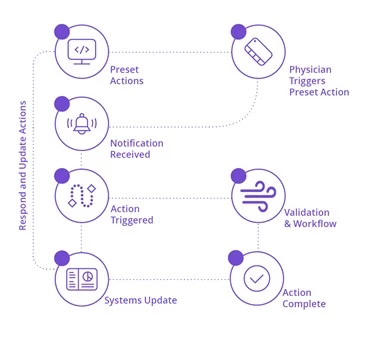 Built on our Azure IoT platform, Swittons takes advantage of the latest in cloud, security, telecommunications, and analytics technology. “We strategically selected Azure IoT as the foundation for our Swittons ‘Virtual Rep.’ Microsoft’s vision, investments and the breadth of Azure cloud were the key criteria for selection. Having a reliable IoT platform along with world-class data and security infrastructure in Azure made the choice very easy,” commented Anupam Nandwana, CEO, P360, parent company of Swittons.
On the other end of the pharmaceutical supply chain is another scenario that dramatically affects the efficacy of pharmaceutical products—medication adherence.
Ensuring medication adherence
In the US today, 25 to 50 percent of all adults fail to take their prescribed medication on time, contributing to poor health outcomes, over-utilization of healthcare services and significant cost increases.
The causes of low levels of medication adherence are multi-faceted and include factors like carelessness, fear, supply, cost, and lack of understanding or information, with forgetfulness as the primary cause.
Furthermore, as cited in an editorial from BMJ Quality and Safety, “medication adherence thus constitutes one of the ‘big hairy problems’ or ‘big hairy audacious goals’ of healthcare. As well as affecting patients’ long-term outcomes, non-adherence can increase healthcare costs through consumption of medicines below the threshold of adherence required for clinical benefit, as well as contributing to healthcare resource use such as hospital admissions.
In response to this, the global market for medication adherence (hardware-based automation and adherence systems and software-based applications) was worth nearly $1.7 billion in 2016. The market is expected to reach more than $3.9 billion by 2021, increasing at a CAGR of 18.0 percent from 2016 through 2021. This steep increase is fueled by burgeoning demand for advanced medication adherence systems and a growing number of people worldwide with chronic diseases.
Personal experience leads to action
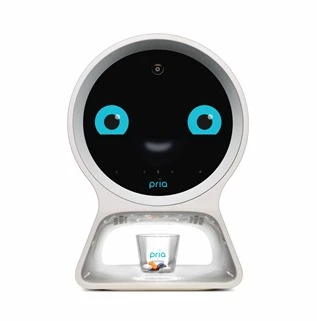
Emanuele Musini knows all too well the implications of not taking medications properly. In fact, it was the pain of losing his father in 2005 from a chronic condition and a lack of adhering to the prescribed medication regimen that became the catalyst for Emanuele to start studying the issue in-depth, searching for a solution. In 2015, Emanuele, along with his multidisciplinary team of doctors, entrepreneurs, engineers, and user-experience professionals, created Pillo Health, a health platform centered around a robot and digital assistant designed to prevent other family members from enduring what Emanuele and his family experienced. Since their founding, they’ve partnered with leading manufacturers, such as Stanley Black & Decker, to bring in-home medication management solutions to market with solutions like Pria, a winner of the 2019 CES Innovation Awards.”
The Pillo Health team built their medication adherence solution on Microsoft Azure Cloud Services using Azure Cognitive Services for voice technology and facial recognition, and services from the Azure IoT platform, including IoT Hub. The result is a voice-first, personalized, cloud-enabled, medication assistant that can help people maintain their medication regimen through social connectivity and delivery of important medical information at home. In a 4-week study conducted with AARP in 2018 for diabetic patients who were prescribed Metformin, Pillo delivered an average medication adherence rate of more than 87 percent—a meaningful 20 to 30 percent improvement from conventional reported standards.
Antonello Scalmato, Director of Cloud Services at Pillo Health noted, “We selected Microsoft Azure because it provided the best infrastructure for PaaS applications, allowed us to speed up the development of our complex product and avoided the overhead of machine and security management for traditional web API infrastructure. Moreover, IoT Hub provides a channel for secure communications and notifications to our users, and also enables simple device management that protects our product, from the factory into the users’ homes.”

Learn More
- To learn more about how Microsoft and our partners are transforming healthcare, visit or healthcare industry webpage. To get started building your IoT solutions, explore our portfolio for Azure IoT.
- To learn more about Pillo Health, check out this video.