This post series provides the latest updates and news for Visual Studio Team Services and is a great way for Azure users to keep up-to-date with new features being released every three weeks. Visual Studio Team Services offers the best DevOps tooling to create an efficient continuous integration and release pipeline to Azure. With the rapidly expanding list of features in Team Services, teams can start to leverage it more efficiently for all areas of their Azure workflow, for apps written in any language and deployed to any OS.
Delivery Plans
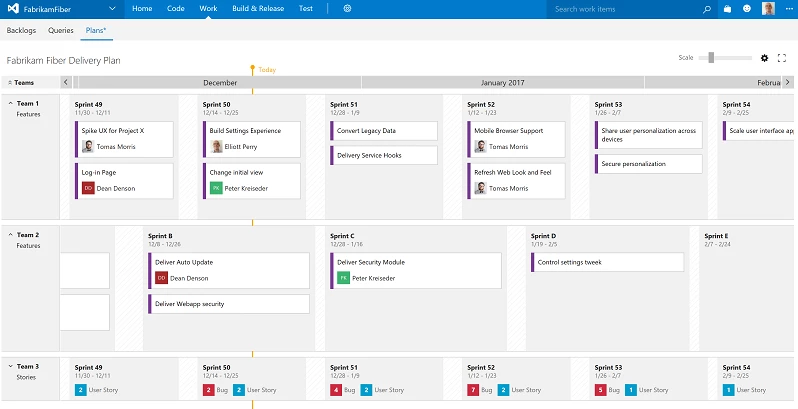
We are excited to announce the preview of Delivery Plans! Delivery Plans help you drive alignment across teams by overlaying several backlogs onto your delivery schedule (iterations). Tailor plans to include the backlogs, teams, and work items you want to view. 100% interactive plans allow you to make adjustments as you go. Head over to the marketplace to install the new Delivery Plans extension. For more information, see our blog post.
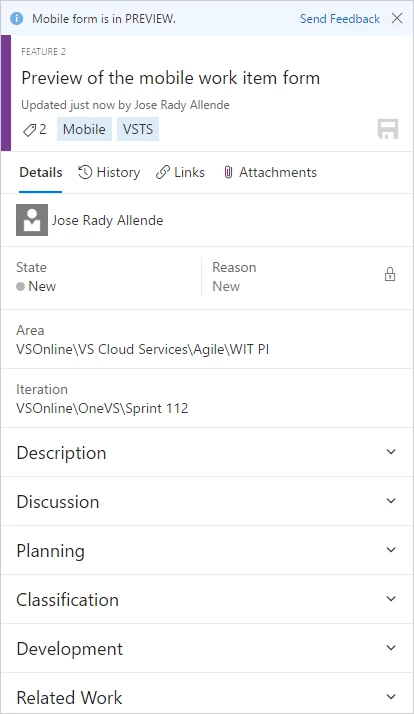
Mobile Work Item Form Preview
We’re releasing a preview of our mobile-friendly work item form for Visual Studio Team Services! This mobile work item form brings an optimized look and feel that’s both modern and useful. See our blog post for more information.
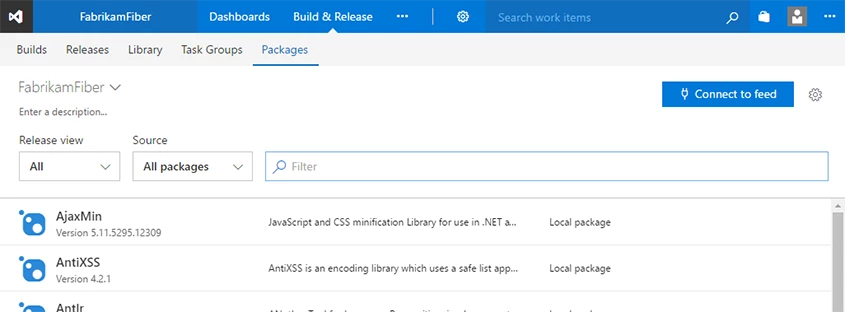
Updated Package Management experience
We’ve updated the Package Management user experience to make it faster, address common user-reported issues, and make room for upcoming package lifecycle features. Learn more about the update, or turn it on using the toggle in the Packages hub.
Release Views in Package Management
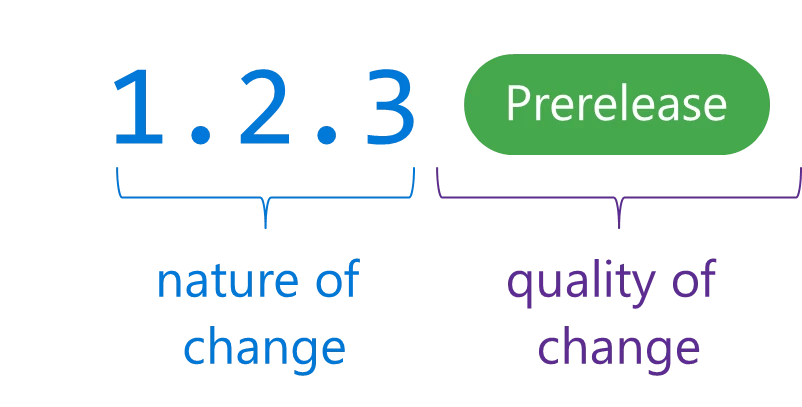
We’ve added a new feature to Package Management called release views. Release views represent a subset of package-versions in your feed that you’ve promoted into that release view. Creating a release view and sharing it with your package’s consumers enables you to control which versions they take a dependency on. This is particularly useful in continuous integration scenarios where you’re frequently publishing updated package versions, but may not want to announce or support each published version.
By default, every feed has two release views: Prerelease and Release.
To promote a package-version into the release view:
- Select the package
- Click the Promote button
- Select the view to promote to and select Promote
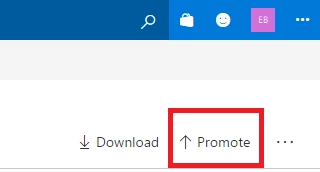
Check out the docs to get started.
Build editor preview
We’re offering a preview of a new design aimed at making it easier for you to create and edit build definitions. Click the switch to give it a try.
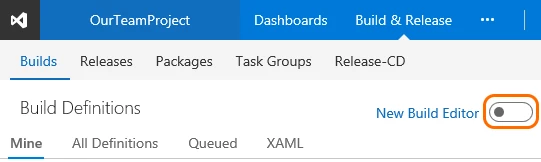
If you change your mind, you can toggle it off. However, eventually after we feel it’s ready for prime time, the preview editor will replace the current editor. So please give it a try and give us feedback.
The new editor has all the capabilities of the old editor along with several new capabilities and enhancements to existing features:
Search for a template
Search for the template you want and then apply it, or start with an empty process.
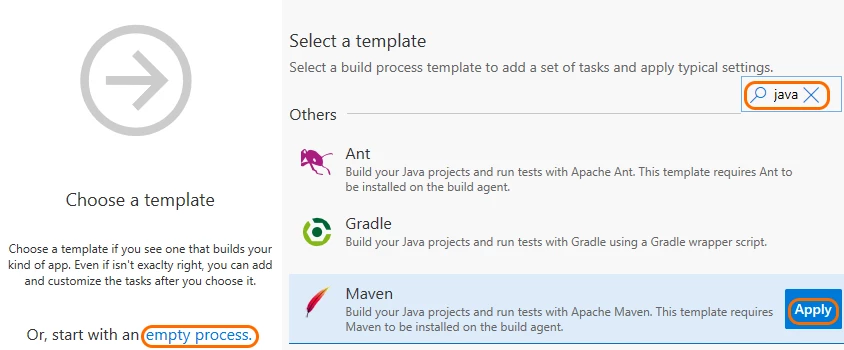
Quickly find and add a task right where you want it
Search for the task you want to use, and then after you’ve found it, you can add it after the currently selected task on the left side, or drag and drop it where you want it to go.
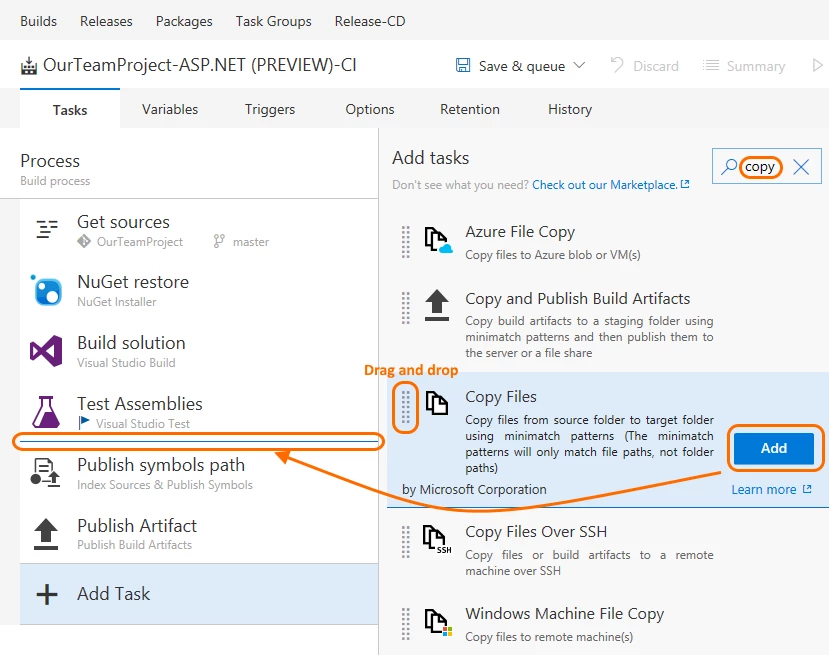
You can also drag and drop a task to move it, or drag and drop while holding the Ctrl key to copy the task.
Use process parameters to pass key arguments to your tasks
You can now use process parameters to make it easier for users of your build definition or template to specify the most important bits of data without having to go deep into your tasks.
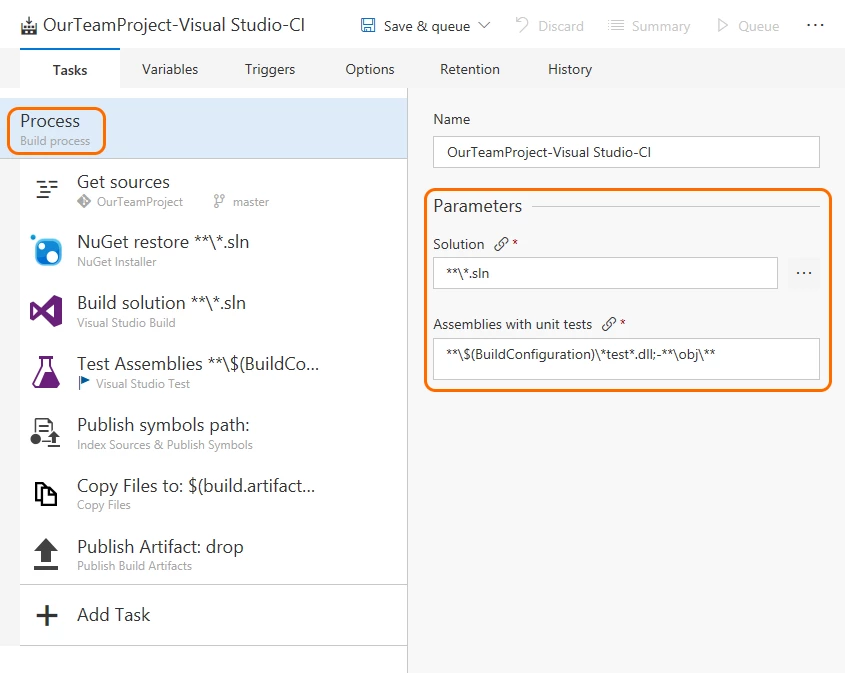
For more details, see the post about the preview of our new build editor.
Pull Request: Improved support for Team Notifications
Working with pull requests that are assigned to teams is getting a lot easier. When a PR is created or updated, email alerts will now be sent to all members of all teams that are assigned to the PR.
This feature is in preview and requires an account admin to enable it from the Preview features panel (available under the profile menu).
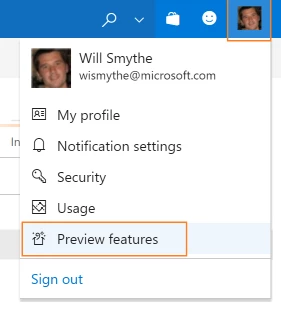
After selecting for this account, switch on the Team expansion for notifications feature.
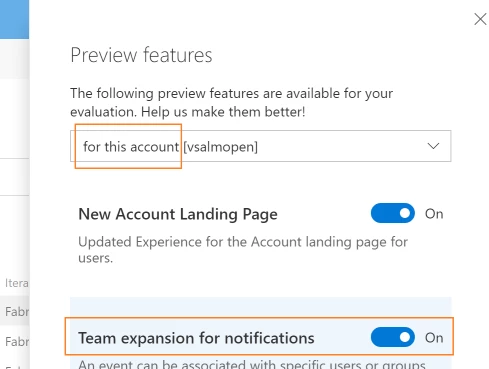
In a future release, we’ll be adding support for PRs assigned to Azure Active Directory (AAD) groups and teams containing AAD groups.
Pull Request: Actionable comments
In a PR with more than a few comments, it can be hard to keep track of all of the conversations. To help users better manage comments, we’ve simplified the process of resolving items that have been addressed with a number of enhancements:
- In the header for every PR, you’ll now see a count of the comments that have been resolved.

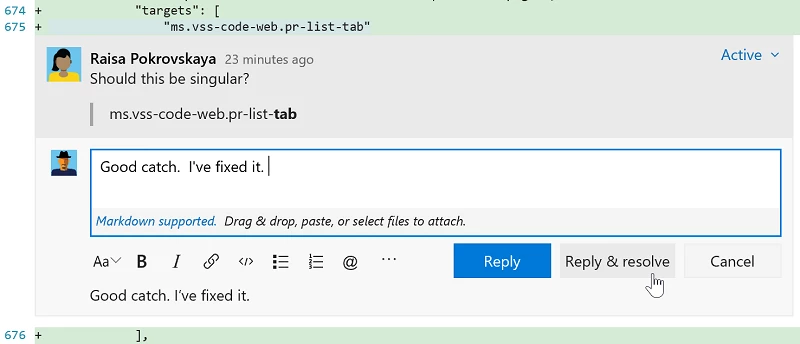
- When a comment has been addressed, you can resolve it with a single click.
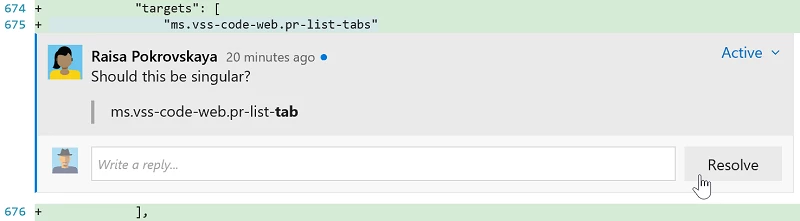
- If you have comments to add while you’re resolving, you can reply and resolve in a single gesture.
Automatic Github Pull Request Builds
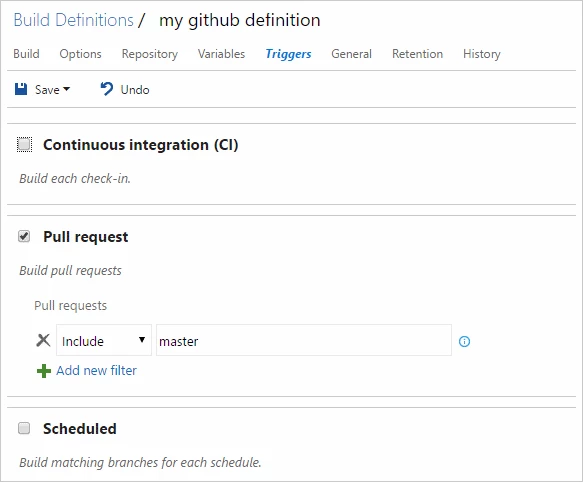
For a while we’ve provided CI builds from your GitHub repo. Now we’re adding a new trigger so you can build your GitHub pull requests automatically. After the build is done, we report back with a comment in your GitHub pull request.
For security, we only build pull requests when both the source and target are within the same repo. We don’t build pull requests from a forked repo.
Extension of the Month: Azure Build and Release Tasks
This extension has really been trending over the last month and it’s not hard to see why. If you’re building and publishing your applications with Microsoft Azure you’ll definitely want to give this 4.5 star rated extension a look. It is a small gold mine of tasks to use in your Build and Release definitions.
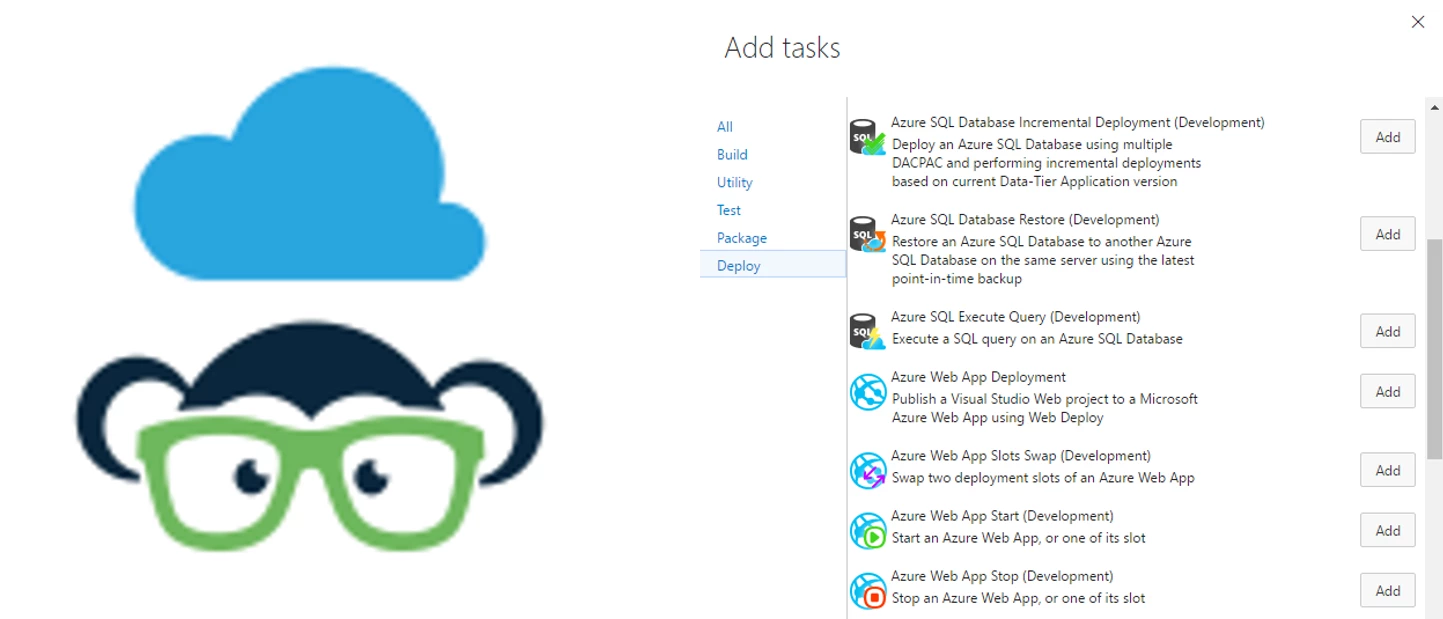
- Azure Web App Slots Swap: Swap two deployment slots of an Azure Web App
- Azure Web App Start: Start an Azure Web App, or one of its slot
- Azure Web App Stop: Stop an Azure Web App, or one of its slot
- Azure SQL Execute Query: Execute a SQL query on an Azure SQL Database
- Azure SQL Database Restore: Restore an Azure SQL Database to another Azure SQL Database on the same server using the latest point-in-time backup
- Azure SQL Database Incremental Deployment: Deploy an Azure SQL Database using multiple DACPAC and performing incremental deployments based on current Data-Tier Application version
- AzCopy: Copy blobs across Azure Storage accounts using AzCopy
Go to the Visual Studio Team Services Marketplace and install the extension.
There are many more updates, so I recommend taking a look at the full list of new features in the release notes for January 25th and February 15th.
Happy coding!