Skip to main content Get to know Azure Microsoft as Customer Zero View all products (200+) Microsoft Foundry Azure Copilot GitHub Copilot Azure Kubernetes Service (AKS) Azure Cosmos DB Azure Database for PostgreSQL Azure Arc Microsoft Fabric Linux virtual machines in Azure Foundry Models Foundry Agent Service Foundry IQ Foundry Tools Foundry Control Plane Observability in Foundry Control Plane Azure OpenAI in Foundry Models Azure Speech in Foundry Tools Azure Machine Learning View all databases Azure Cosmos DB Azure DocumentDB Azure SQL Azure Database for PostgreSQL Azure Managed Redis Microsoft Fabric Azure Databricks Linux virtual machines in Azure Windows Server on Azure Azure Functions Azure Virtual Machine Scale Sets Azure API Management Azure Container Apps Azure Kubernetes Service (AKS) Azure Kubernetes Fleet Manager Azure Container Registry Azure Red Hat OpenShift Azure Container Instances Azure Container Storage Azure Arc Azure Local Microsoft Defender for Cloud Azure Monitor Microsoft Sentinel Azure Migrate View all solutions (40+) Cloud solutions for small and medium businesses Cloud migration and modernization center Data analytics for AI Azure Databases AI apps and agents Microsoft Marketplace Microsoft Sovereign Cloud AI apps and agents Responsible AI with Azure AI Infrastructure Data analytics for AI Machine learning operations (MLOps) Low-code application development on Azure Integration Services Serverless computing DevOps Migration and modernization center .NET apps migration Databases on Azure Linux on Azure Oracle on Azure SAP on the Microsoft Cloud Adaptive cloud High-performance computing (HPC) Infrastructure as a service (IaaS) Resiliency Azure Essentials Frontier Accelerate for Azure FinOps on Azure Microsoft Marketplace Azure pricing overview Create an Azure account Free Azure services Flexible purchase options Pricing calculator FinOps on Azure Maximize ROI from AI Azure savings plans Azure reservations Azure Hybrid Benefit Virtual Machines Azure SQL Microsoft Foundry Microsoft Fabric Azure Kubernetes Service (AKS) Microsoft Defender for Cloud View more Software Development Companies Microsoft Marketplace Find a partner Resources for Azure partners Get started with Azure Customer stories Analyst reports, white papers, and e-books Videos Learn more about cloud computing Documentation Explore Azure portal Developer resources Quickstart templates Resources for startups Developer community Students Azure for partners Blog Events and Webinars Learn Support Contact Sales Get started with Azure Sign in

Quantum machine learning is a promising area of interest to those in the quantum community and those curious about how quantum computing will impact complex systems. Machine learning on classical computers is revolutionizing the world of science and business. However, the high computational cost of training the models hinders the development and scope of the field. Because of this, researchers are looking for new ways to train models with quantum computers that can provide some advantage over classical machine learning algorithms.

As part of the February Quantum Development Kit (QDK) update, we are releasing our new Quantum Machine Learning (QML) library. We’re very excited not only to bring a new library to the QDK, but also one that was developed in collaboration with Microsoft’s quantum research team to build knowledge in the rapidly evolving quantum machine learning space.

The QML library provides the necessary tools to implement the circuit-centric quantum classifier, a new hybrid quantum-classical algorithm to solve supervised classification problems. We are also releasing a sample to help demonstrate how to use the QML library to classify data using the circuit-centric quantum classifier. For more information on how to get started with the QML library, head over to our documentation page.

Once you’re acquainted with how to classify data using the QML library and sample, you can start building your own classifiers in Q#. We encourage you to explore QML – why not try building your own model and compare it against the sample? You can find information on how to get started building your own classifiers, loading your own data sets, and validating your models in our documentation.
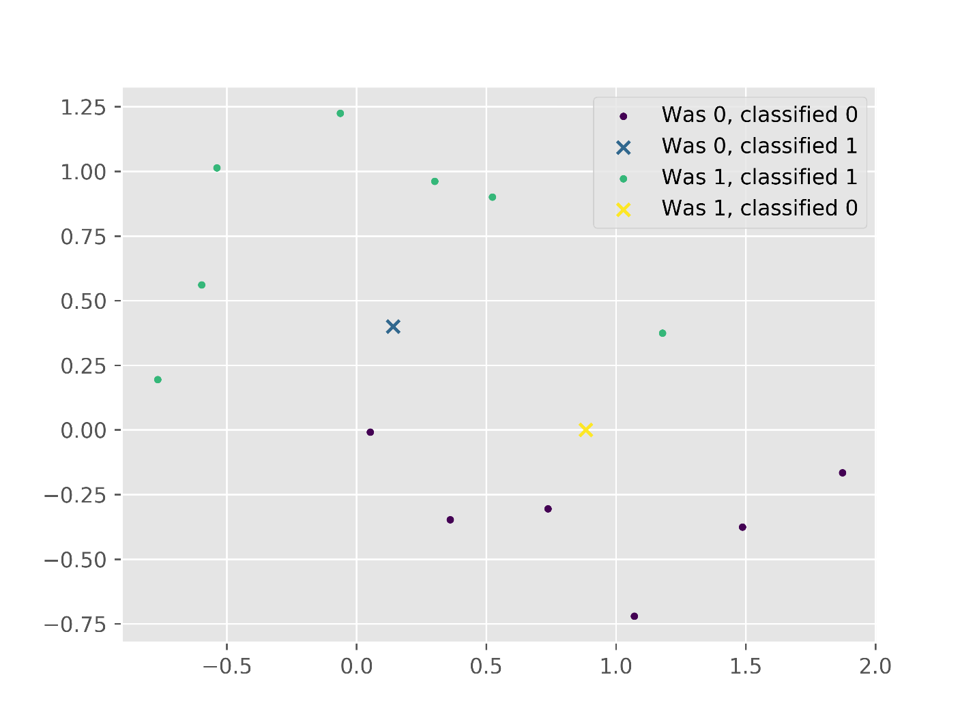
Result graph of classification from the new half-moon sample

The QML library is open source along with the rest of the QDK. We always look forward to new community contributions! If you’re interested in contributing to the Quantum Machine Learning library, our documentation, or any part of the QDK, check out our contribution guide.

To learn more about the research behind the circuit-centric quantum classifier, check out the research paper here.

For more information about what’s new in this month’s QDK release, head over to the Quantum Development Kit release notes. To learn more about classical machine learning in Azure, be sure to take a look at Azure Machine Learning.