Skip to main content Explore View all products (200+) Microsoft Foundry Azure Copilot GitHub Copilot Azure Kubernetes Service (AKS) Azure Cosmos DB Azure Database for PostgreSQL Azure Arc Microsoft Fabric Linux virtual machines in Azure Foundry Models Foundry Agent Service Foundry IQ Foundry Tools Foundry Control Plane Observability in Foundry Control Plane Azure OpenAI in Foundry Models Azure Speech in Foundry Tools Azure Machine Learning View all databases Azure Cosmos DB Azure DocumentDB Azure SQL Azure Database for PostgreSQL Azure Managed Redis Microsoft Fabric Azure Databricks Linux virtual machines in Azure Windows Server on Azure Azure Functions Azure Virtual Machine Scale Sets Azure API Management Azure Container Apps Azure Kubernetes Service (AKS) Azure Kubernetes Fleet Manager Azure Container Registry Azure Red Hat OpenShift Azure Container Instances Azure Container Storage Azure Arc Azure Local Microsoft Defender for Cloud Azure Monitor Microsoft Sentinel Azure Migrate View all solutions (40+) Cloud solutions for small and medium businesses Cloud migration and modernization center Data analytics for AI Azure Databases AI apps and agents Microsoft Marketplace Microsoft Sovereign Cloud AI apps and agents Responsible AI with Azure AI Infrastructure Data analytics for AI Machine learning operations (MLOps) Low-code application development on Azure Integration Services Serverless computing DevOps Migration and modernization center .NET apps migration Databases on Azure Linux on Azure Oracle on Azure SAP on the Microsoft Cloud Adaptive cloud High-performance computing (HPC) Infrastructure as a service (IaaS) Resiliency Azure Essentials Frontier Accelerate for Azure FinOps on Azure Microsoft Marketplace Azure pricing overview Create an Azure account Free Azure services Flexible purchase options Pricing calculator FinOps on Azure Maximize ROI from AI Azure savings plans Azure reservations Azure Hybrid Benefit Virtual Machines Azure SQL Microsoft Foundry Microsoft Fabric Azure Kubernetes Service (AKS) Microsoft Defender for Cloud View more Software Development Companies Microsoft Marketplace Find a partner Resources for Azure partners Get started with Azure Customer stories Analyst reports, white papers, and e-books Videos Learn more about cloud computing Documentation Explore Azure portal Developer resources Quickstart templates Resources for startups Developer community Students Azure for partners Blog Events and Webinars Learn Support Contact Sales Get started with Azure Sign in

Last year, we shared the release of a great developer experience through Ansible in Azure Cloud Shell, and the Ansible extension for Visual Studio Code. Today we’re excited to be expanding our support of Ansible on Azure with a fully configured Azure Marketplace Ansible solution.

As you know from interacting with Microsoft Azure services, we delivered a suite of Ansible cloud modules that help you automate provisioning and orchestrate your infrastructure on Azure. Using Ansible cloud modules for Azure requires authenticating with the Azure API. This Ansible solution enables teams to use Ansible with managed identities for Azure resources, formerly known as Managed Service Identity (MSI). This means you can use the identity to authenticate to any service that supports Azure Active Directory authentication, without any credentials in your code or environment variables.

Furthermore, this solution template also permits you to select the Ansible releases later than version 2.5.0, such as 2.7.5, according to your needs. By default, the latest release version is used. It also enables Azure CLI. These features allow you to use a consistently hosted instance of Ansible for cloud configuration & management and production scenarios.
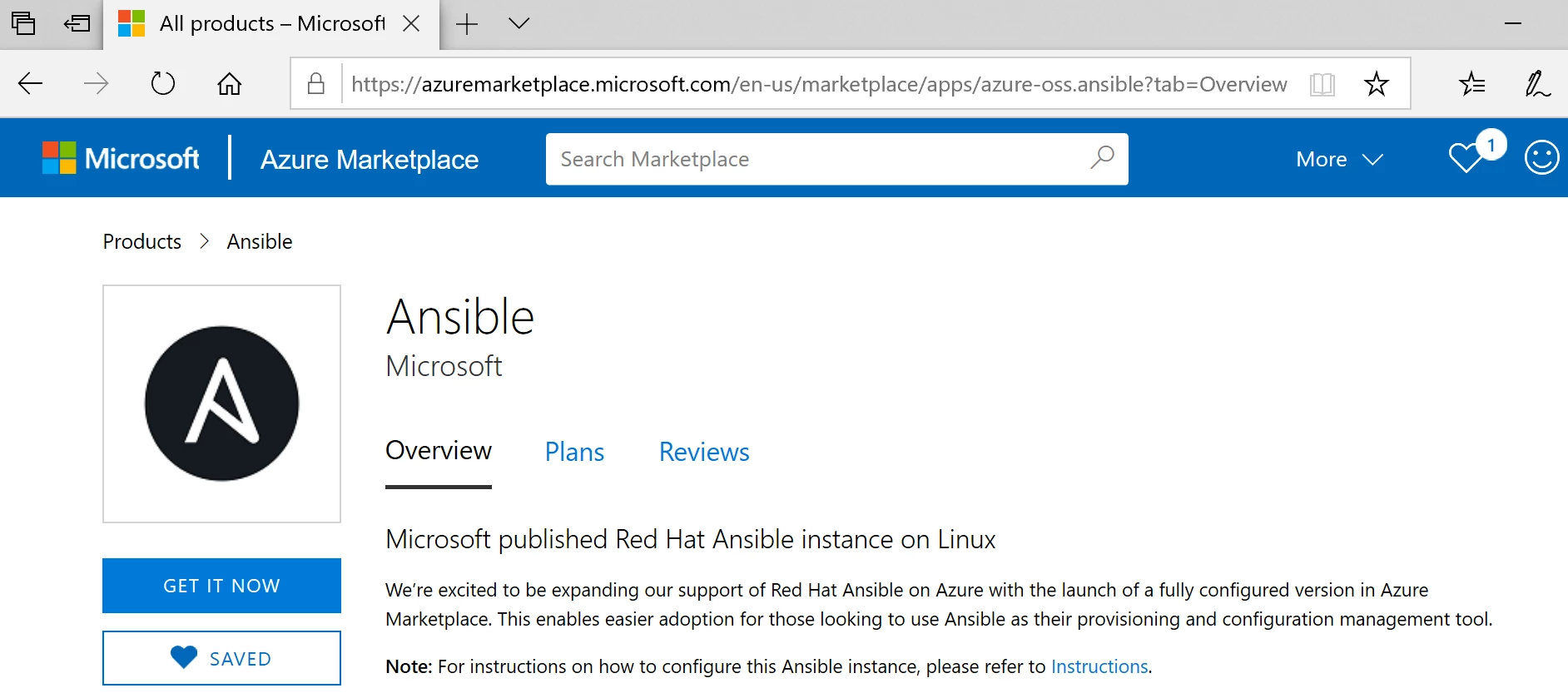
Screenshot of Ansible Marketplace offering

You can search Ansible in your Azure portal or go to Azure Marketplace and select Get it now to create a hosted instance of Ansible. You also can find a three minute QuickStart that provides a step-by-step walkthrough.
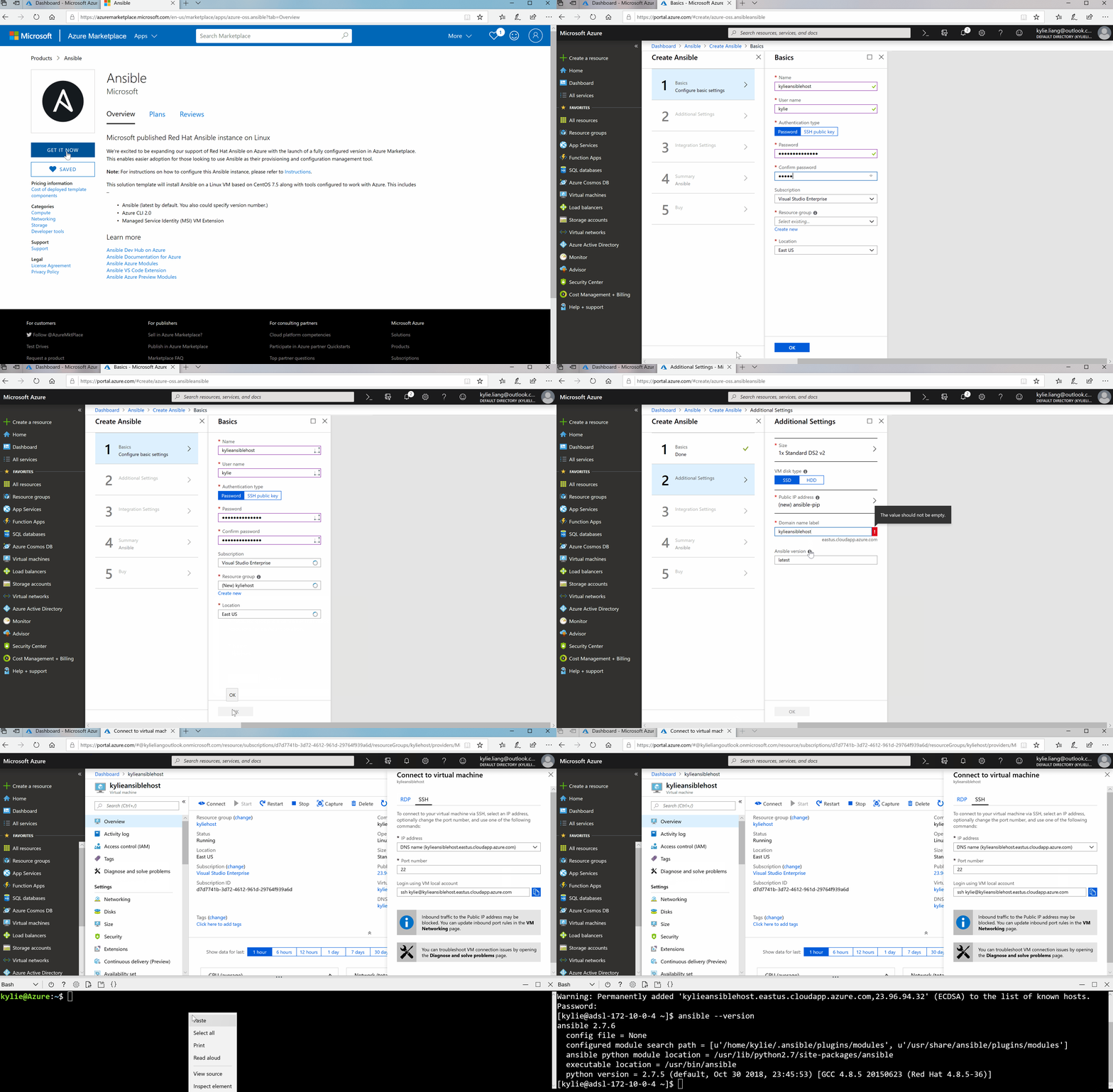
Create Ansible solution gif

Ansible solution and Ansible extension – Develop locally, run in Azure

It’s common to write Ansible playbooks in a local environment, but run them in a fully configured Ansible host. We added secure shell support for the Ansible extension to permit Ansible developers to copy Ansible playbooks or the whole workspace, and run them in the remote Ansible host. Now Ansible developers can use Ansible extension in  Visual Studio Code, a free code editor which runs on macOS, Linux, and Windows operating systems to develop Ansible playbooks in any platform and run them in a fully configured Ansible host created by Ansible solution.
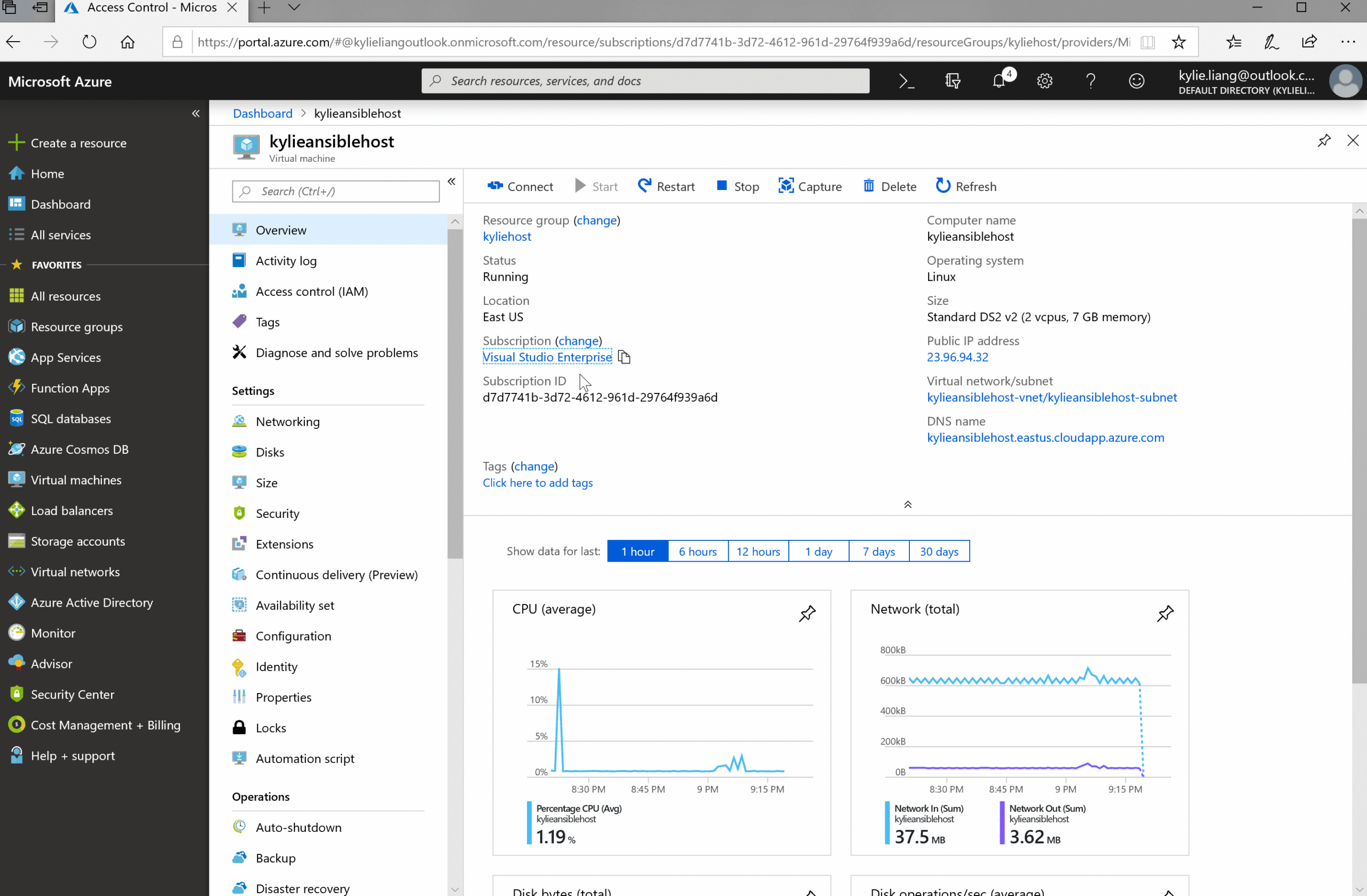
Ansible extension gif

You need to grant the virtual machine access to the subscription used to connect to the Ansible host from your local environment.
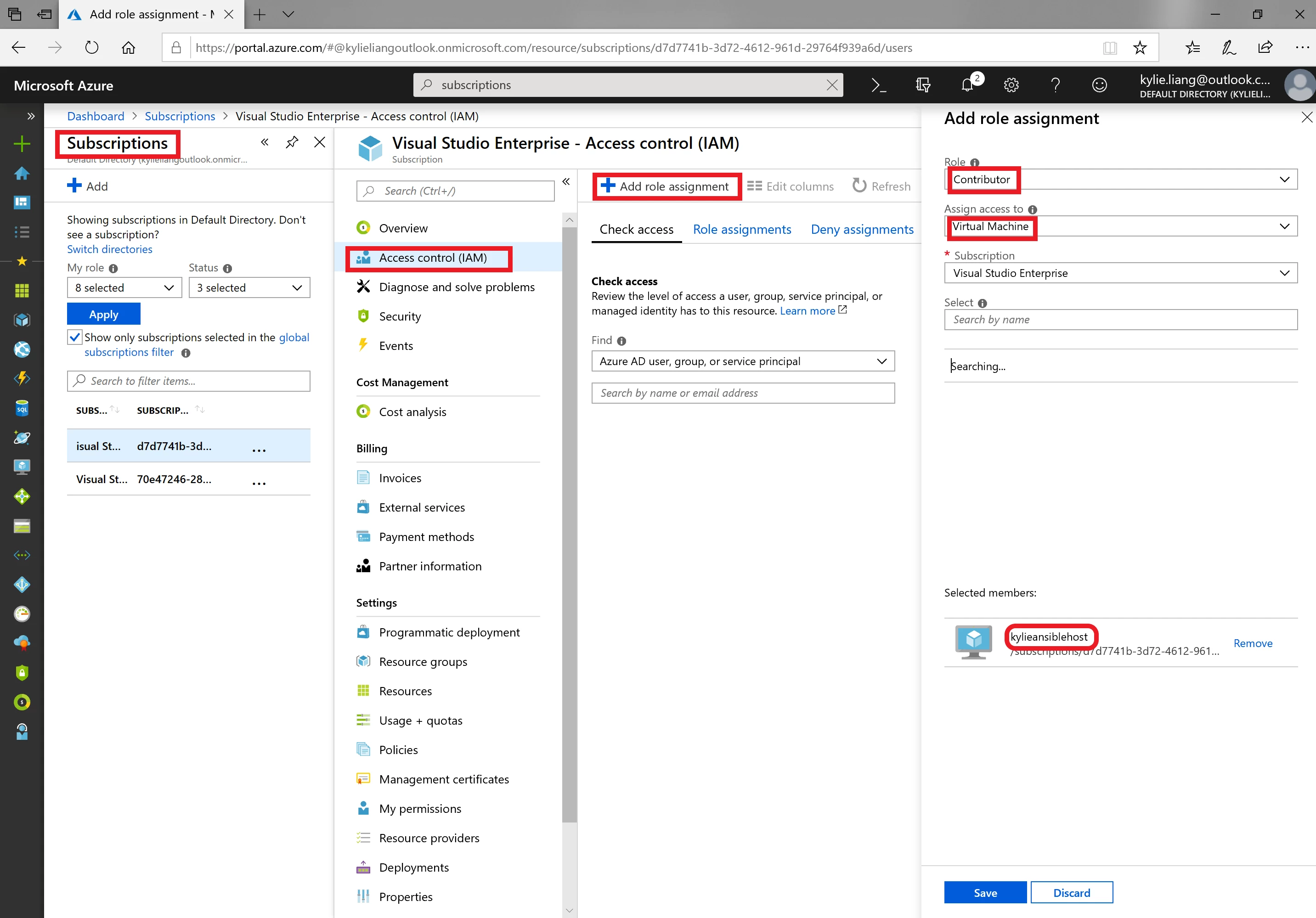
Screenshot of granting virtual machines access to subscriptions in the Azure portal

We are excited about the improving developer experience we are creating for Ansible on Azure. Go ahead and try the Ansible solution. For more information visit the Ansible on Azure developer hub.