This post was co-authored by Omar Aftab, Partner Director of Program Management, Power Virtual Agents.
Conversational artificial intelligence (AI) is enabling organizations to improve their business in areas like customer service and employee engagement by automating some of the most commonly requested services, which frees up employees to take on more value-adding activities. While the benefits of conversational AI are well established, determining who in an organization should build these solutions is not always clear.
As is true of many applications, conversational AI solutions (or bots) can be built using software-as-a-service (SaaS) or platform-as-a-service (PaaS) offerings. Consequently, organizations are forced to decide between empowering business users who are closest to the business problems or empowering developers with coding experience to have full control over how these solutions are built, without many options to bridge the gap and allow for collaboration between the two. However, with the integration of Bot Framework Skills into Microsoft Power Virtual Agents (a graphical interface offering for business users creating bots, now generally available), Microsoft uniquely empowers both business users and developers to collaborate seamlessly in building conversational AI solutions.
In the bot building journey, bot builders across the organization should not work in siloes. If a business user is building a bot but wants to add a nuanced scenario, they should be able to collaborate with a developer who can customize the bot further. Similarly, developers building a bot can also leverage bots that have been built by business users as a skill.
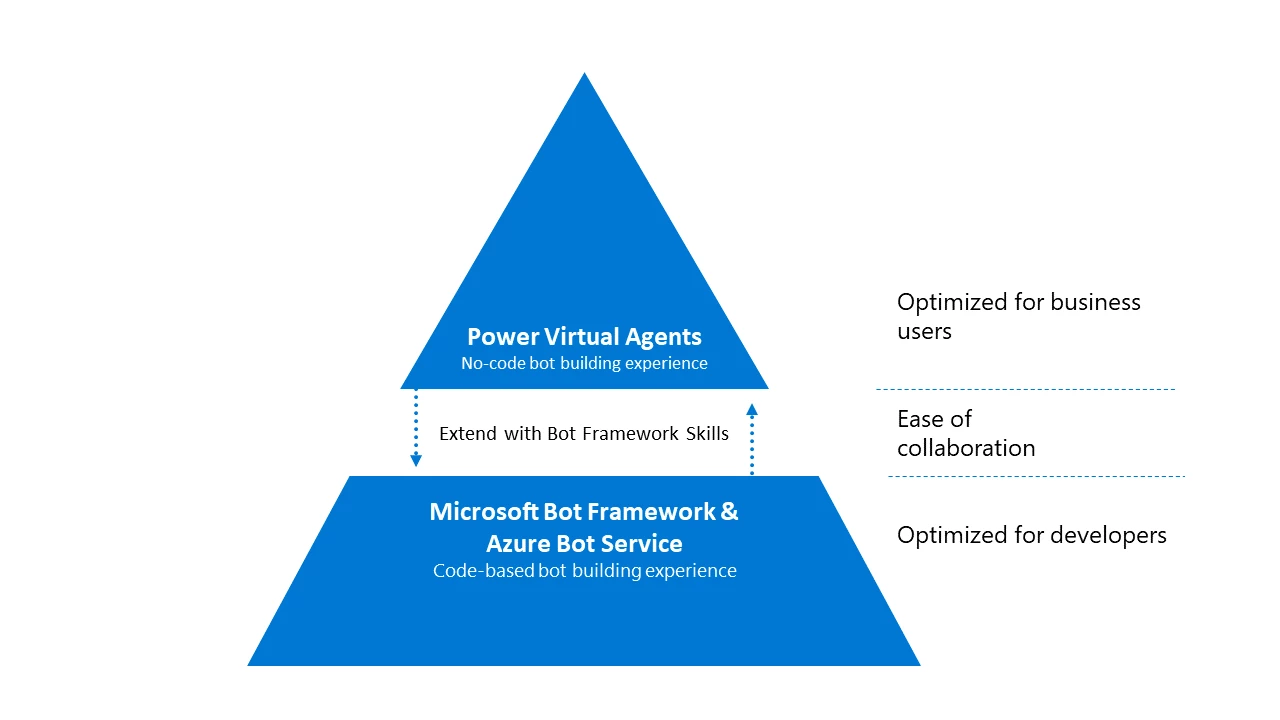
Microsoft offers an end-to-end, no-cliffs bot building experience with Power Virtual Agents and Bot Framework.
- Power Virtual Agents provides a no-code experience for bot development – ideal for business users and domain experts to easily build a bot, without having to worry about the technical aspects of bot development.
- Bot Framework is an open-source SDK and tools purpose-built for bot development – ideal for developers who want to build a bot using a code experience and want full control of technical aspects of bot development, including language model ownership, and visual design. Additionally, Azure Bot Service allows developers to host and deploy their bots to popular channels like Teams and other messaging platforms where users will interact with the bot.
- Bot Framework Skills allows you to extend your bot – no matter your starting point. With Bot Framework Skills, Power Virtual Agents users have a no-cliff bot building experience because they can collaborate with Bot Framework developers to extend their bots with custom capabilities. Equally important, Bot Framework developers can extend their bots as a skill and allow subject matter experts to update bot conversations.
For example, suppose an organization is creating a travel bot using Power Virtual Agents. The business users build out the dialogs with a UI-based experience that allows the bot to handle customers’ intents, such as Check miles and rewards, Check flight status, Update account information, and Book a flight.
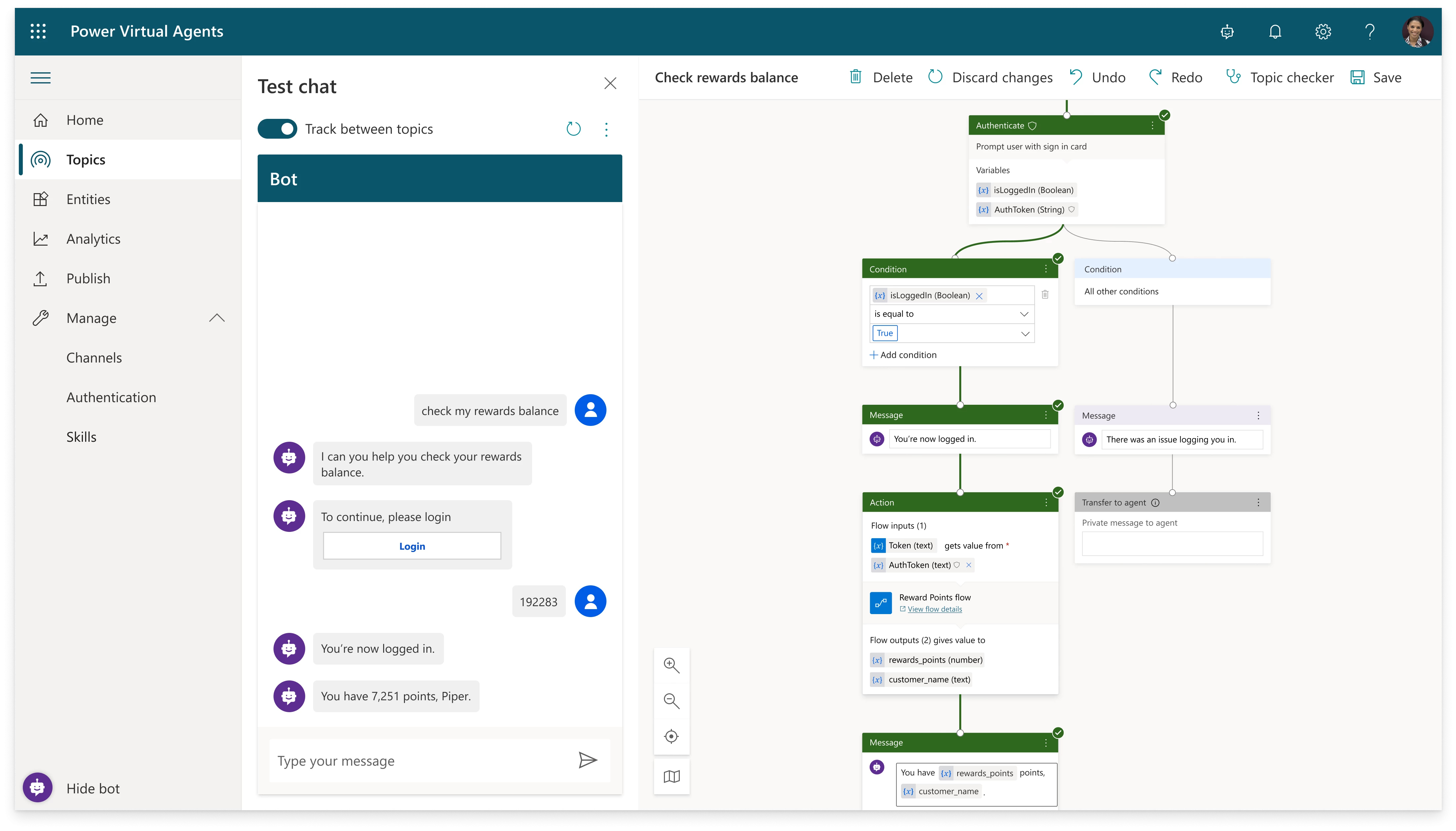
However, what if someone in the organization has already built a Book a Flight skill with custom language models using Bot Framework and Language Understanding service as illustrated below?
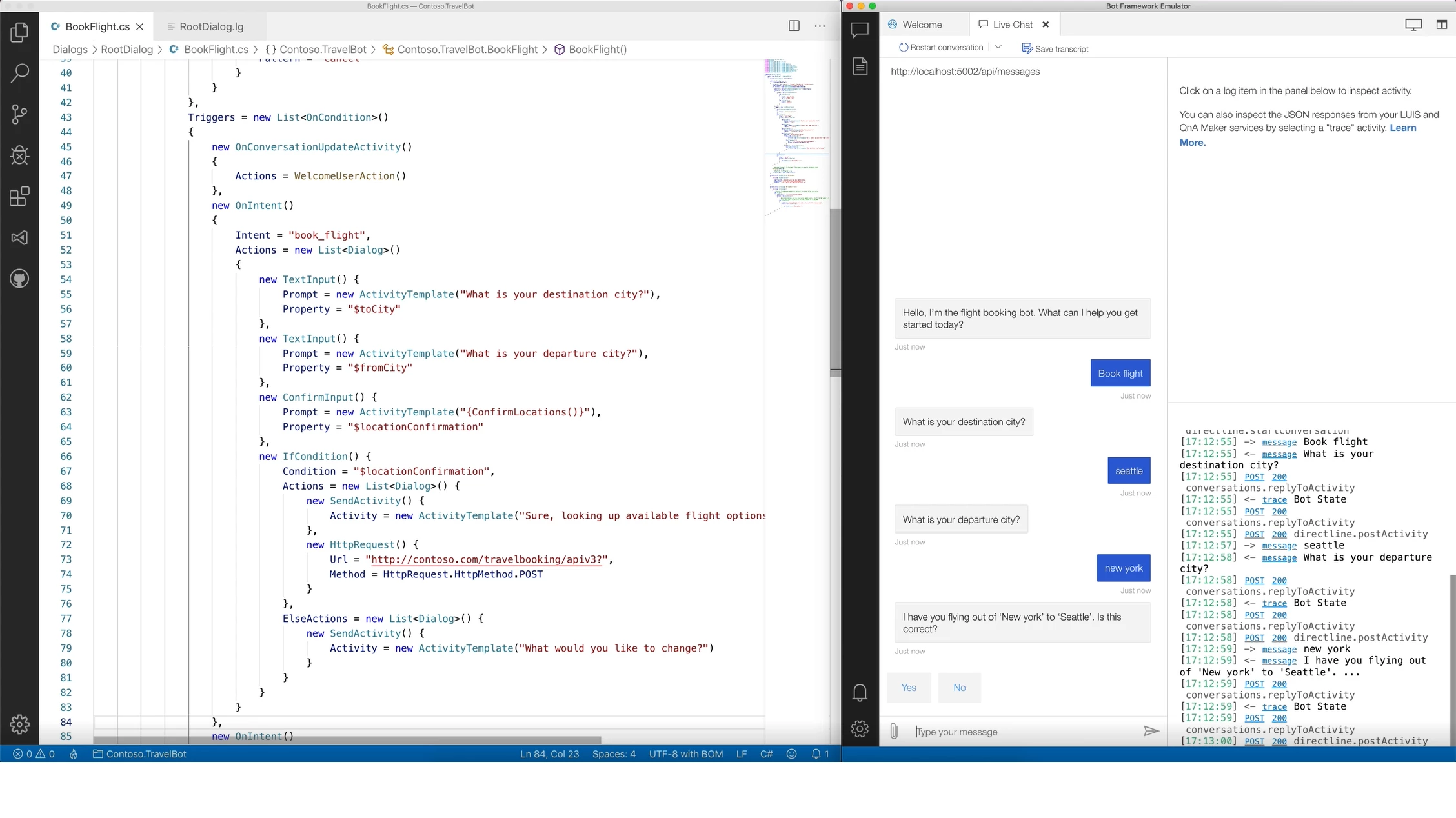
In this scenario, business experts can collaborate with the developer who has built this flight booking skill by selecting it as an action in Power Virtual Agents.
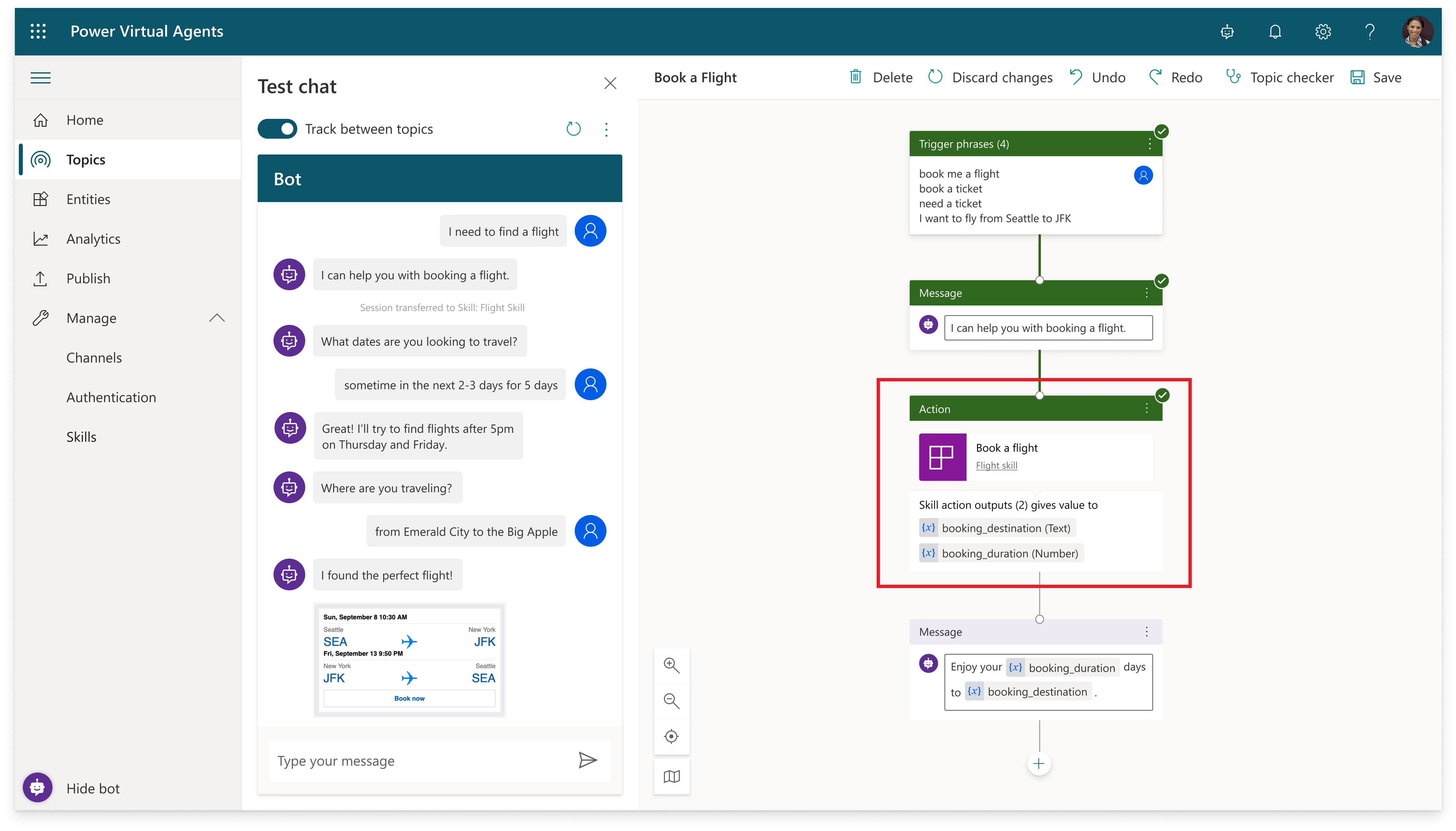
As conversational AI adoption continues to grow, we believe it is important for organizations to take an interdisciplinary team approach to bot development. For this reason, Microsoft offers an end-to-end, no-cliffs bot building experience that empowers business subject matter experts and developers alike to collaborate.