We are excited to announce the preview of Azure Dedicated Host, a new Azure service that enables you to run your organization’s Linux and Windows virtual machines on single-tenant physical servers. Azure Dedicated Hosts provide you with visibility and control to help address corporate compliance and regulatory requirements. We are extending Azure Hybrid Benefit to Azure Dedicated Hosts, so you can save money by using on-premises Windows Server and SQL Server licenses with Software Assurance or qualifying subscription licenses. Azure Dedicated Host is in preview in most Azure regions starting today.
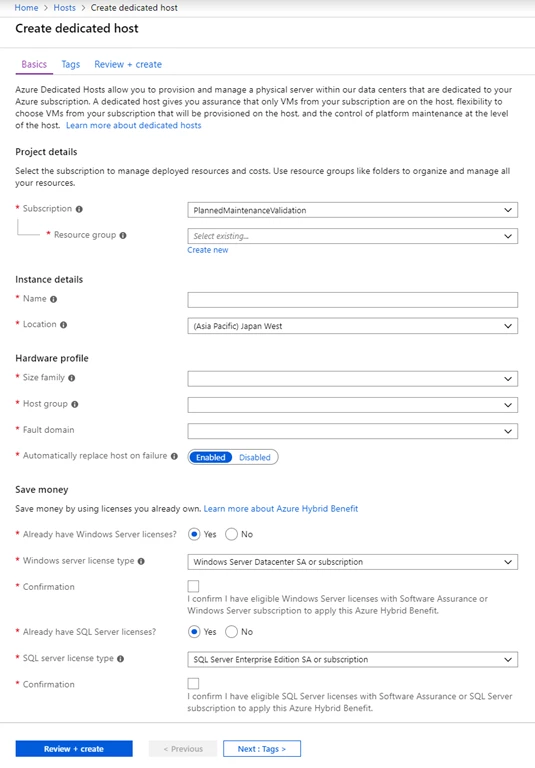
You can use the Azure portal to create an Azure Dedicated Host, host groups (a collection of hosts), and to assign Azure Virtual Machines to hosts during the virtual machine (VM) creation process.
Visibility and control
Azure Dedicated Hosts can help address compliance requirements organizations may have in terms of physical security, data integrity, and monitoring. This is accomplished by giving you the ability to place Azure VMs on a specific and dedicated physical server. This offering also meets the needs of IT organizations seeking host-level isolation.
Azure Dedicated Hosts provide visibility over the server infrastructure running your Azure Virtual Machines. They allow you to gain further control over:
- The underlying hardware infrastructure (host type)
- Processor brand, capabilities, and more
- Number of cores
- Type and size of the Azure Virtual Machines you want to deploy
You can mix and match different Azure Virtual Machine sizes within the same virtual machine series on a given host.
With an Azure Dedicated Host, you can control all host-level platform maintenance initiated by Azure (e.g., host OS updates). An Azure Dedicated Host gives you the option to defer host maintenance operations and apply them within a defined maintenance window, 35 days. During this self-maintenance window, you can apply maintenance to your hosts at your convenience, thus gaining full control over the sequence and velocity of the maintenance process.
Licensing cost savings
We now offer Azure Hybrid Benefit for Windows Server and SQL Server on Azure Dedicated Hosts, making it the most cost-effective dedicated cloud service for Microsoft workloads.
- Azure Hybrid Benefit allows you to use existing Windows Server and SQL Server licenses with Software Assurance, or qualifying subscription licenses, to pay a reduced rate on Azure services. Learn more by referring to the Azure Hybrid Benefit FAQ.
- We are also expanding Azure Hybrid Benefit so you can take advantage of unlimited virtualization for Windows Server and SQL Server with Azure Dedicated Hosts. Customers with Windows Server Datacenter licenses and Software Assurance can use unlimited virtualization rights in Azure Dedicated Hosts. In other words, you can deploy as many Windows Server virtual machines as you like on the host, subject only to the physical capacity of the underlying server. Similarly, customers with SQL Server Enterprise Edition licenses and Software Assurance can use unlimited virtualization rights for SQL Server on their Azure Dedicated Hosts.
- Consistent with other Azure services, customers will get free Extended Security Updates for Windows Server 2008/R2 and SQL Server 2008/R2 on Azure Dedicated Host. Learn more about how to prepare for SQL Server and Windows Server 2008 end of support.
Azure Dedicated Hosts allow you to use other existing software licenses, such as SUSE or RedHat Linux. Check with your vendors for detailed license terms.
With the introduction of Azure Dedicated Hosts, we’re updating the outsourcing terms for Microsoft on-premises licenses to clarify the distinction between on-premises/traditional outsourcing and cloud services. For more details about these changes, read the blog “Updated Microsoft licensing terms for dedicated hosted cloud services.” If you have any additional questions, please reach out to your Microsoft account team or partner.
Getting started
The preview is available now. Get started with your first Azure Dedicated Host. Watch a video introduction to Azure Dedicated Host.
You can deploy Azure Dedicated Hosts with an ARM template or using CLI, PowerShell, and the Azure portal. For a more detailed overview, please refer to our website and the documentation for both Windows and Linux.
Last but not least, you can also request access to the preview of the maintenance control feature, which gives you the option to skip platform updates for your Azure Dedicated Host and apply the updates at a time of your choice within a 35-day rolling window.
Frequently asked questions
Q: Which Azure Virtual Machines can I run on Azure Dedicated Host?
A: During the preview period you will be able to deploy Dsv3 and Esv3 Azure Virtual Machine series. Support for Fsv2 virtual machines is coming soon. Any virtual machine size from a given virtual machine series can be deployed on an Azure Dedicated Host instance, subject to the physical capacity of the host. For additional information please refer to the documentation.
Q: Which Azure Disk Storage solutions are available to Azure Virtual Machines running on an Azure Dedicated Host?
A: Azure Standard HDDs, Standard SSDs, and Premium SSDs are all supported during the preview program. Learn more about Azure Disk Storage.
Q: Where can I find pricing and more details about the new Azure Dedicated Host service?
A: You can find more details about the new Azure Dedicated Host service on our pricing page.
Q: Can I use Azure Hybrid Benefit for Windows Server/SQL Server licenses with my Azure Dedicated Host?
A: Yes, you can lower your costs by taking advantage of Azure Hybrid Benefit for your existing Windows Server and SQL Server licenses with Software Assurance or qualifying subscription licenses. With Windows Server Datacenter and SQL Server Enterprise Editions, you get unlimited virtualization when you license the entire host and use Azure Hybrid Benefit. As a result, you can deploy as many Windows Server virtual machines as you like on the host, subject to the physical capacity of the underlying server. All Windows Server and SQL Server workloads in Azure Dedicated Hosts are also eligible for free Extended Security Updates for Windows Server and SQL Server 2008/R2.
Q: Can I use my Windows Server/SQL Server licenses with dedicated cloud services?
A: In order to make software licenses consistent across multitenant and dedicated cloud services, we are updating licensing terms for Windows Server, SQL Server, and other Microsoft software products for dedicated cloud services. Beginning October 1, 2019, new licenses purchased without Software Assurance and mobility rights cannot be used in dedicated hosting environments in Azure and certain other cloud service providers. This is consistent with our policy for multitenant hosting environments. However, SQL Server licenses with Software Assurance can continue to use their licenses on dedicated hosts with any cloud service provider via License Mobility, even if licenses were purchased after October 1, 2019. Customers may use on-premises licenses purchased before October 1, 2019 on dedicated cloud services. For more details regarding licensing, please read the blog “Updated Microsoft licensing terms for dedicated hosted cloud services.”
For additional information, please refer to the Azure Dedicated Host website and the Azure Hybrid Benefit page.