According to the UN, we will see the world’s urban populations grow from today’s 55 percent to 68 percent by 2050. With almost a billion people on the path to be urban dwellers, most cities are still unfriendly to people with disabilities. As more people flock to cities, making our cities smarter and more inclusive will become increasingly important. The concept of smart cities is all about developing strategies that leverage data and technology to enhance urban life. The IoT plays a central role in collecting sensor data and then using the insights gained from that data to manage assets, resources, and services efficiently.
As city planners tackle the complex challenges of increasing urbanization, managing scarce resources, climate change, and creating safer more accessible cities, Azure Maps (a collection of geospatial APIs) becomes a critical tool for city planners. A key aspect of IoT & technology solutions is that they should be intuitive, easy to use, and accessible.
Azure Maps and accessibility
Azure Maps makes it easy for all users to navigate an interactive map experience. Users can interact with maps using a mouse, touch, or keyboard. Azure Maps provides screen readers with enhanced descriptions that can combine multiple updates into a single message that is easier to digest and understand. Recently Azure Maps achieved exciting new capabilities & Microsoft certification around accessibility. All apps, both Microsoft owned and third party, that use Azure Maps will benefit from the accessibility features that are provided out of the box.
Azure Maps also relies on best of breed content partnerships for everything from the maps data, traffic, real time transit, ride share, to weather data.
Moovit helps people with disabilities ride transit
One of the Azure Maps content partnerships is with Moovit. Launched in 2011 in Israel, Moovit has become the world’s most popular transit-planning and navigation app, with more than 500 million users and service in over 3,000 cities across 94 countries. The company is also a leader in inclusive technology, with innovative work that helps people across the disability spectrum use buses, trains, subways, ride-hailing services, and other modes of public transit.
In addition to offering a consumer app in 45 languages, Moovit has partnered with Microsoft to provide its multi-modal transit data to developers who use Azure Maps, and a set of mobility-as-a-service solutions to cities, governments, and organizations. The partnership will enable the creation of more inclusive smart cities and more accessible transit apps.
How Aira helps smart cities become more accessible
One of the companies that is leveraging the geospatial and mapping capabilities from Azure Maps and the transit capabilities from Moovit, is Aira. Aira is a technology company dedicated to making lives simpler and more engaging. Based in San Diego, California, they build solutions to connect people who are blind, have low vision, or are simply aging into a digital world, with highly-trained professionals who provide visual information on demand.
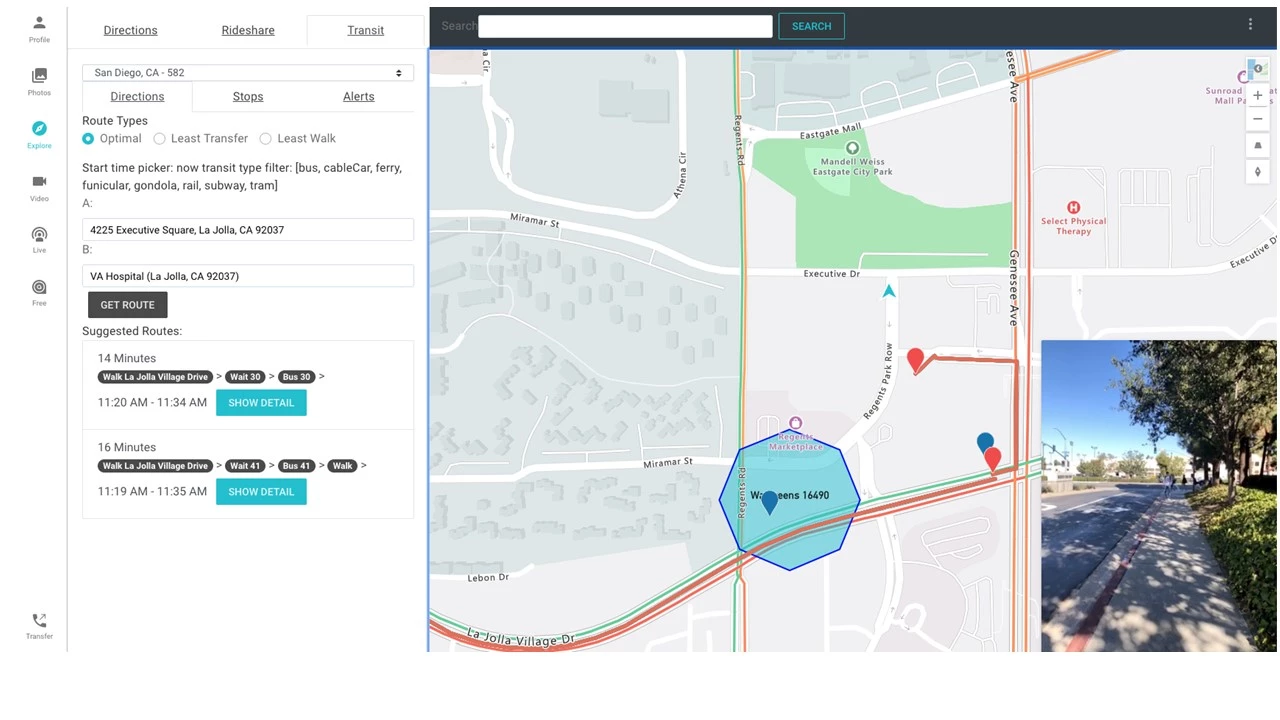
Public transportation is the lifeline to jobs, education, healthcare, and more, yet many blind or low vision riders still have trouble getting to their destination. They may be uncertain that they’ve caught the right bus, or unable to read the entrance sign they need to follow in order to access the subway. In addition, as populations age, the number of people experiencing age-related vision loss rises every day. Moovit, Microsoft, and Aira are joining forces in order to challenge these obstacles and make public transit more accessible and inclusive, empowering blind and low vision riders to travel with more confidence.
“In Azure Maps, we invested significant time and resources to define accessibility requirements, implementing capabilities for those with needs, and pushing ourselves to service this segment of users” says Chris Pendleton, Head of Azure Maps at Microsoft Corp. “I’m elated to see Aira, Moovit, and Azure Maps providing services together further justifying our investments in the benefit of those who need it most”
Smart City Expo World Congress
In order to connect with cities on their journeys for digital transformation, the Azure Maps team, along with Moovit and Aira, will be at Smart City Expo World Congress, the industry-leading event for urbanization, showcasing technologies and partners enabling the digital transformation of smart cities. For updates from SCEWC, follow us on twitter.