Skip to main content Explore View all products (200+) Microsoft Foundry Azure Copilot GitHub Copilot Azure Kubernetes Service (AKS) Azure Cosmos DB Azure Database for PostgreSQL Azure Arc Microsoft Fabric Linux virtual machines in Azure Foundry Models Foundry Agent Service Foundry IQ Foundry Tools Foundry Control Plane Observability in Foundry Control Plane Azure OpenAI in Foundry Models Azure Speech in Foundry Tools Azure Machine Learning View all databases Azure Cosmos DB Azure DocumentDB Azure SQL Azure Database for PostgreSQL Azure Managed Redis Microsoft Fabric Azure Databricks Linux virtual machines in Azure Windows Server on Azure Azure Functions Azure Virtual Machine Scale Sets Azure API Management Azure Container Apps Azure Kubernetes Service (AKS) Azure Kubernetes Fleet Manager Azure Container Registry Azure Red Hat OpenShift Azure Container Instances Azure Container Storage Azure Arc Azure Local Microsoft Defender for Cloud Azure Monitor Microsoft Sentinel Azure Migrate View all solutions (40+) Cloud solutions for small and medium businesses Cloud migration and modernization center Data analytics for AI Azure Databases AI apps and agents Microsoft Marketplace Microsoft Sovereign Cloud AI apps and agents Responsible AI with Azure AI Infrastructure Data analytics for AI Machine learning operations (MLOps) Low-code application development on Azure Integration Services Serverless computing DevOps Migration and modernization center .NET apps migration Databases on Azure Linux on Azure Oracle on Azure SAP on the Microsoft Cloud Adaptive cloud High-performance computing (HPC) Infrastructure as a service (IaaS) Resiliency Azure Essentials Frontier Accelerate for Azure FinOps on Azure Microsoft Marketplace Azure pricing overview Create an Azure account Free Azure services Flexible purchase options Pricing calculator FinOps on Azure Maximize ROI from AI Azure savings plans Azure reservations Azure Hybrid Benefit Virtual Machines Azure SQL Microsoft Foundry Microsoft Fabric Azure Kubernetes Service (AKS) Microsoft Defender for Cloud View more Software Development Companies Microsoft Marketplace Find a partner Resources for Azure partners Get started with Azure Customer stories Analyst reports, white papers, and e-books Videos Learn more about cloud computing Documentation Explore Azure portal Developer resources Quickstart templates Resources for startups Developer community Students Azure for partners Blog Events and Webinars Learn Support Contact Sales Get started with Azure Sign in

Azure SQL Data Warehouse (SQL DW) continues to introduce updates to the Azure portal to provide a seamless user experience when monitoring, managing, and integrating your data warehouse.

Support for Azure Monitor metrics

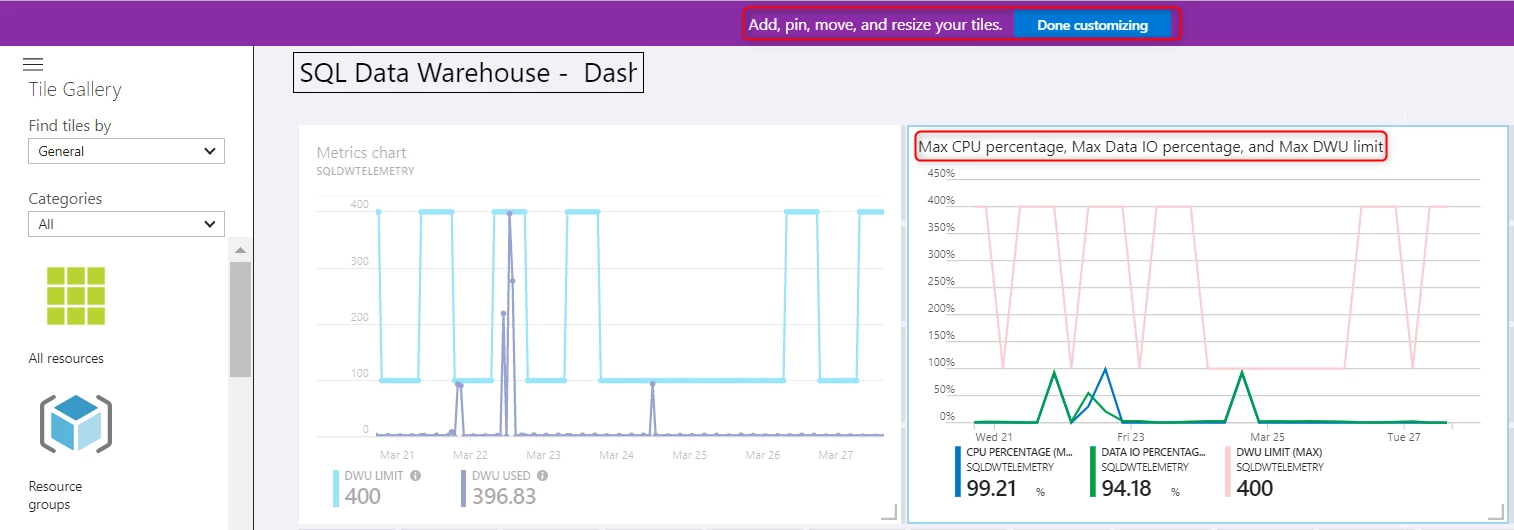
SQL DW now supports Azure Monitor which is a built-in monitoring service that consumes performance and health telemetry for your data warehouse. Azure monitor not only enables you to monitor your data warehouse within the Azure portal, but its tight integration between Azure services also enables you to monitor your entire data analytics solution within a single interface. For this release, data warehouse metrics have been enabled to enables you to identify performance bottlenecks and user activity:

  • Successful/Failed/Blocked by firewall connections
  • CPU
  • IO
  • DWU Limit
  • DWU Percentage
  • DWU used

These metrics now have a one-minute frequency for near real-time visibility into resource bottlenecks of your data warehouse. There is a default retention period of 90 days for all data warehouse metrics with Azure Monitor.

Configure metric charts in the Azure monitor service through the Azure Portal or programmatically query for metrics via PowerShell or REST:
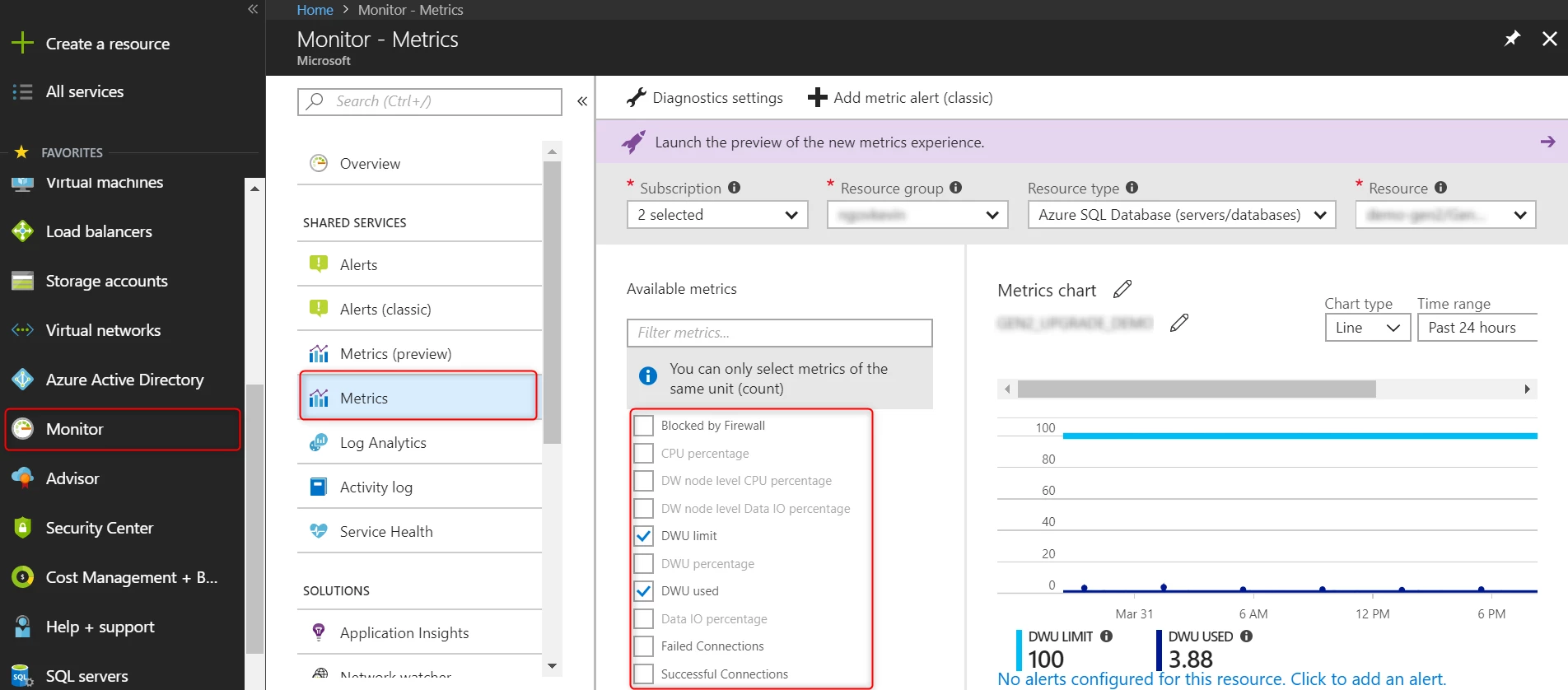
AzureMonitor_Support

Pin configured charts for your data warehouse through Azure dashboards:
AzureMonitorDashboard_Support (002)

Safely manage costs by pausing

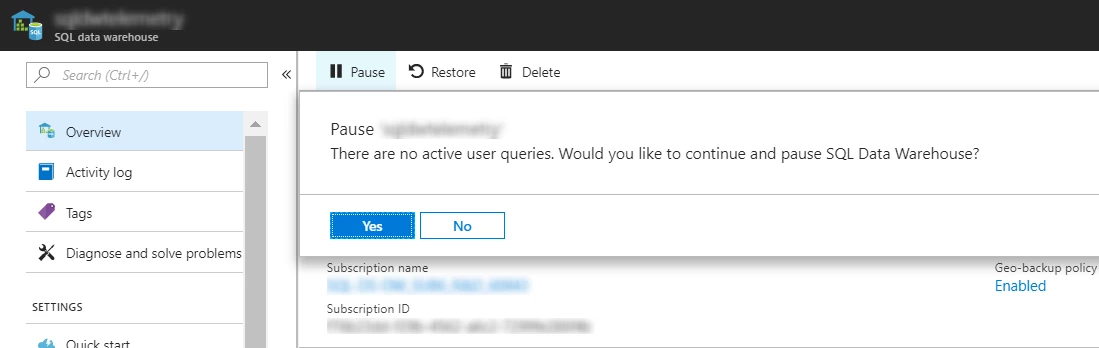
The pause feature for SQL DW enables you to reduce and manage operating costs for your data warehouse by turning off compute during times of little to no activity. We have enhanced this feature within the Azure portal by detecting active running queries and providing a warning before issuing the pause command. Pausing will cancel all sessions to immediately quiesce your data warehouse before shutting it down. This can sometimes lead to interruptions to your end user applications. Now with a simple click of the pause button in the Azure portal, you can detect the number of running queries to you can make an informed decision on when to pause:
Pause_DW (003)

You can also leverage the “dataWarehouseUserActivities” REST API to programatically integrate query detection in your applications.

Integrate with Azure Analysis Services

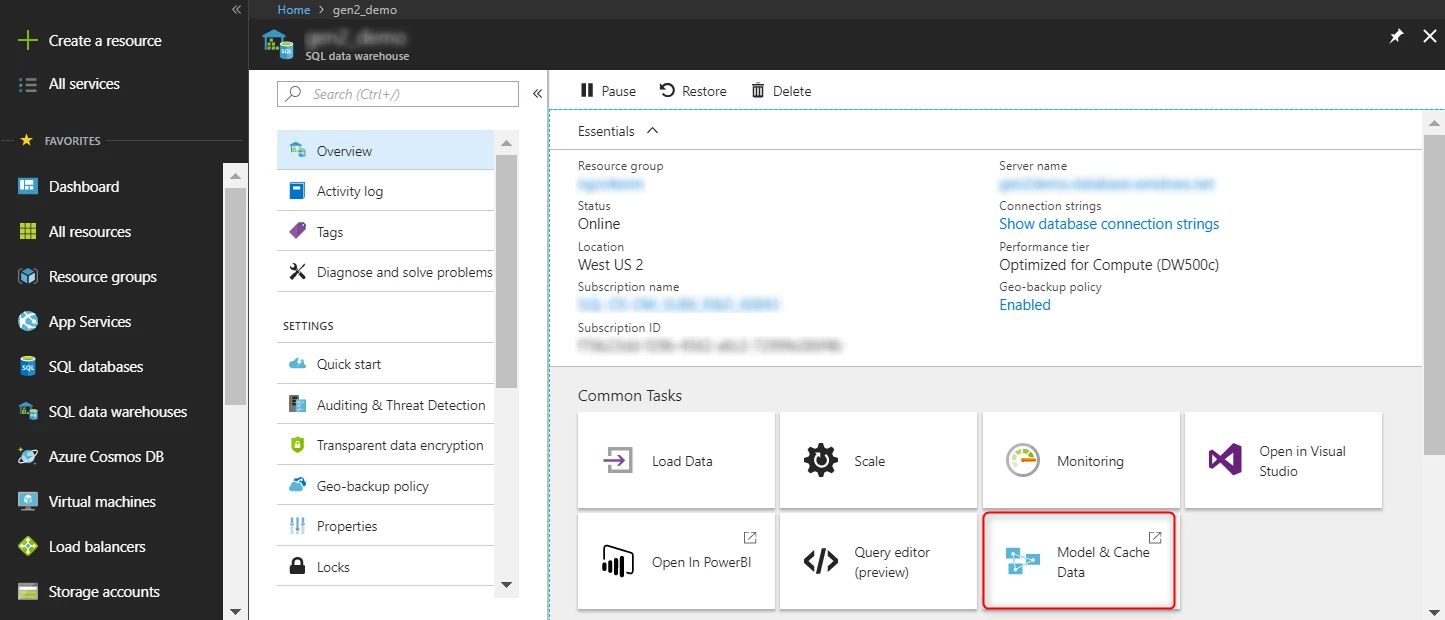
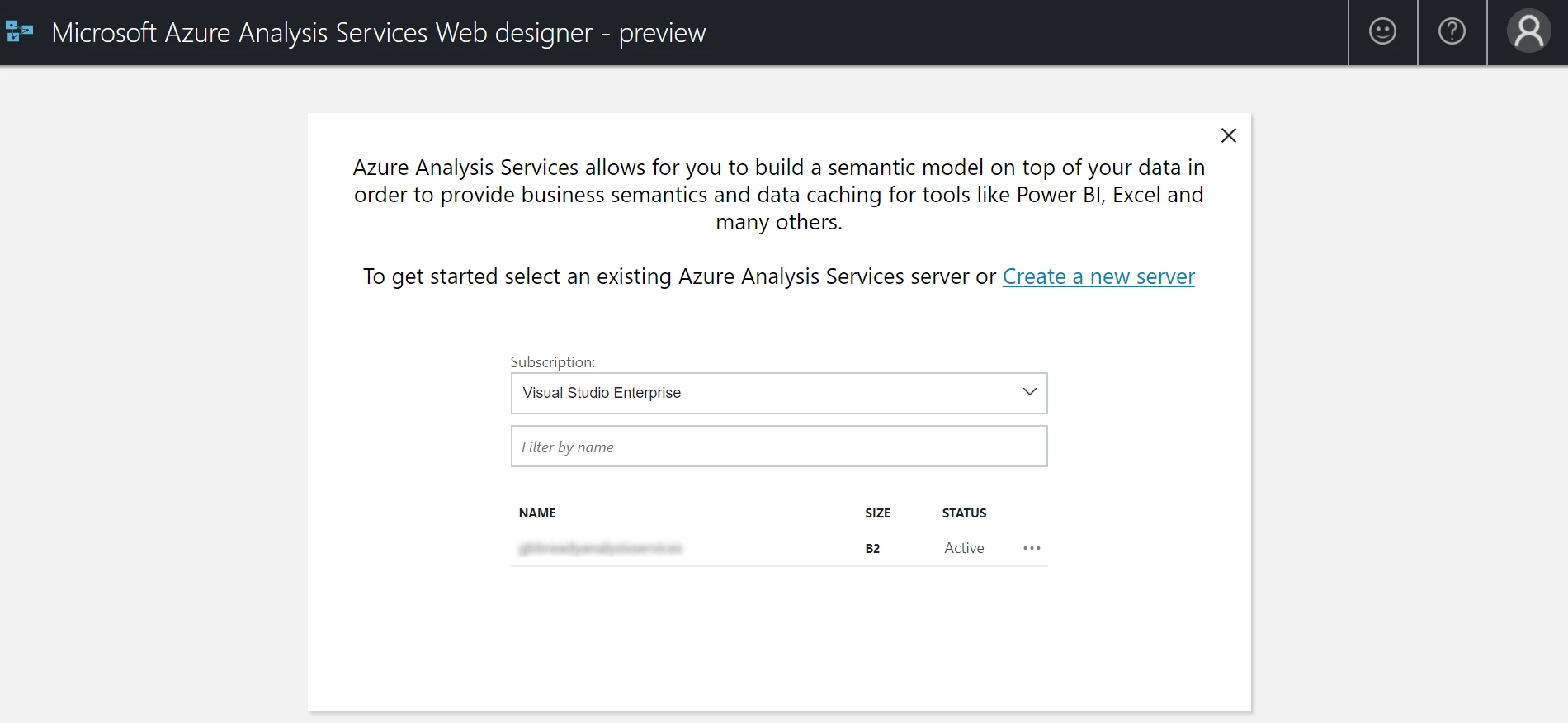
SQL DW is tightly integrated across many Azure services enabling you to develop an advanced modern data analytics solution. One common pattern is to leverage Azure Analysis Services (AAS) with SQL DW in a hub and spoke pattern to optimize for cost, performance, and concurrency. To enable seamless access to AAS, a tighter integration point within the Azure Portal has been enabled. Click on the “Model and Cache Data” button within the Task panel to immediately begin building and hosting semantic models of your data.
AAS_Portal (002)
AAS_view (002)

If you need help for a POC, contact us directly. Stay up-to-date on the latest Azure SQL DW news and features by following us on Twitter @AzureSQLDW.


WE ARE MICROSOFT

Explore Microsoft Foundry

The future of AI starts here. Envision your next great AI app with the latest technologies. Get started with Azure.