
We are excited to announce that Microsoft Azure Public IPs are zone-redundant by default. This means that unless you specifically select a single zone when deploying your Microsoft Azure Standard Public IPs, they will be zone-redundant—without any extra steps on your part. Yes, automatically.
If you don’t select a zone for your Standard Public IPs (such as the default way of creating one), you will now get the benefits of zone redundancy—at no extra cost. A zone-redundant IP is created in three zones for a region and can survive any single zone failure, improving the resiliency of your application using this public IP.
The details
As you may know, Azure Public IP addresses allow inbound and outbound connectivity to internet resources from your Microsoft Azure resources. You can dedicate the address to the resource until you delete it, known as a static IP address. Currently, two stock keeping units (SKUs) of Public IPs exist—Basic and Standard. Since Basic SKU is being retired in September of 2025, this blog’s focus is on Standard SKU Public IPs. Any reference to Public IPs in this blog is limited to Standard SKU only.
Standard Public IPs are static in nature, giving you more control of the IP address. Once created, the address remains associated with your Azure subscription until you delete it. These Public IPs can be associated with numerous Azure resources—Virtual Machines, Virtual Machine Scale Sets, Azure Load Balancer, and Azure NAT Gateway to name a few. You can move your Azure Public IP from one resource to another, too.
Azure regions provide availability zones, which are groups of data centers within a region. Availability zones are close enough to have low-latency connections to other availability zones. They’re designed such that if one zone experiences an outage, then regional services, capacity, and high availability are supported by the remaining zones. You can use zone-redundant services to automatically achieve resiliency.
Standard Public IPs support availability zones and can be zone-redundant, zonal, or no zone.
- Zone-redundant Public IPs are available across three zones in a region (for example: Zone 1, Zone 2, Zone 3).
- Zonal are only available in the specific zone you select (for example: Zone 1).
- Non-zonal have no zonal promise.
In Azure, we want to set you up for success from a resiliency standpoint. As you go through the resiliency checklist for your Azure resources, our goal is to ensure that you are set up for resiliency—by default or as easily as possible.
With this in mind, we are enabling all Azure Standard Public IPs to be zone-redundant by default. This means that whether you create a Standard Public IP today or have created one previously that doesn’t specify zones, you get this added benefit (in the regions specified in “Which regions is this available in?” section) free of charge.
As a result, we are eliminating non-zonal Standard IPs and ensuring that Public IPs where zones are not mentioned are zone-redundant by default at no extra cost in regions specified below. Standard Public IPs are charged as specified on the Public IP pricing page.
Whether your IP address JSON looks like the first image or the second image below, both will be zone-redundant.
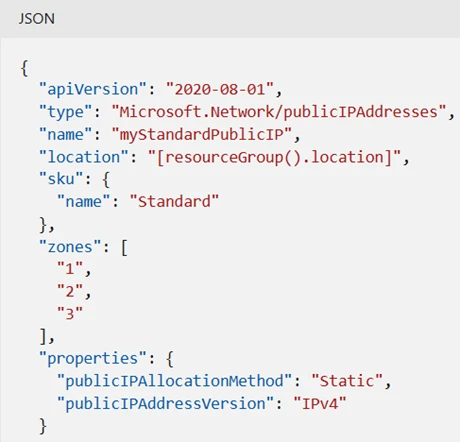
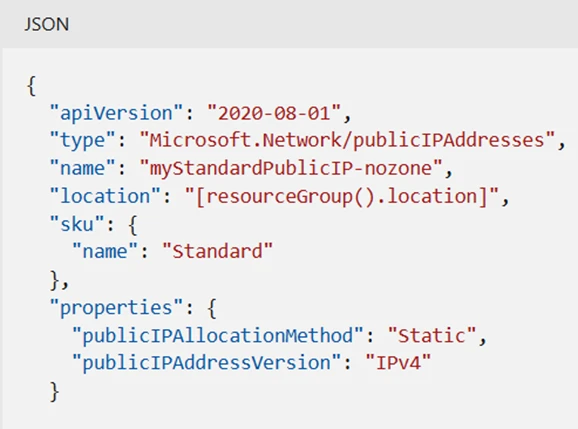
In the Azure portal, these are currently referred to as zone-redundant and non-zonal IPs respectively. Once all regions are updated with this functionality, the non-zonal option will be removed.
Given this announcement, as you migrate your workloads to zone-redundant architectures, you no longer need to re-IP or change your IP address to ensure zone-redundancy for your Public IP resources. This not only relieves management overhead for you and your customers but also alleviates the hassle of updating of IP lists for firewalls.
What do I need to do to get the benefits?
If you have Standard Public IPs with no zone parameters, you don’t need to take any action. Your IPs are already zone-redundant in the regions below. If you already have zone-redundant IPs, they will continue to stay zone-redundant. Whether you create your Public IPs today or created them years ago, this applies to all of your Standard public IPs.
If you upgrade your Basic SKU Public IP to Standard SKU, with this announcement, it will now be zone-redundant. No extra steps or actions are needed apart from the upgrade.
Which regions is this available in?
Zone redundancy by default for public IPs is available in 12 regions and will continue to expand in the upcoming months. The goal is to ensure that all regions get this benefit. This will be an incremental process and today the following regions have this available:
Central Canada, Central Poland, Central Israel, Central France, Central Qatar, East Norway, Italy North, Sweden Central, South Africa North, South Brazil, West Central Germany, West US 2.
This blog will not be updated as we add more regions. For an up-to-date region list, please refer to the Public IP documentation.
What about regions with no zones?
As those regions are retrofitted to have zones, we will ensure that the public IPs are made redundant. The region list will be updated as appropriate to reflect the latest status.
Have more questions?
As always, for any feedback, please feel free to reach us by submitting your feedback. We look forward to hearing your thoughts and hope this announcement helps you build more resilient applications in Azure.
We strongly recommend you build zone-resilient architectures in Azure regions. Leverage appropriate documentation for services you use. For public IPs, with this change, you will get the benefits by default as we roll to more regions for your existing IPs. If deploying new IPs, select zone-redundant ones.