Azure ExpressRoute allows enterprise customers to privately and directly connect to Microsoft’s cloud services, providing a more predictable networking experience than traditional internet connections. ExpressRoute is available in 42 peering locations globally and is supported by a large ecosystem of more than 100 connectivity providers. Leading customers use ExpressRoute to connect their on-premises networks to Azure, as a vital part of managing and running their mission critical applications and services.
Cisco to build Azure ExpressRoute practice
As we continue to grow the ExpressRoute experience in Azure, we’ve found our enterprise customers benefit from understanding networking issues that occur in their internal networks with hybrid architectures. These issues can impact their mission-critical workloads running in the cloud.
To help address on-premises issues, which often require deep technical networking expertise, we continue to partner closely with Cisco to provide a better customer networking experience. Working together, we can solve the most challenging networking issues encountered by enterprise customers using Azure ExpressRoute.
Today, Cisco announced an extended partnership with Microsoft to build a new network practice providing Cisco Solution Support for Azure ExpressRoute. We are fully committed to working with Cisco and other partners with deep networking experience to build and expand on their networking practices and help accelerate our customers’ journey to Azure.
Cisco Solution Support provides customers with additional centralized options for support and guidance for Azure ExpressRoute, targeting the customers on premises end of the network.
New monitoring options for ExpressRoute
To provide more visibility into ExpressRoute network traffic, Network Performance Monitor (NPM) for ExpressRoute will be generally available in six regions in mid-February, following a successful preview announced at Microsoft Ignite 2017. NPM enables customers to continuously monitor their ExpressRoute circuits and alert on several key networking metrics including availability, latency, and throughput in addition to providing graphical view of the network topology.
NPM for ExpressRoute can easily be configured through the Azure portal to quickly start monitoring your connections.
We will continue to enhance the footprint, features and functionality of NPM of ExpressRoute to provide richer monitoring capabilities for ExpressRoute.
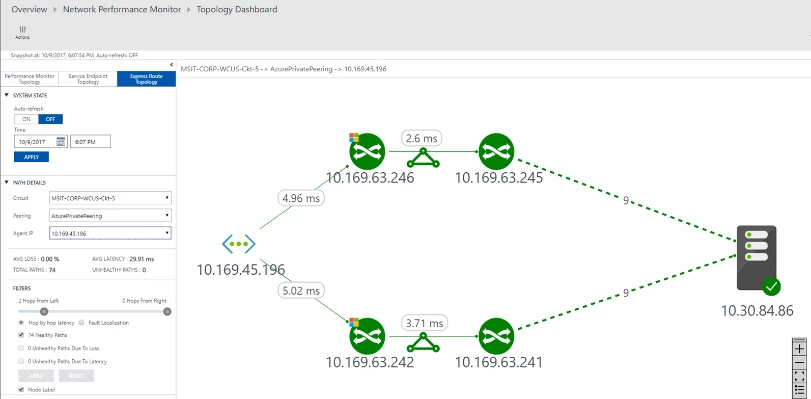
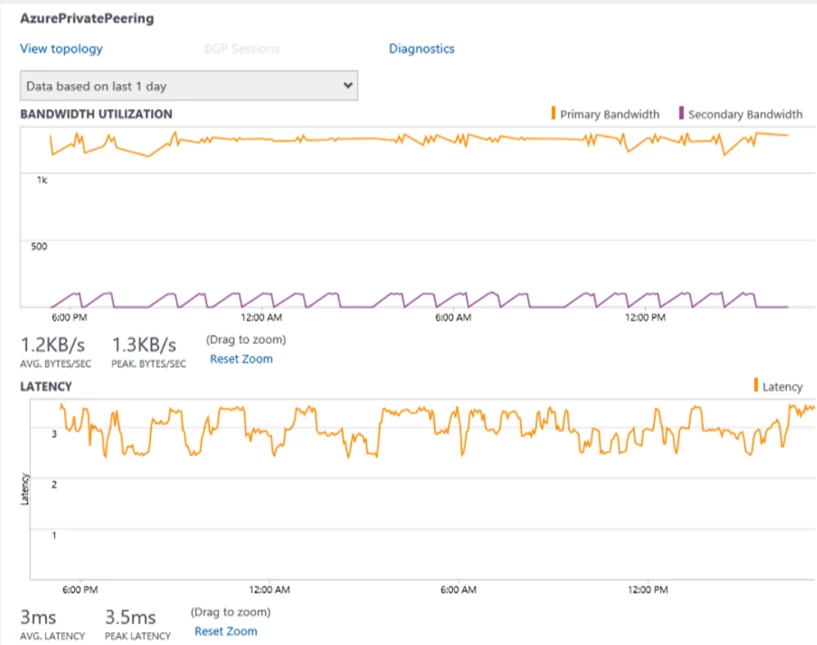
Figure 1: Network Performance Monitor and Endpoint monitoring simplifies ExpressRoute monitoring
Endpoint monitoring for ExpressRoute enables customers to monitor connectivity not only to PaaS services such as Azure Storage but also SaaS services such as Office 365 over ExpressRoute. Customers can continuously measure and alert on the latency, jitter, packet loss and topology of their circuits from any site to PaaS and SaaS services. A new preview of Endpoint Monitoring for ExpressRoute will be available in mid-February.
Simplifying ExpressRoute peering
To further simplify management and configuration of ExpressRoute we have merged public and Microsoft peerings. Now available on Microsoft peering are Azure PaaS services such as Azure Storage and Azure SQL along with Microsoft SaaS services (Dynamics 365 and Office 365). Access to your Azure Virtual Networking remains on private peering.
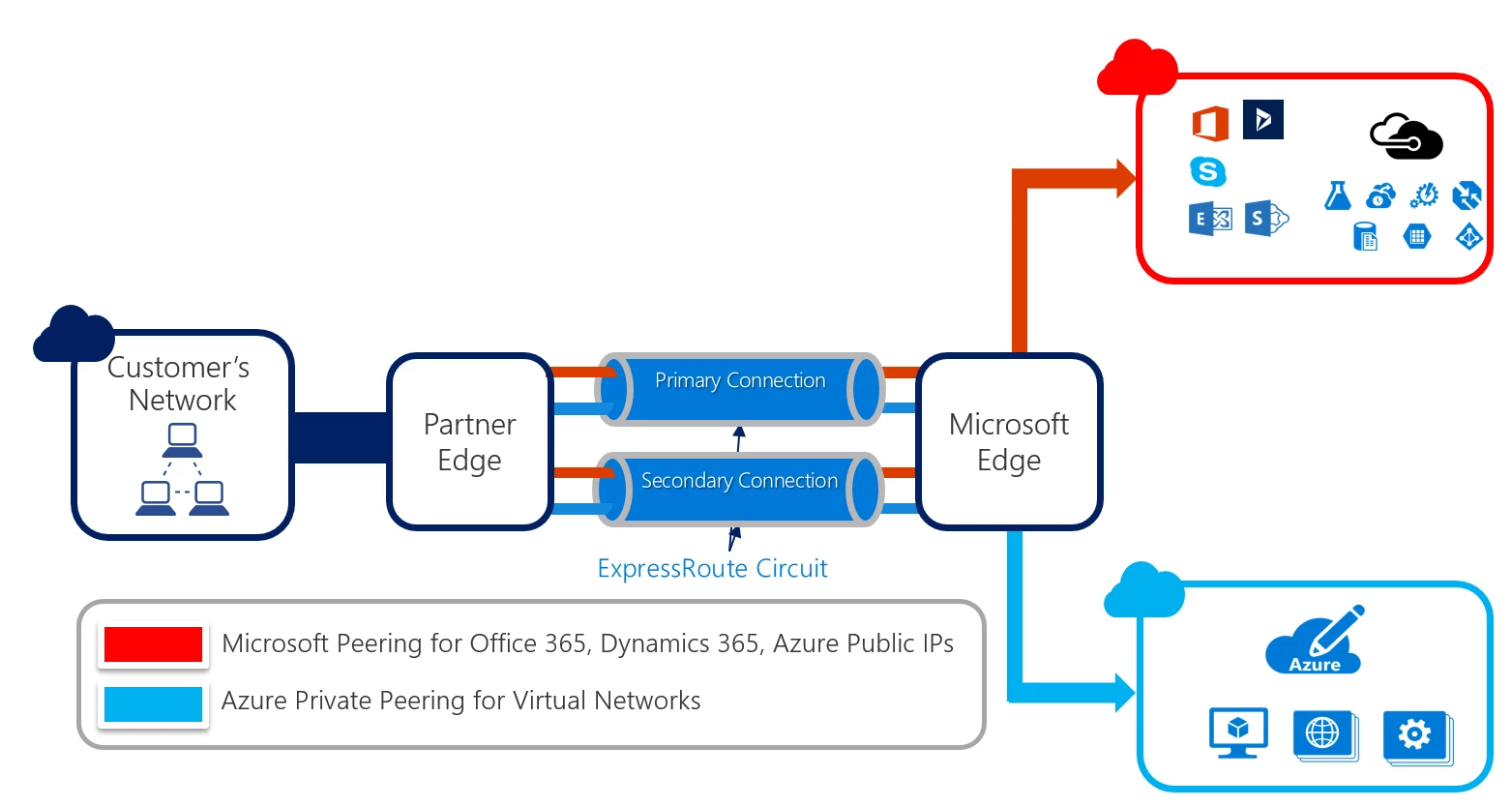
Figure 2: ExpressRoute with Microsoft peering and private peering
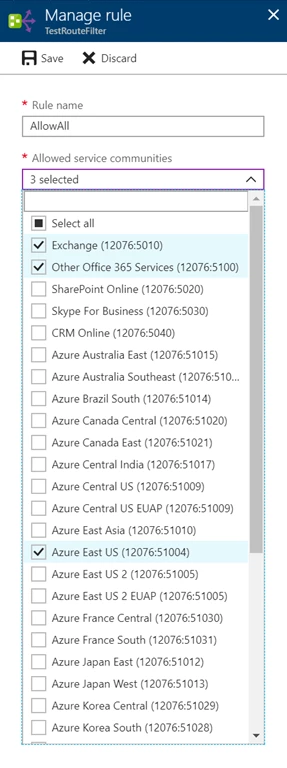
ExpressRoute, using BGP, provides Microsoft prefixes to your internal network. Route filters allow you to select the specific Office 365 or Dynamics 365 services (prefixes) accessed via ExpressRoute. You can also select Azure services by region (e.g. Azure US West, Azure Europe North, Azure East Asia). Previously this capability was only available on ExpressRoute Premium. We will be enabling Microsoft peering configuration for standard ExpressRoute circuits in mid-February.
New ExpressRoute locations
ExpressRoute is always configured as a redundant pair of virtual connections across two physical routers. This highly available connection enables us to offer an enterprise-grade SLA. We recommend that customers connect to Microsoft in multiple ExpressRoute locations to meet their Business Continuity and Disaster Recovery (BCDR) requirements. Previously this required customers to have ExpressRoute circuits in two different cities. In select locations we will provide a second ExpressRoute site in a city that already has an ExpressRoute site. A second peering location is now available in Singapore. We will add more ExpressRoute locations within existing cities based on customer demand. We’ll announce more sites in the coming months.