

Azure availability zones
High availability for your mission-critical applications and data.

Ensure resiliency and high availability with Azure availability zones
Take advantage of high availability with Azure availability zones as a part of your comprehensive business continuity and disaster recovery strategy with built-in security, and flexible, high-performance architecture.

Increase application resiliency and availability supported by 99.99% uptime SLA for virtual machines.

Enable advanced scalability for applications that support multisite active-active scaling.

Meet compliance and regulatory needs for critical applications.

Improve recovery time objectives (RTOs) and recovery point objectives (RPOs).
Protect against infrastructure disruptions
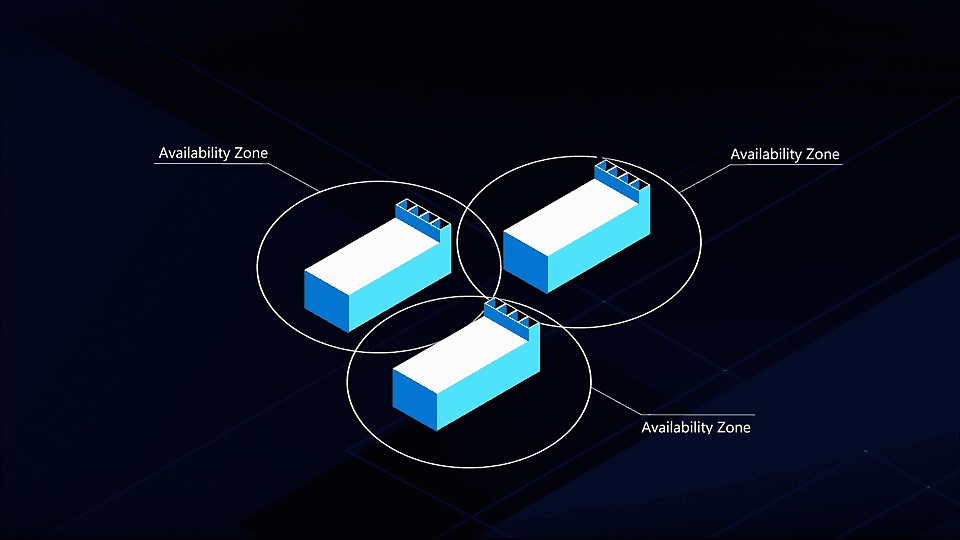
Eliminate any single point of failure through a regional network design that connects at least three physically distinct strategically placed datacenters in each region, taking into consideration more than 30 viability criteria and risk factors. Maintain synchronous replication, withstand datacenter failures, and ensure customer impact is minimal to none with a latency perimeter of less than two milliseconds between Azure availability zones.

Ensure high availability and business continuity
Achieve high availability and business continuity in all available Azure regions without compromising data residency. Access your data even if your primary datacenter fails while supporting high availability needs and backup. Use zone-redundant services to automatically achieve resiliency.
Achieve the scale and high availability that you need
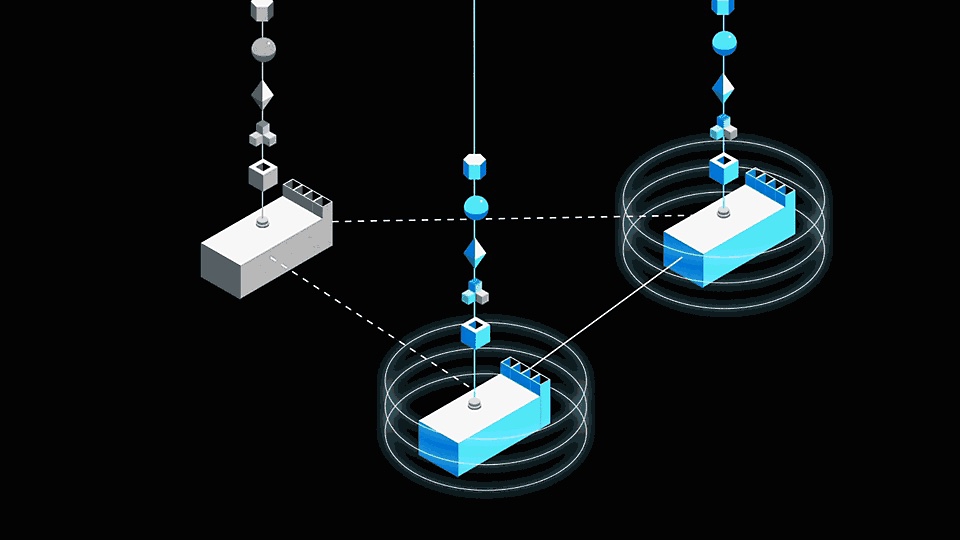
Increase scale, ensure rapid recovery, and maintain data integrity for all your applications. Seamlessly recover from site failure while reducing the complexity of availability using zone-redundant services. Lower the cost of site recovery with automated data replication, while enabling active-active scaling with low-latency data replication.
Securely support your solution needs
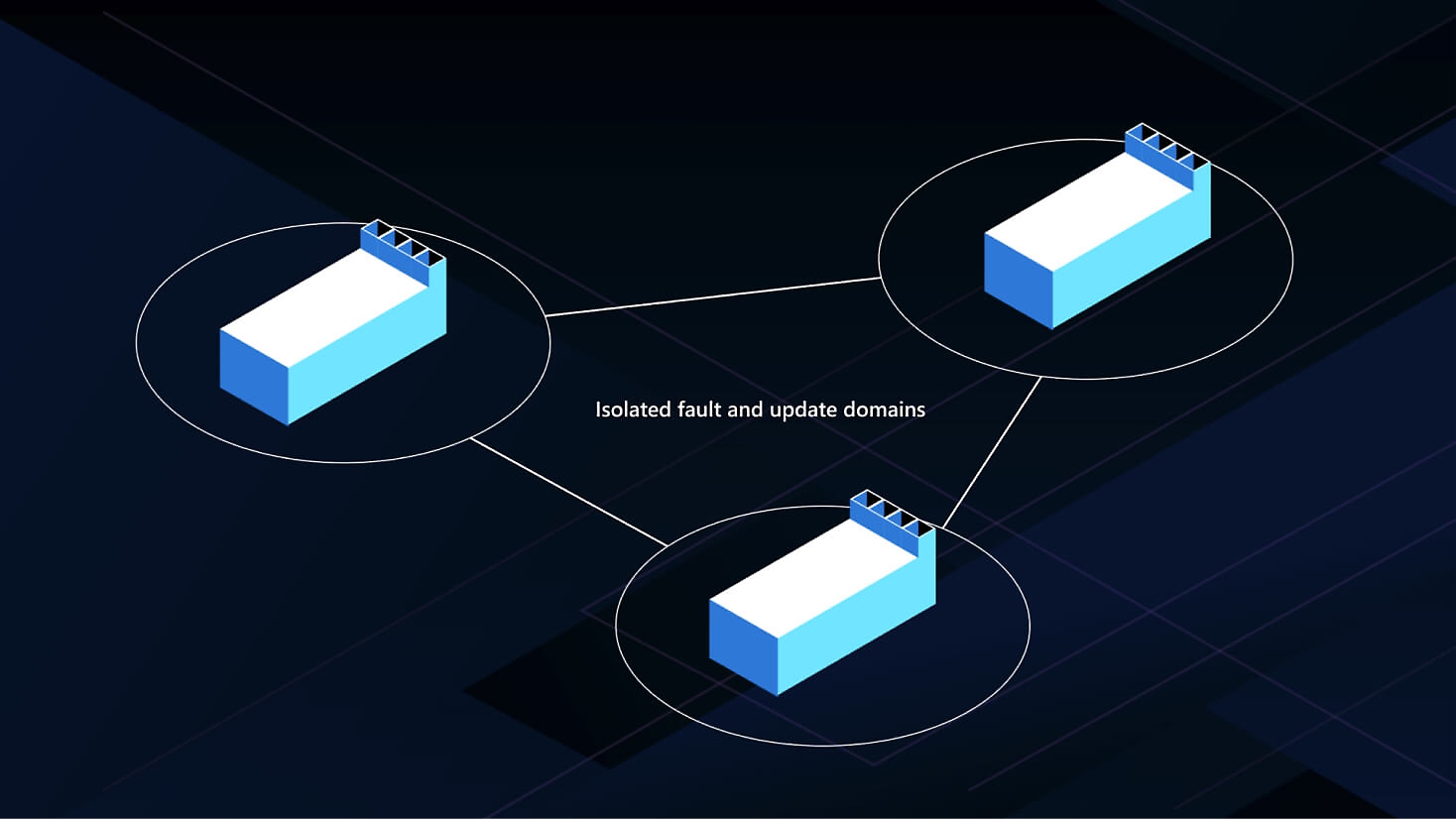
Get multizone support for availability zone design and configuration with built-in security. Select from a wide variety of Azure services, including zone-redundant storage (ZRS) to provide holistic resiliency in the event of a failure. Secure data transfers within availability zones and across Azure regions.

"Availability zones give us the combination of low latency and high availability that we need to meet customer requirements. All of my team's applications with higher SLA levels are now built on availability zones. The physical separation of availability zones builds an extra layer of redundancy."
Mitch Nelson, Director, Managed Services, Adobe

"Trust and resilience are critical for the financial services industry to meet both the regulatory requirements of APRA and customer expectations. The investment that Microsoft continues to make in its Azure availability zones gives us, our customers, and regulators peace of mind that systems will be available and data will be protected."
Steve Day, Executive General Manager Infrastructure, Cloud and Workplace at NAB

Azure availability zones Pricing
Azure availability zones are available with your Azure subscription. However you may incur charges when moving between regions.
Frequently asked questions
-
Azure availability zones are physically and logically separated datacenters with their own independent power source, network, and cooling. Connected with an extremely low-latency network, they become a building block to delivering high availability applications. Availability zones ensure that if there's an event impacting a datacenter site—for example, if someone cuts the power, or there are issues with cooling—your data will be protected. Learn more.
-
Availability zones are available in every country where Azure operates a region. Learn more about Azure geographies.
-
We ensure that customer impact is minimal to none with a latency perimeter of less than two milliseconds between availability zones.
-
Yes. Data traversing within or between regions is encrypted.
-
As part of our design process, we utilize more than 30 viability and risk-based criteria to evaluate the placement of each availability zone. This process identifies both significant individual risk as well as collective and shared risk between availability zones.
-
Azure services that support availability zones fall into three categories: zonal, zone-redundant, and non-regional services. Customer workloads can be categorized to utilize any of these architecture scenarios to meet application performance and durability.
- Zonal services: A resource can be deployed to a specific, self-selected availability zone to achieve more stringent latency or performance requirements. Resiliency is self-architected by replicating applications and data to one or more zones within the region. Resources can be pinned to a specific zone. For example, virtual machines, managed disks, or standard IP addresses can be pinned to a specific zone, which allows for increased resilience by having one or more instances of resources spread across zones.
- Zone-redundant services (ZRS): With zone-redundant services, replication of data is performed automatically to protect resources from single points of failure. Zone redundant storage, for example, replicates the data across three zones so that a zone failure won't impact the high availability of the data.
- Non-regional services: Services that don’t depend on a specific Azure region, making them resilient to zone-wide outages as well as region-wide outages.
Learn more about Azure services that support availability zones.
-
See the full list of Azure services that are supported by availability zones.
-
You don't need to deal with the complexities of architecting an app when it’s built on zone-redundant services. Resiliency only needs to be addressed when your application uses both zonal and zone-redundant architecture. The Azure Well-Architected Framework is a set of guiding tenets that can be used to improve the quality of a workload and learn more about architecting applications.
Learn more





Related products and services

Azure Virtual Machines
Provision Windows and Linux virtual machines in seconds.

Azure Load Balancer
Deliver high availability and network performance to your applications.

Azure Managed Disks
Persistent, secured disk storage for Azure virtual machines.