At Microsoft Quantum, our ambition is to help solve some of the world’s most complex challenges through the world’s most scalable quantum system. Recently, we introduced Azure Quantum to unite a diverse and growing quantum community and accelerate the impact of this technology. Whether it’s algorithmic innovation that improves healthcare outcomes or breakthroughs in cryogenic engineering that enable more sustainable systems design, these recent advancements across the stack are bringing the promise of quantum to our world, right now.
In December 2018, the United States Congress signed the National Quantum Initiative Act – an important milestone for investing the resources needed to continue advancing the field. As recognized by the Act, education on quantum information science and engineering needs to be an area of explicit focus, as the shortage of quantum computing talent worldwide poses a significant challenge to accelerating innovation and fully realizing the impact quantum can have on our world.
Leaders across both public and private sectors need to continue working together to develop a global workforce of quantum engineers, researchers, computer and materials scientists, and other industry experts who will be able to carry quantum computing into the future. Microsoft has been collaborating with academic institutions and industrial entities around the world to grow this quantum generation and prepare the workforce for this next technological revolution.
Empowering the quantum generation through education
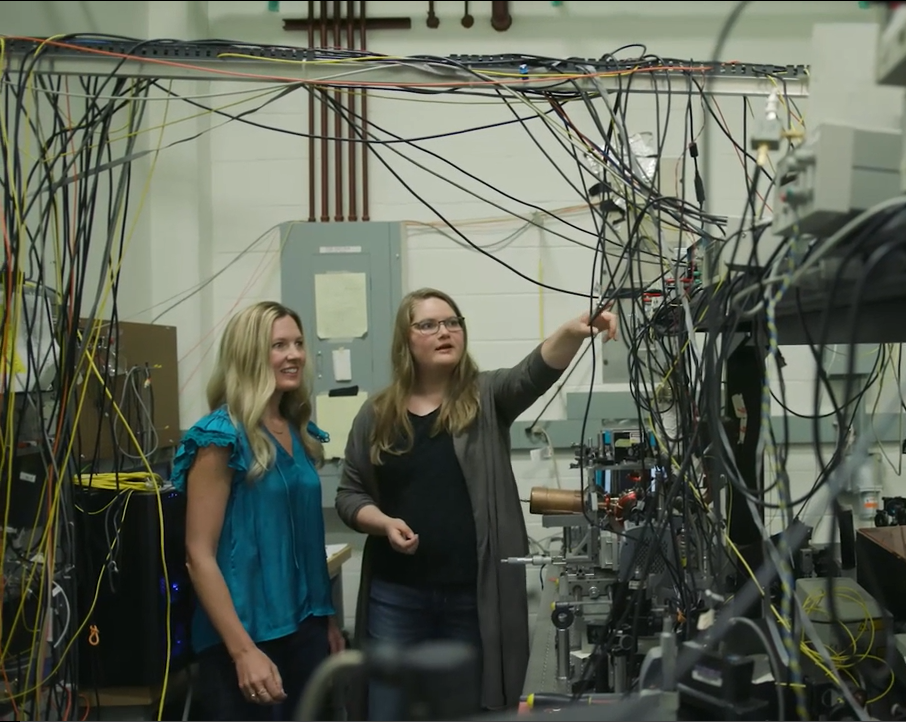
Earlier this year, Microsoft partnered with the University of Washington to teach an introductory course on quantum computing and programming. The course, led by Dr. Krysta Svore, General Manager of Microsoft Quantum Systems, focused on the practical implementation of quantum algorithms.
Students were first introduced to quantum programming with Q# through a series of coding exercises followed by programming assignments. For their final project, student teams developed quantum solutions for specified problems – everything from entanglement games and key distribution protocols to quantum chemistry and a Bitcoin mining algorithm. Several students from this undergraduate course joined the Microsoft Quantum team for a summer internship, further developing their new skillsets and delivering quantum impact to organizations around the world.
On the heels of this hands-on teaching engagement, Microsoft has established curriculum partnerships with more than 10 institutions around the world to continue closing the skills gap in quantum development and quantum algorithm design. This curriculum is circling the globe, from the University of California, Los Angeles (UCLA) to the Indian Institute of Technology (IIT) in Roorkee and Hyderabad, India.
Partner universities leverage Q#, Microsoft’s quantum programming language and associated Quantum Development Kit, to teach the principles of quantum computing to the next generation of computer engineers and scientists.
“The course material extended to us by Microsoft is concise and challenging. It covers the necessary mathematical foundations of Quantum Computing. Simulation on Q# is quite straightforward and easy to interpret. Collaboration with Microsoft has indeed captivated students of IIT Roorkee to get deeper insights into Quantum Technology.”
– Professor Ajay Wasan of IIT Roorkee, Department of Physics
Q# integrates with familiar tools like Visual Studio and Python, making it a very approachable entry point for undergraduate and graduate students alike.
“I integrated Microsoft’s Q# into my UCLA graduate course called Quantum Programming. My students found many aspects of Q# easy to learn and used the language to program and run four quantum algorithms. Thus, the curriculum partnership with Microsoft [has] helped me teach quantum computing to computer science students successfully.”
– Professor Jens Palsberg of UCLA, Computer Science Department
Microsoft has also partnered with Brilliant to bring quantum computing to students and professionals around the world via a self-serve e-learning environment.
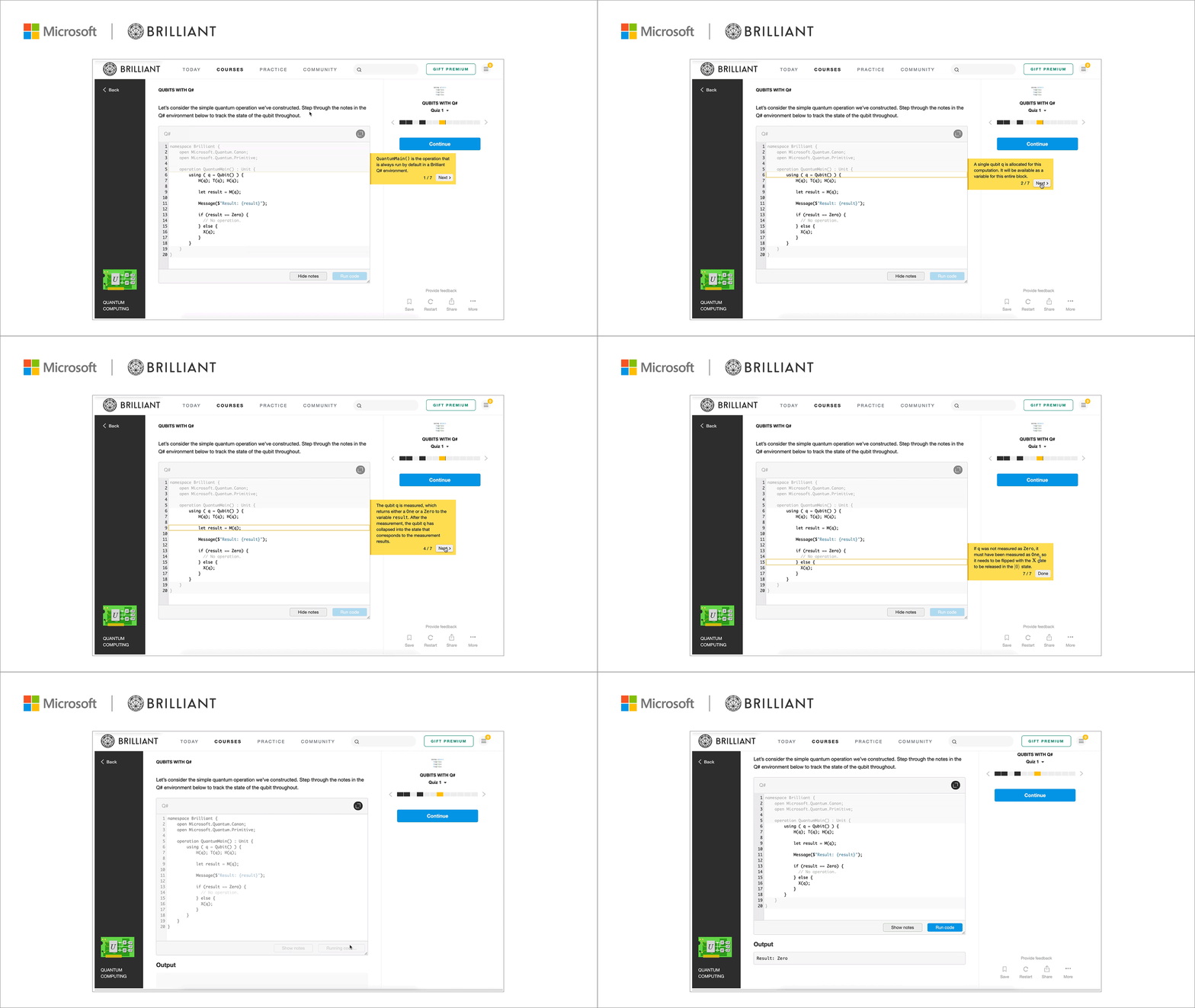
This interactive Quantum Computing course introduces students to quantum principles and uses Q# to help people learn to build quantum algorithms, simulating a quantum environment in their browsers. In the last six months, more than 40,000 people have interacted with the course and started building their own quantum solutions.
Accelerating quantum innovation through cross-industry collaboration
Recently, Microsoft enrolled into the Quantum Economic Development Consortium (QED-C), which aims to enable and grow the United States quantum industry.
QED-C was established with support from the National Institute of Standards and Technology (NIST) as part of the federal strategy for advancing quantum information science. Through the QED-C, Microsoft partners with a diverse set of business and academic leaders to identify and address gaps in technology, standards, and workforce readiness facing the quantum industry.
We look forward to continuing our academic and cross-industry collaborations in developing a quantum workforce to tackle real-world scenarios and bring this revolutionary technology to fruition.
Request to be an early adopter of Azure Quantum and incorporate Q# and the QDK in your quantum curriculum.
Are you currently a student interested in joining Microsoft Quantum as an intern? Apply to our open research intern positions today!
Other ways to get involved:
- Azure Quantum
- Q# and QDK Curriculum Inquiries
- Microsoft Quantum Network
- Northwest Quantum Nexus
- Cascadia Innovation Corridor
- Quantum Economic Development Consortium
Learning resources: