Skip to main content Explore View all products (200+) Microsoft Foundry Azure Copilot GitHub Copilot Azure Kubernetes Service (AKS) Azure Cosmos DB Azure Database for PostgreSQL Azure Arc Microsoft Fabric Linux virtual machines in Azure Foundry Models Foundry Agent Service Foundry IQ Foundry Tools Foundry Control Plane Observability in Foundry Control Plane Azure OpenAI in Foundry Models Azure Speech in Foundry Tools Azure Machine Learning View all databases Azure Cosmos DB Azure DocumentDB Azure SQL Azure Database for PostgreSQL Azure Managed Redis Microsoft Fabric Azure Databricks Linux virtual machines in Azure Windows Server on Azure Azure Functions Azure Virtual Machine Scale Sets Azure API Management Azure Container Apps Azure Kubernetes Service (AKS) Azure Kubernetes Fleet Manager Azure Container Registry Azure Red Hat OpenShift Azure Container Instances Azure Container Storage Azure Arc Azure Local Microsoft Defender for Cloud Azure Monitor Microsoft Sentinel Azure Migrate View all solutions (40+) Cloud solutions for small and medium businesses Cloud migration and modernization center Data analytics for AI Azure Databases AI apps and agents Microsoft Marketplace Microsoft Sovereign Cloud AI apps and agents Responsible AI with Azure AI Infrastructure Data analytics for AI Machine learning operations (MLOps) Low-code application development on Azure Integration Services Serverless computing DevOps Migration and modernization center .NET apps migration Databases on Azure Linux on Azure Oracle on Azure SAP on the Microsoft Cloud Adaptive cloud High-performance computing (HPC) Infrastructure as a service (IaaS) Resiliency Azure Essentials Azure Accelerate FinOps on Azure Microsoft Marketplace Azure pricing overview Create an Azure account Free Azure services Flexible purchase options Pricing calculator FinOps on Azure Maximize ROI from AI Azure savings plans Azure reservations Azure Hybrid Benefit Virtual Machines Azure SQL Microsoft Foundry Microsoft Fabric Azure Kubernetes Service (AKS) Microsoft Defender for Cloud Software Development Companies Microsoft Marketplace Find a partner Get started with Azure Customer stories Analyst reports, white papers, and e-books Videos Learn more about cloud computing Documentation Explore Azure portal Developer resources Quickstart templates Resources for startups Developer community Students Azure for partners Blog Events and Webinars Learn Support Contact Sales Get started with Azure Sign in
  • 1 min read

Accessing the Red Hat Customer Portal from Azure

Access the Red Hat Customer Portal from Red Hat Enterprise Linux On-Demand VMs on Microsoft Azure.

Did you know you can access premium Red Hat content by using a Red Hat Enterprise Linux VM image in the Azure Marketplace?

Three weeks ago we announced availability of Red Hat Enterprise Linux Pay-As-You-Go (PAYG) images in the Azure Marketplace. Today, I will show you one of the benefits you get from provisioning a Red Hat Enterprise Linux PAYG VM on Microsoft Azure.

First, let’s provision a Red Hat Enterprise Linux VM:

  • Open the Azure portal
  • Click on New
  • Type “Red Hat” in the marketplace search field
  • Pick the desired version (currently 6.7 and 7.2) and follow the rest of the VM provisioning process:
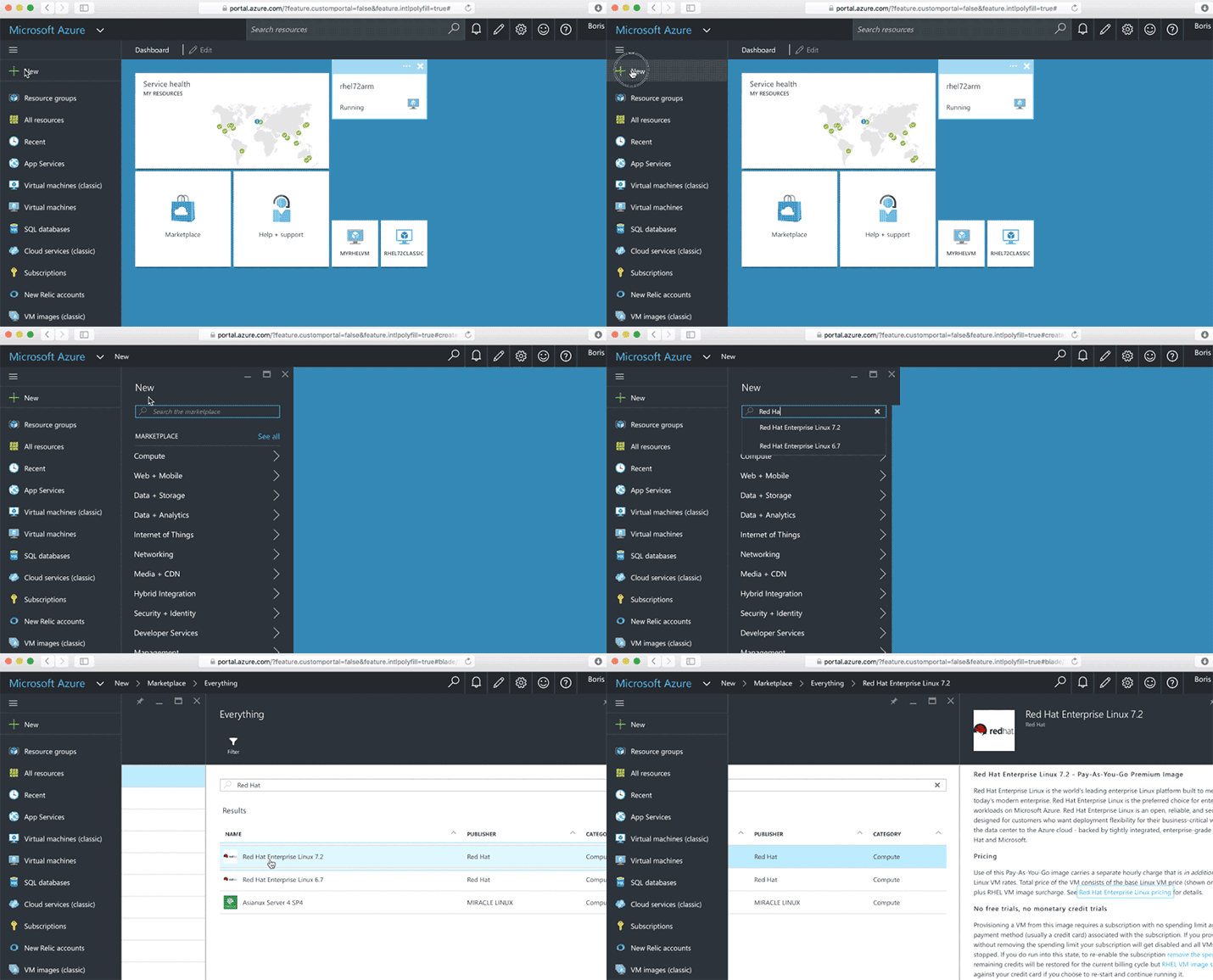
Red Hat Enterprise Linux VM Create

Alternatively, you can use the Red Hat Enterprise Linux quick start template or command-line interface to provision a VM.

Single-sign-on into Red Hat Customer Portal

As soon as your VM is running, select it in the portal UI. The “Settings” blade should automatically open and you will see a line in the Support & Troubleshooting section, “Red Hat Customer Portal,” as illustrated below.
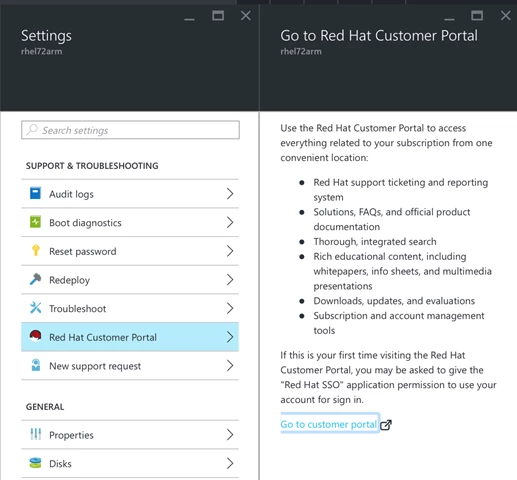
Red Hat Customer Portal

Following the link “Go to customer portal” will initiate a single-sign-on (SSO) process to the Red Hat Customer Portal. Initially you will go through a set of steps to associate your Azure account with an account on Red Hat Customer Portal (either new or existing).

Upon successful initial registration, clicking the link next time will sign you in to the Red Hat Customer Portal directly with no need to type the user name or password as your existing identity in the Azure portal will be used.

Once you are logged into the Red Hat Customer Portal, you can read the official Red Hat product documentation, find solutions and FAQs, and access a variety of other subscription-protected content on the Red Hat site. You can also open a support ticket directly with Red Hat using the Red Hat Customer Portal.
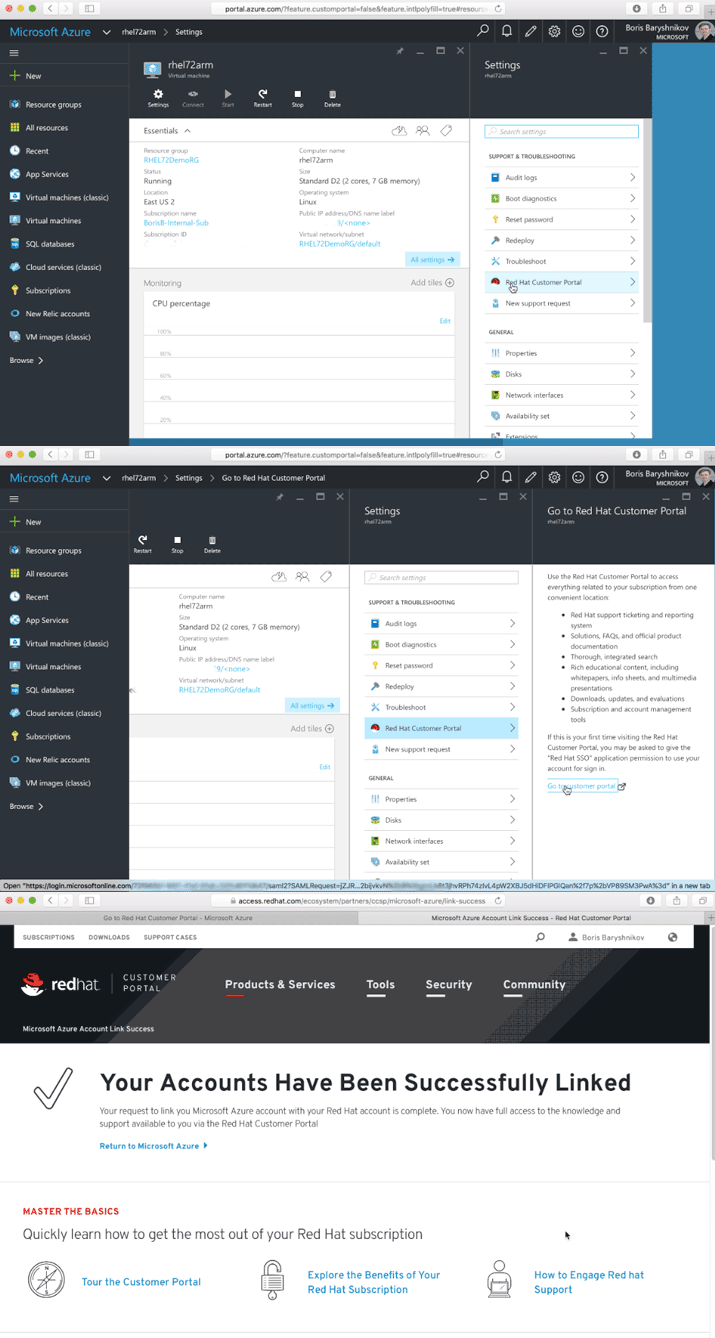
RHEL Portal

The ability to access the Red Hat Customer Portal directly from Microsoft Azure portal is one of many benefits included with the premium Red Hat Enterprise Linux VM image on Microsoft Azure. Consult the Red Hat Enterprise Linux VM pricing page and FAQ for additional details.

Please try it out and enjoy the benefit!
English (United States)
Your Privacy Choices Opt-Out Icon Your Privacy Choices
Consumer Health Privacy Sitemap Contact Microsoft Privacy Manage cookies Terms of use Trademarks Safety & eco Recycling About our ads