In countries around the world, natural disasters have been much in the news. If you had a hunch such calamities were increasing, you’re right. In 2017, hurricanes, earthquakes, and wildfires cost $306 billion worldwide, nearly double 2016’s losses of $188 billion.
Natural disasters caused by climate change, extreme weather, and aging and poorly designed infrastructure, among other risks, represent a significant risk to human life and communities. Globally, $94 trillion in new investment is needed to keep pace with population growth, with a large portion of that going toward repair of the built environment. These projects have long cycles due to government authorization processes, huge financial investments, and multi-year building efforts. We need to think creatively about how to accelerate these processes now.
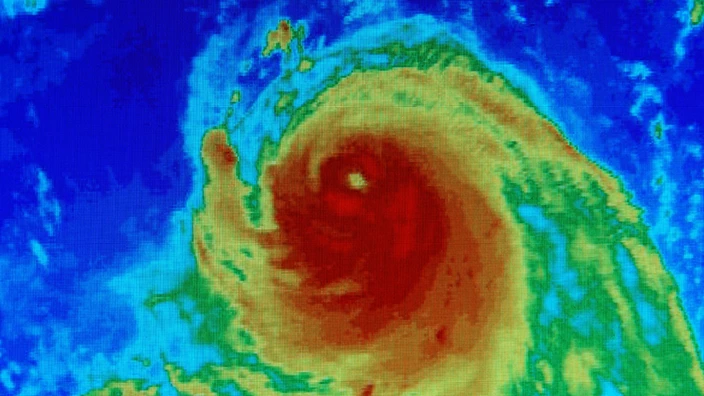
National, state, and local governments and organizations are also grappling with how to update disaster management practices to keep up. The Internet of Things (IoT), artificial intelligence (AI), and machine learning can help. These technologies can improve readiness and lessen the human and infrastructure costs of major events when they do occur. Disaster modeling is an important start and can help shape comprehensive programs to reduce disasters and respond to them effectively.
Anticipating disasters with better data
Fortunately, the science of predicting what’s coming keeps getting better, enabling federal agencies—FEMA, NASA, NOAA—and municipalities to prepare. Organizations already use sensor data, LoRa devices, wireless radio frequency technology, and satellite imagery to predict the impact of disasters. For example, disaster management teams could monitor IoT networks of weather base stations in the Caribbean as an early warning system for hurricanes and tropical storms and sensors on trees for drought conditions that increase the risk of forest fires. SkyAlert, an early warning system in Mexico, uses a mobile app, standalone devices, and an IoT solution that runs on Microsoft Azure to provide alerts to millions of residents up to two minutes before a quake hits, enabling them to move swiftly to safety.
Preparedness at a granular level
IoT sensors and devices that are embedded in infrastructure assets make it possible for public safety officials and development planners to monitor data on roads, bridges, buildings, energy grids, and public transportation—in real time. They can prioritize preventive maintenance and repairs; evaluate whether structures can withstand a coming weather event while continuing normal operations; and close unsafe assets. IoT could make sudden failures like bridge collapses—and the corresponding loss of life and mobility chokepoints—a thing of the past.
Government agencies and localities can also apply AI and machine learning to IoT data sets to predict disaster impacts, so they can identify staging areas, evacuation routes, and flood areas. Such information helps organizations marshal response efforts such as Duke Energy did when it staged 20,000 professionals across the Carolinas to respond to Hurricane Florence.
During a crisis, IoT technology can help by continually updating which evacuation routes are no longer available and what transit options are up and running, for safer, faster mass people movement. Say there’s a fire in a building or a stadium: IoT-powered systems can help direct individuals to all approved exits, while providing updates on which to avoid.
Responding more efficiently
The first 72 hours of a disaster’s aftermath are crucial. Emergency management teams must coordinate, set up operations, search for survivors, and take steps to minimize environmental crises such as chemical contamination. AI and IoT technologies underpin much of this initial response aggregating and analyzing data such as:
- Drone and satellite imagery
- IoT infrastructure data
- AI-powered chatbots
- 911 and reverse 911 systems
- Social media data, such as pleas for help or Facebook’s “mark yourself safe” feature
- Online heat maps
All this information can help teams identify urgent needs, prioritize responses, and avoid wasted effort, but only if it’s decipherable. AI quickly makes sense of the vast torrents of data created during crises and can also predict future developments, such as the potential aftershocks of an earthquake or additional flooding.
Azure Digital Twins technology is a new example of where public safety and emergency response are headed. Digital Twins provides a virtual representation of physical spaces that models relationships among people, places, and devices.
Take the example of a hospital that’s isolated by flooding. A team could model the building layout, identify the location of the highest-needs patients, assess the extent of infrastructure damage, stage vehicles in available parking, and plan evacuation all from a secure location. First responders would know when entrances and exits are blocked, find other ways in, move rapidly through spaces, and deliver triage faster. Combining IoT sensor data, social media messages, mobile communications from first responders, and robot exploration of degraded spaces enables this technology to save more lives faster.
Azure Maps is another example of how public safety and emergency response are evolving. Azure Maps used for traffic services enable real-time traffic flow and incident data. They can power digital signs diverting the public away from an incident, for example. As a result, emergency responders can more easily find the fastest path to help those in need.
Improved planning and relief efforts through analytics
AI and machine learning can help public safety officials refine strategies over time, getting smarter about planning and response. AI can be used to analyze event data for patterns, identify current at-risk areas and populations, and model future needs, based on population growth, development, and climate change, among other variables. Government leaders can use these insights to craft policies that reduce the impact of disasters on communities, like planning new buildings in less vulnerable areas.
Not every crisis is avoidable, but we now have the technology to predict and prevent catastrophes such as oil spills or building collapses. When unpredictable natural disasters do strike, responders can gain access to real-time data that aims aid where it needs to be faster, reducing additional loss of life.
Following a crisis, hindsight is 20/20. But AI and machine learning are making foresight a lot easier when it comes to disaster management.