Skip to main content Explore View all products (200+) Microsoft Foundry Azure Copilot GitHub Copilot Azure Kubernetes Service (AKS) Azure Cosmos DB Azure Database for PostgreSQL Azure Arc Microsoft Fabric Linux virtual machines in Azure Foundry Models Foundry Agent Service Foundry IQ Foundry Tools Foundry Control Plane Observability in Foundry Control Plane Azure OpenAI in Foundry Models Azure Speech in Foundry Tools Azure Machine Learning View all databases Azure Cosmos DB Azure DocumentDB Azure SQL Azure Database for PostgreSQL Azure Managed Redis Microsoft Fabric Azure Databricks Linux virtual machines in Azure Windows Server on Azure Azure Functions Azure Virtual Machine Scale Sets Azure API Management Azure Container Apps Azure Kubernetes Service (AKS) Azure Kubernetes Fleet Manager Azure Container Registry Azure Red Hat OpenShift Azure Container Instances Azure Container Storage Azure Arc Azure Local Microsoft Defender for Cloud Azure Monitor Microsoft Sentinel Azure Migrate View all solutions (40+) Cloud solutions for small and medium businesses Cloud migration and modernization center Data analytics for AI Azure Databases AI apps and agents Microsoft Marketplace Microsoft Sovereign Cloud AI apps and agents Responsible AI with Azure AI Infrastructure Data analytics for AI Machine learning operations (MLOps) Low-code application development on Azure Integration Services Serverless computing DevOps Migration and modernization center .NET apps migration Databases on Azure Linux on Azure Oracle on Azure SAP on the Microsoft Cloud Adaptive cloud High-performance computing (HPC) Infrastructure as a service (IaaS) Resiliency Azure Essentials Frontier Accelerate for Azure FinOps on Azure Microsoft Marketplace Azure pricing overview Create an Azure account Free Azure services Flexible purchase options Pricing calculator FinOps on Azure Maximize ROI from AI Azure savings plans Azure reservations Azure Hybrid Benefit Virtual Machines Azure SQL Microsoft Foundry Microsoft Fabric Azure Kubernetes Service (AKS) Microsoft Defender for Cloud View more Software Development Companies Microsoft Marketplace Find a partner Resources for Azure partners Get started with Azure Customer stories Analyst reports, white papers, and e-books Videos Learn more about cloud computing Documentation Explore Azure portal Developer resources Quickstart templates Resources for startups Developer community Students Azure for partners Blog Events and Webinars Learn Support Contact Sales Get started with Azure Sign in

We introduced Azure Availability Zones during Microsoft Ignite as part of our continuing expansion of Azure’s support for the most demanding, mission-critical workloads. Today I’m excited to announce the general availability of Availability Zones beginning with select regions in the United States and Europe.

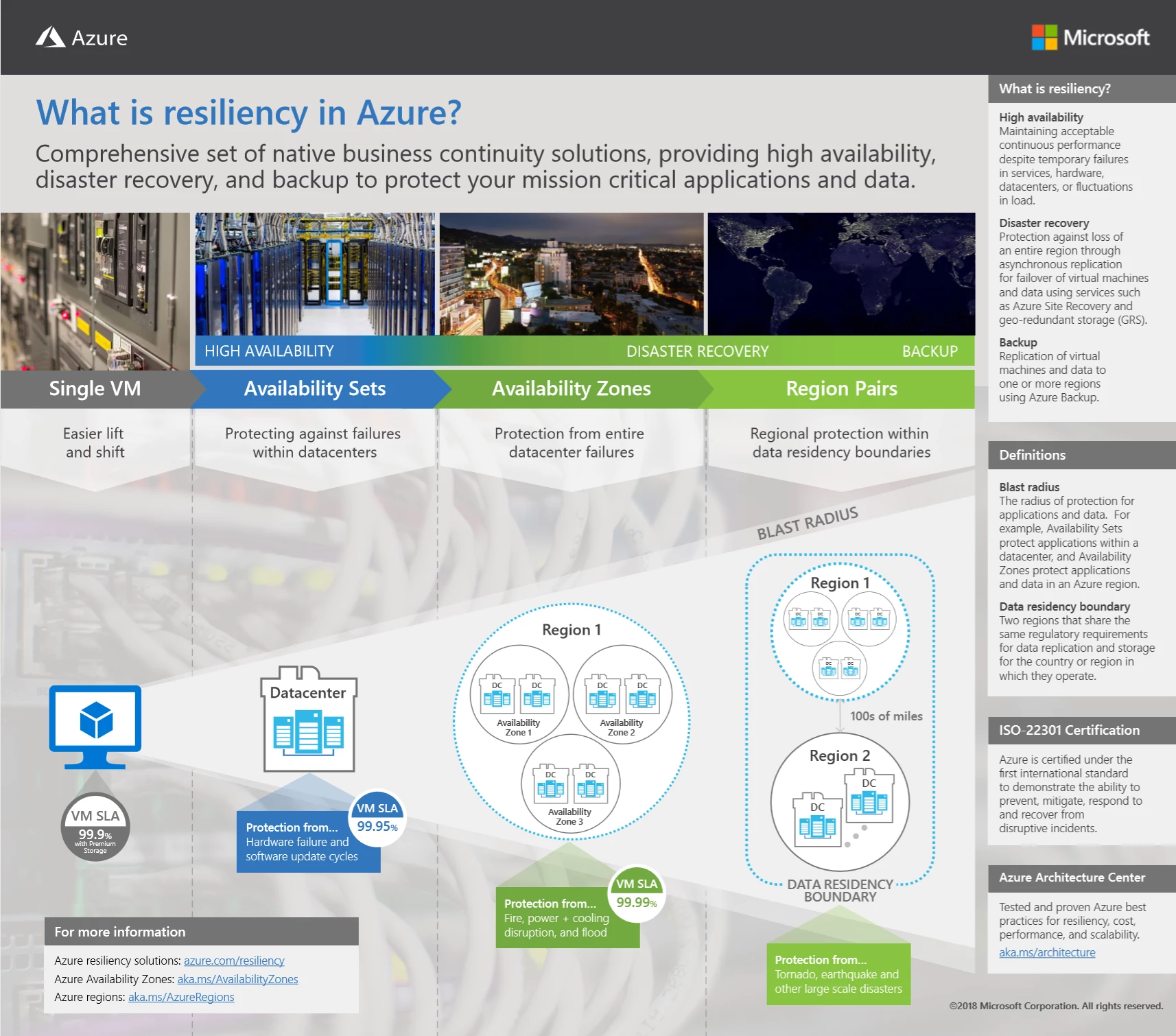
With Availability Zones, in addition to the broadest global coverage, Azure now offers the most comprehensive resiliency strategy in the industry from mitigating rack level failures with availability sets to protecting against large scale events with failover to separate regions. Within a region, Availability Zones increase fault tolerance with physically separated locations, each with independent power, network, and cooling.

For many companies, especially those in regulated industries, who are increasingly moving their mission-critical applications to the cloud, resiliency and business continuity have become a crucial focus. From online commerce systems in retail to customer-facing applications in financial services, the stakes are high for organizations and enterprises to deliver for their customers. Even a minor issue can have a major impact on a company’s brand reputation, customer satisfaction, and bottom line. In this environment, it’s imperative to develop applications with the highest operations standards anchored by a multi-layered resiliency approach.

“Availability Zones give us the combination of low latency and high availability that we need to meet customer requirements. All of my team’s applications with higher SLA levels are now built on Availability Zones. The physical separation of Availability Zones builds an extra layer of redundancy.”

– Mitch Nelson, Director, Managed Services, Adobe
Azure Availability Zone

Availability Zones are now available providing an industry-leading 99.99% SLA when virtual machines are running in two or more Availability Zones in the same region. Moving forward, we’re committed to bringing Availability Zones to additional geographies to allow customers to create a comprehensive business continuity strategy with data residency. 

Learn more and start using Azure Availability Zones today. To learn more about Azure resiliency overall, visit the resiliency page.


WE ARE MICROSOFT

Explore Microsoft Foundry

The future of AI starts here. Envision your next great AI app with the latest technologies. Get started with Azure.