Skip to main content Explore View all products (200+) Microsoft Foundry Azure Copilot GitHub Copilot Azure Kubernetes Service (AKS) Azure Cosmos DB Azure Database for PostgreSQL Azure Arc Microsoft Fabric Linux virtual machines in Azure Foundry Models Foundry Agent Service Foundry IQ Foundry Tools Foundry Control Plane Observability in Foundry Control Plane Azure OpenAI in Foundry Models Azure Speech in Foundry Tools Azure Machine Learning View all databases Azure Cosmos DB Azure DocumentDB Azure SQL Azure Database for PostgreSQL Azure Managed Redis Microsoft Fabric Azure Databricks Linux virtual machines in Azure Windows Server on Azure Azure Functions Azure Virtual Machine Scale Sets Azure API Management Azure Container Apps Azure Kubernetes Service (AKS) Azure Kubernetes Fleet Manager Azure Container Registry Azure Red Hat OpenShift Azure Container Instances Azure Container Storage Azure Arc Azure Local Microsoft Defender for Cloud Azure Monitor Microsoft Sentinel Azure Migrate View all solutions (40+) Cloud solutions for small and medium businesses Cloud migration and modernization center Data analytics for AI Azure Databases AI apps and agents Microsoft Marketplace Microsoft Sovereign Cloud AI apps and agents Responsible AI with Azure AI Infrastructure Data analytics for AI Machine learning operations (MLOps) Low-code application development on Azure Integration Services Serverless computing DevOps Migration and modernization center .NET apps migration Databases on Azure Linux on Azure Oracle on Azure SAP on the Microsoft Cloud Adaptive cloud High-performance computing (HPC) Infrastructure as a service (IaaS) Resiliency Azure Essentials Frontier Accelerate for Azure FinOps on Azure Microsoft Marketplace Azure pricing overview Create an Azure account Free Azure services Flexible purchase options Pricing calculator FinOps on Azure Maximize ROI from AI Azure savings plans Azure reservations Azure Hybrid Benefit Virtual Machines Azure SQL Microsoft Foundry Microsoft Fabric Azure Kubernetes Service (AKS) Microsoft Defender for Cloud View more Software Development Companies Microsoft Marketplace Find a partner Resources for Azure partners Get started with Azure Customer stories Analyst reports, white papers, and e-books Videos Learn more about cloud computing Documentation Explore Azure portal Developer resources Quickstart templates Resources for startups Developer community Students Azure for partners Blog Events and Webinars Learn Support Contact Sales Get started with Azure Sign in

I’m excited to announce that the AzureCAT patterns and practices team has published new guidance about microservices titled Designing, building, and operating microservices on Azure.

Microservices have become a popular architectural style for building cloud applications that are resilient, highly scalable, and able to evolve quickly. To be more than just a buzzword, however, microservices require a different approach to designing and building applications.

In this set of articles, we explore how to build and run a microservices architecture on Azure, using Kubernetes as a container orchestrator. Future articles will include Service Fabric. Topics include:

  • Using Domain Driven Design (DDD) to design a microservices architecture.
  • Choosing the right Azure technologies for compute, storage, messaging, and other elements of the design.
  • Understanding microservices design patterns.
  • Designing for resiliency, scalability, and performance.
  • Building a CI/CD pipeline.

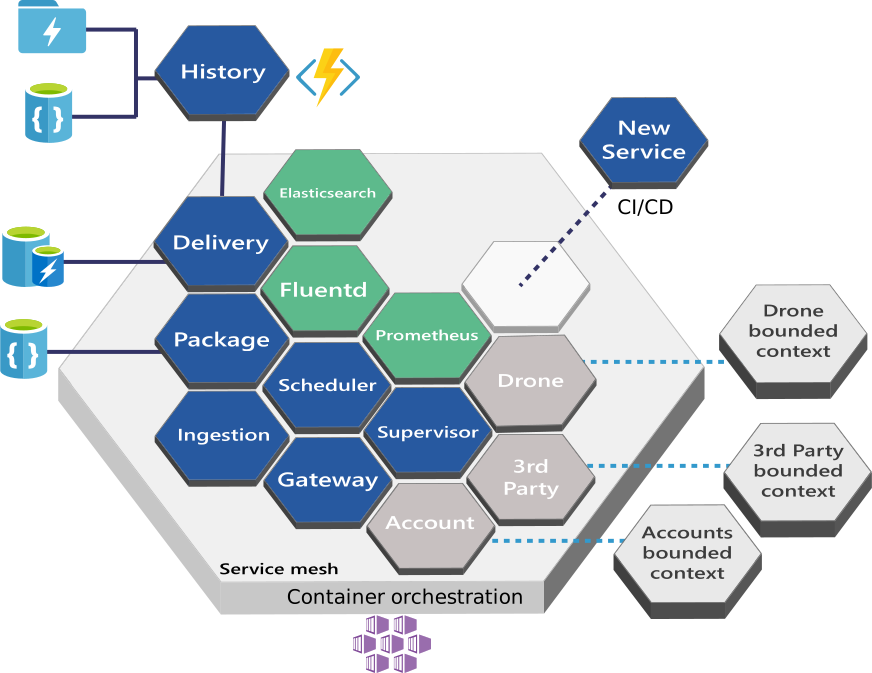
Throughout, we focus on an end-to-end scenario for a drone delivery service that lets customers schedule packages to be picked up and delivered via drone. A reference implementation for this project is available on GitHub.

The reference implementation includes a number of different Azure and open source technologies:

  • Azure Container Service (Kubernetes) to run frontend and backend services.
  • Azure Functions to run event driven services.
  • Linkerd to manage inter-service communication.
  • Prometheus to monitor system/application metrics.
  • Fluentd and Elasticsearch to monitor application logs.
  • Cosmos DB, Azure Data Lake Store, and Azure Redis Cache to store different types of data.
drone

The goal of this guidance is to show the end-to-end process of designing, building, and operating microservices under a realistic scenario. We hope you will find it useful in your own projects. As always, we greatly appreciate your feedback.


WE ARE MICROSOFT

Explore Microsoft Foundry

The future of AI starts here. Envision your next great AI app with the latest technologies. Get started with Azure.