Skip to main content Explore View all products (200+) Microsoft Foundry Azure Copilot GitHub Copilot Azure Kubernetes Service (AKS) Azure Cosmos DB Azure Database for PostgreSQL Azure Arc Microsoft Fabric Linux virtual machines in Azure Foundry Models Foundry Agent Service Foundry IQ Foundry Tools Foundry Control Plane Observability in Foundry Control Plane Azure OpenAI in Foundry Models Azure Speech in Foundry Tools Azure Machine Learning View all databases Azure Cosmos DB Azure DocumentDB Azure SQL Azure Database for PostgreSQL Azure Managed Redis Microsoft Fabric Azure Databricks Linux virtual machines in Azure Windows Server on Azure Azure Functions Azure Virtual Machine Scale Sets Azure API Management Azure Container Apps Azure Kubernetes Service (AKS) Azure Kubernetes Fleet Manager Azure Container Registry Azure Red Hat OpenShift Azure Container Instances Azure Container Storage Azure Arc Azure Local Microsoft Defender for Cloud Azure Monitor Microsoft Sentinel Azure Migrate View all solutions (40+) Cloud solutions for small and medium businesses Cloud migration and modernization center Data analytics for AI Azure Databases AI apps and agents Microsoft Marketplace Microsoft Sovereign Cloud AI apps and agents Responsible AI with Azure AI Infrastructure Data analytics for AI Machine learning operations (MLOps) Low-code application development on Azure Integration Services Serverless computing DevOps Migration and modernization center .NET apps migration Databases on Azure Linux on Azure Oracle on Azure SAP on the Microsoft Cloud Adaptive cloud High-performance computing (HPC) Infrastructure as a service (IaaS) Resiliency Azure Essentials Frontier Accelerate for Azure FinOps on Azure Microsoft Marketplace Azure pricing overview Create an Azure account Free Azure services Flexible purchase options Pricing calculator FinOps on Azure Maximize ROI from AI Azure savings plans Azure reservations Azure Hybrid Benefit Virtual Machines Azure SQL Microsoft Foundry Microsoft Fabric Azure Kubernetes Service (AKS) Microsoft Defender for Cloud View more Software Development Companies Microsoft Marketplace Find a partner Resources for Azure partners Get started with Azure Customer stories Analyst reports, white papers, and e-books Videos Learn more about cloud computing Documentation Explore Azure portal Developer resources Quickstart templates Resources for startups Developer community Students Azure for partners Blog Events and Webinars Learn Support Contact Sales Get started with Azure Sign in

This blog post was co-authored by Anitha Adusumilli, Principal Program Manager, Azure Networking.

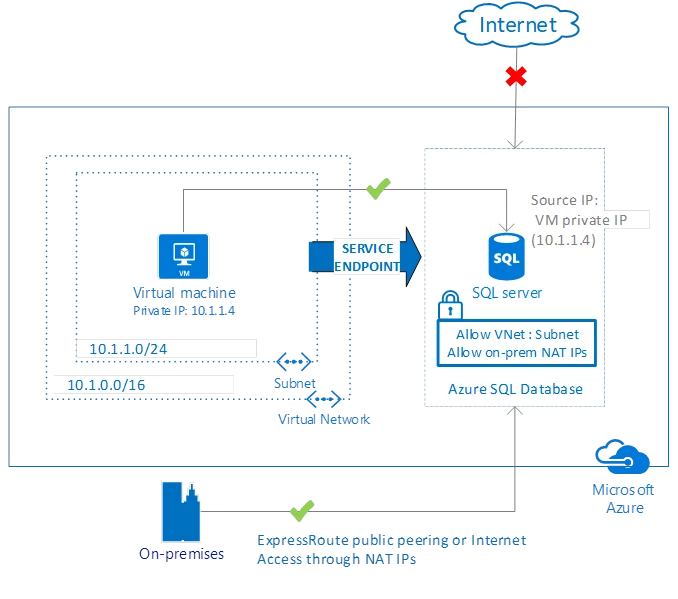
We are excited to announce the general availability of Virtual Network (VNet) Service Endpoints for Azure SQL Database in all Azure regions. This ability allows you to isolate connectivity to your logical server from only a given subnet or set of subnets within your virtual network. The traffic to Azure SQL Database from your VNet will always stay within the Azure backbone network. This direct route will be preferred over any specific routes that take Internet traffic through virtual appliances or on-premises.

There is no additional billing for virtual network access through service endpoints. Current pricing model for Azure SQL DB applies as is.

VNet service endpoints for SQL Data Warehouse (DW) continues to be in public preview, for all Azure regions.
clip_image002

Firewall rules and VNet Service Endpoints can be used together

Turning on VNet Service Endpoints does not override Firewall rules that you have provisioned on your SQL Server or Database. Both continue to be applicable.

VNet Service Endpoints don’t extend to on-premises. To allow access from on-premises, Firewall rules can be used to limit connectivity only to your public (NAT) IPs.

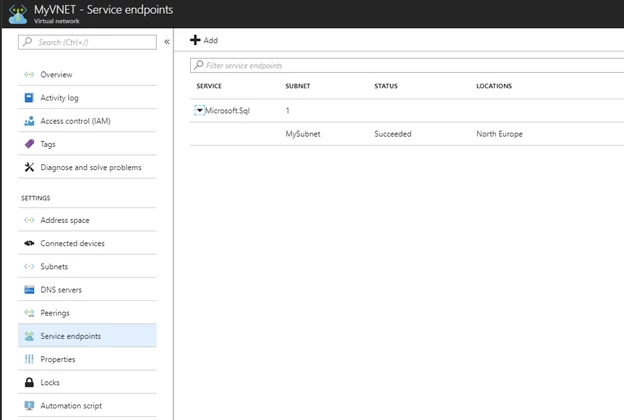
To enable VNet protection, first enable service endpoints for SQL in the VNet.
image

On the SQL Server, you can allow access to multiple subnets belonging to one or more VNets. It is also possible for you to configure Firewall rules in conjunction to your VNet rules.
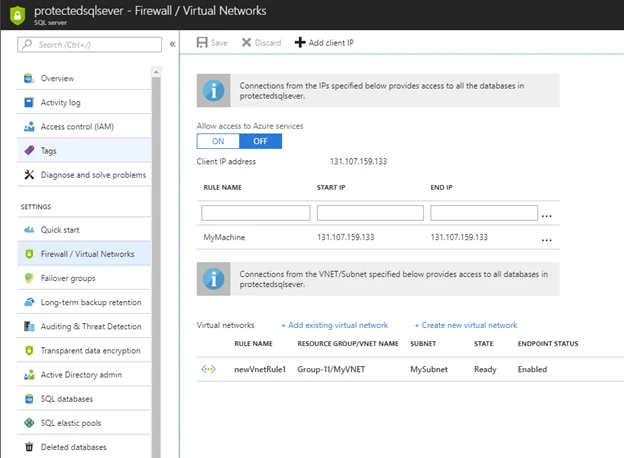
image

Turning on service endpoints for servers with pre-existing firewall rules

When you connect to your server with service endpoints turned on, the source IP of SQL connections will switch to the private IP space of your VNet. If at present, your server or database firewall rules allow specific Azure public IPs, then the connectivity will break until you allow the given VNet/subnet by specifying it in the VNet firewall rules. To ensure connectivity, you can preemptively specify VNet firewall rules before turning on service endpoints by using IgnoreMissingServiceEndpoint flag.

Support for ASE

As part of GA, we now support service endpoints for App Service Environment (ASE) subnets deployed into your VNets.

Next Steps

To get started, refer to the documentation Virtual Network Service Endpoints and VNet Service Endpoints and rules for Azure SQL Database.

For feature details and scenarios please watch the Microsoft Ignite session, Network security for applications in Azure.


WE ARE MICROSOFT

Explore Microsoft Foundry

The future of AI starts here. Envision your next great AI app with the latest technologies. Get started with Azure.