Skip to main content Explore View all products (200+) Microsoft Foundry Azure Copilot GitHub Copilot Azure Kubernetes Service (AKS) Azure Cosmos DB Azure Database for PostgreSQL Azure Arc Microsoft Fabric Linux virtual machines in Azure Foundry Models Foundry Agent Service Foundry IQ Foundry Tools Foundry Control Plane Observability in Foundry Control Plane Azure OpenAI in Foundry Models Azure Speech in Foundry Tools Azure Machine Learning View all databases Azure Cosmos DB Azure DocumentDB Azure SQL Azure Database for PostgreSQL Azure Managed Redis Microsoft Fabric Azure Databricks Linux virtual machines in Azure Windows Server on Azure Azure Functions Azure Virtual Machine Scale Sets Azure API Management Azure Container Apps Azure Kubernetes Service (AKS) Azure Kubernetes Fleet Manager Azure Container Registry Azure Red Hat OpenShift Azure Container Instances Azure Container Storage Azure Arc Azure Local Microsoft Defender for Cloud Azure Monitor Microsoft Sentinel Azure Migrate View all solutions (40+) Cloud solutions for small and medium businesses Cloud migration and modernization center Data analytics for AI Azure Databases AI apps and agents Microsoft Marketplace Microsoft Sovereign Cloud AI apps and agents Responsible AI with Azure AI Infrastructure Data analytics for AI Machine learning operations (MLOps) Low-code application development on Azure Integration Services Serverless computing DevOps Migration and modernization center .NET apps migration Databases on Azure Linux on Azure Oracle on Azure SAP on the Microsoft Cloud Adaptive cloud High-performance computing (HPC) Infrastructure as a service (IaaS) Resiliency Azure Essentials Frontier Accelerate for Azure FinOps on Azure Microsoft Marketplace Azure pricing overview Create an Azure account Free Azure services Flexible purchase options Pricing calculator FinOps on Azure Maximize ROI from AI Azure savings plans Azure reservations Azure Hybrid Benefit Virtual Machines Azure SQL Microsoft Foundry Microsoft Fabric Azure Kubernetes Service (AKS) Microsoft Defender for Cloud View more Software Development Companies Microsoft Marketplace Find a partner Resources for Azure partners Get started with Azure Customer stories Analyst reports, white papers, and e-books Videos Learn more about cloud computing Documentation Explore Azure portal Developer resources Quickstart templates Resources for startups Developer community Students Azure for partners Blog Events and Webinars Learn Support Contact Sales Get started with Azure Sign in

Selecting a secure cloud services provider is one of the most fundamentally important decisions customers make. Customers must build their applications and services upon a secure trusted foundation. Azure Database for MySQL, PostgreSQL, and MariaDB inherit a fundamentally proven trusted security architecture from Microsoft Azure. Azure has over 50 national, regional and industry specific compliance offering that Azure Database for PostgreSQL and Azure Database for MySQL leverage as part of Microsoft’s Trusted Cloud foundation of security, privacy, compliance, and transparency. To learn more and access additional resources, visit the Microsoft Trust Center. Azure Database for MySQL, PostgreSQL, and MariaDB protection starts with Azure network security. Azure networking provides Distributed Denial of Service (DDoS) protection at the network edge for all Azure services and all network traffic between Azure datacenters that stays on Azure’s global network and does not travel over the Internet. To learn more please read Yousef Khalidi’s blog post on Azure network security.
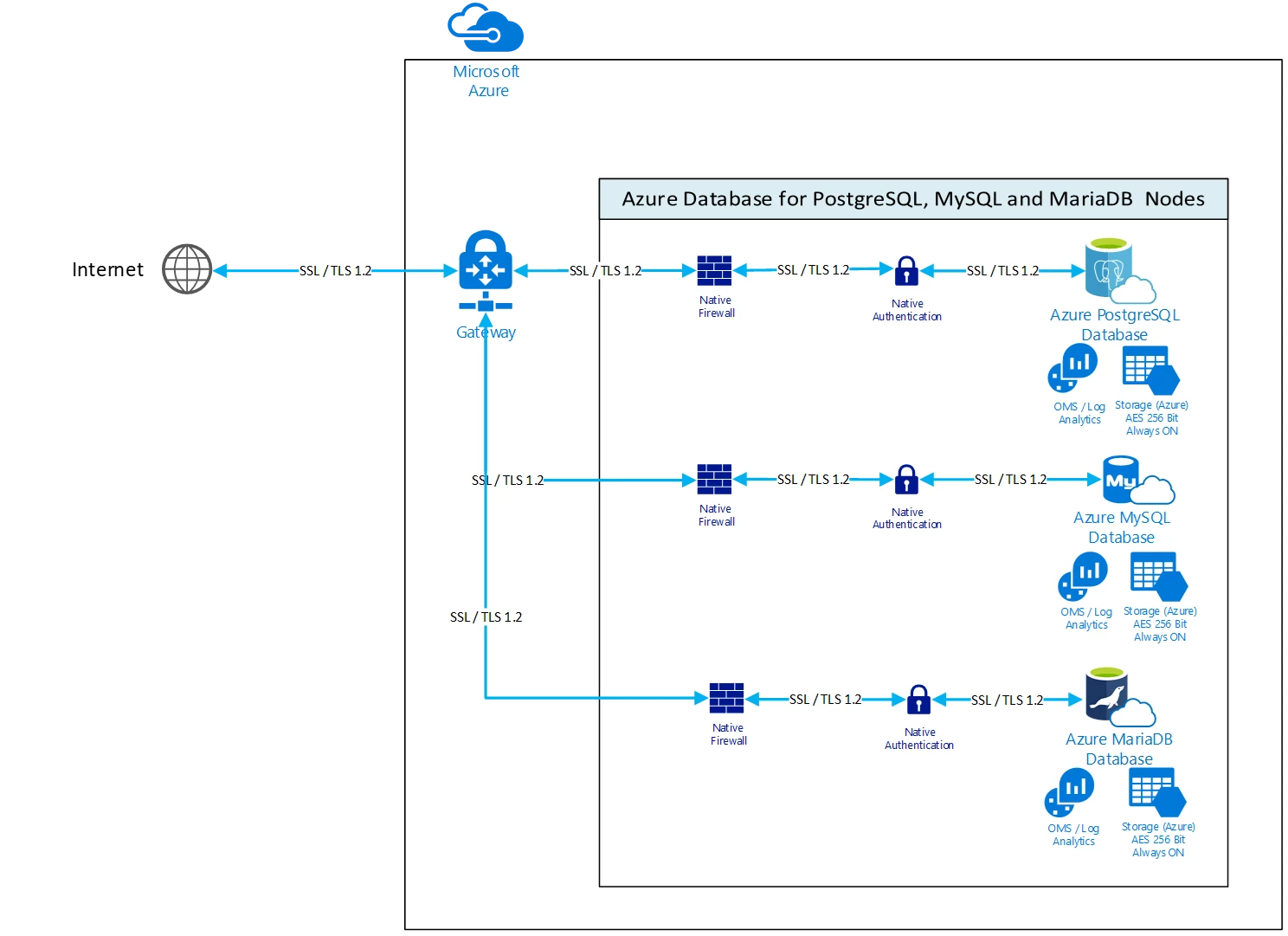
Security for Azure Database for MySQL, PostgreSQL and MariaDB is built into the service as depicted above. Azure Database for MySQL, PostgreSQL and MariaDB share a common layered security model. Neither database service node is exposed directly to the Internet. The services sit behind Azure network protection and have their own gateway that securely establishes connections. Azure Database for PostgreSQL and Azure Database for MySQL support SSL connections. A new database service deploys with SSL connections defaulted to “on”. Visit these articles to learn how to configure SSL for MySQL, PostgreSQL, and MariaDB. Connections to the database services are protected further by configuring MySQL, PostgreSQL, and MariaDB native database firewalls. Native database authentication methods for MySQL, PostgreSQL and MariaDB are supported out of the box. All data stored by the service is secured via the Azure Storage Service through 256 bit AES encryption that is always on and cannot be turned off.

Azure Database for MySQL, PostgreSQL and MariaDB inherit network security and compliance from Microsoft Azure and provide a managed layered security model with DDoS protection, a secure gateway, SSL encrypted network traffic, native firewalls, native authentication, and finally all data is automatically encrypted by the service. Multiple new security features are planned for release in 2019. Check back often for new security feature announcements.


WE ARE MICROSOFT

Explore Microsoft Foundry

The future of AI starts here. Envision your next great AI app with the latest technologies. Get started with Azure.