Developers can now access the latest Cognitive Services Speech SDK which now supports:
- Selection of the input microphone through the AudioConfig class
- Unity in C# (beta)
- Additional sample code
Read the updated Speech Services documentation to get started today.
What’s new
The Speech SDK supports a selection of the input microphone through the AudioConfig class, meaning you can stream audio data to the Speech Service from a non-default microphone. For more details see the documentation and the how-to guide on selecting an audio input device with the Speech SDK. This is not yet available from JavaScript.
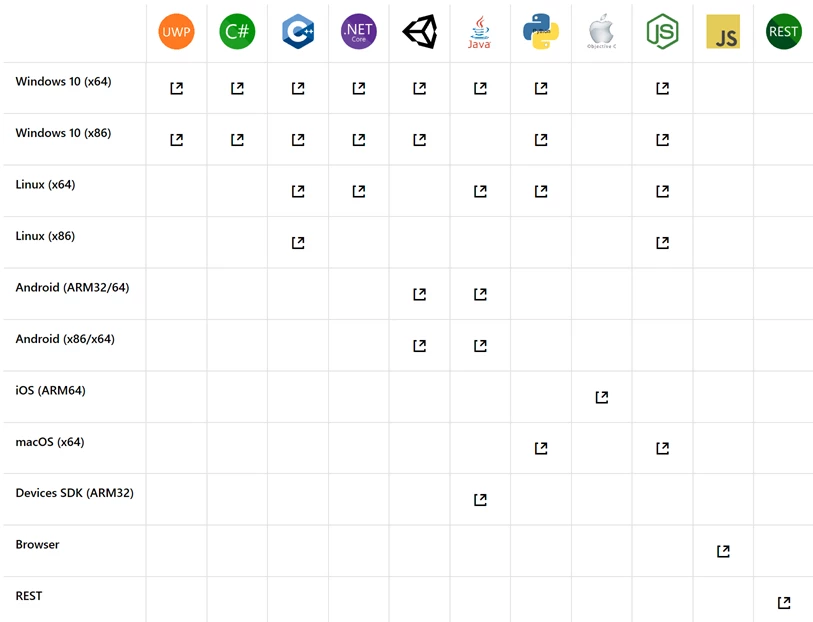
The Speech SDK now also supports Unity in a beta version. Since this is new functionality, please provide feedback through the issue section in the GitHub sample repository. This release supports Unity on Windows x86 and x64 (desktop or Universal Windows Platform applications), and Android (ARM32/64, x86). More information is available in our Unity quickstart.
Samples
The following new content is available in our sample repository.
- Samples for AudioConfig.FromMicrophoneInput.
- Python samples for intent recognition and translation.
- Samples for using the Connection object in iOS.
- Java samples for translation with audio output.
- New sample for use of the Batch Transcription REST API.
Improvements and changes
A number of improvements and changes have been made since our last release including:
- Python
- Improved parameter verification and error messages in SpeechConfig
- Added support for the Connection object
- Support for 32-bit Python (x86) on Windows
- The Speech SDK for Python is out of beta
- iOS
- The SDK is now built against the iOS SDK version 12.1. and supports iOS versions 9.2 and later
- Improved reference documentation and fixed several property names
- JavaScript
- Added support for the Connection object
- Added type definition files for bundled JavaScript
- Initial support and implementation for phrase hints
- Returned properties collection with service JSON for recognition
- Windows DLLs now contains a version resource.
Bug fixes
- Empty proxy username and proxy password were not handled correctly before. With this release, if you set proxy username and proxy password to an empty string, they will not be submitted when connecting to the proxy.
- Session ID’s created by the SDK were not always truly random for some languages and environments. Random generator initialization has been added to fix this.
- Improved handling of authorization token. If you want to use an authorization token, specify in the SpeechConfig and leave the subscription key empty. Then create the recognizer as usual.
- In some cases, the Connection object wasn’t released correctly. This has been fixed.
For more details and examples for how your business can benefit from the new functionality for Speech Services, check out release notes and samples in the GitHub sample repository for Speech Services.