Two years ago at //Build 2016, we made Service Fabric generally available and since then, we’ve seen tremendous growth with enterprise customers across a broad range of industries taking advantage of Service Fabric’s extensive capabilities to lift/shift and modernize, build business critical SaaS, transform gaming apps, write secure financial platforms and create scalable IoT solutions on Azure.
Today, Service Fabric powers many Azure and Microsoft services such as Azure Cosmos DB, Azure SQL Database, Skype for Business, hosting over a million applications and running millions of cores daily. It is a platform for business critical applications. Less than two months ago, we began to open source the entire code base for Service Fabric (all 2.5+ million lines of code) starting our journey to a completely open development process on GitHub.
At Microsoft Build 2018, we are excited to share with you announcements and updates on the road ahead.
Adding serverless capabilities to Service Fabric
Earlier today, we shared our product roadmap and demonstrated Azure Service Fabric Mesh, which offers the same reliability, mission-critical performance and scale customers get with Service Fabric, but no more overhead of cluster management and patching operations. Service Fabric Mesh supports both Windows and Linux containers allowing you to develop with any programming language and framework of your choice.
Whether it be modernizing existing workloads or building highly available, cloud native applications with stateful services, Service Fabric Mesh allows you to deploy microservices running in containers, and quickly scale to meet the needs of most demanding workloads right from Visual Studio or Azure Portal/CLI, and pay only for what you use (per second billing). It also offers intelligent routing between microservices using Envoy.
Here is a screen capture showing how easy it is for you to write an application, test and debug locally on Service Fabric and publish it to Service Fabric Mesh in seconds – no VMs, storage, network to manage.
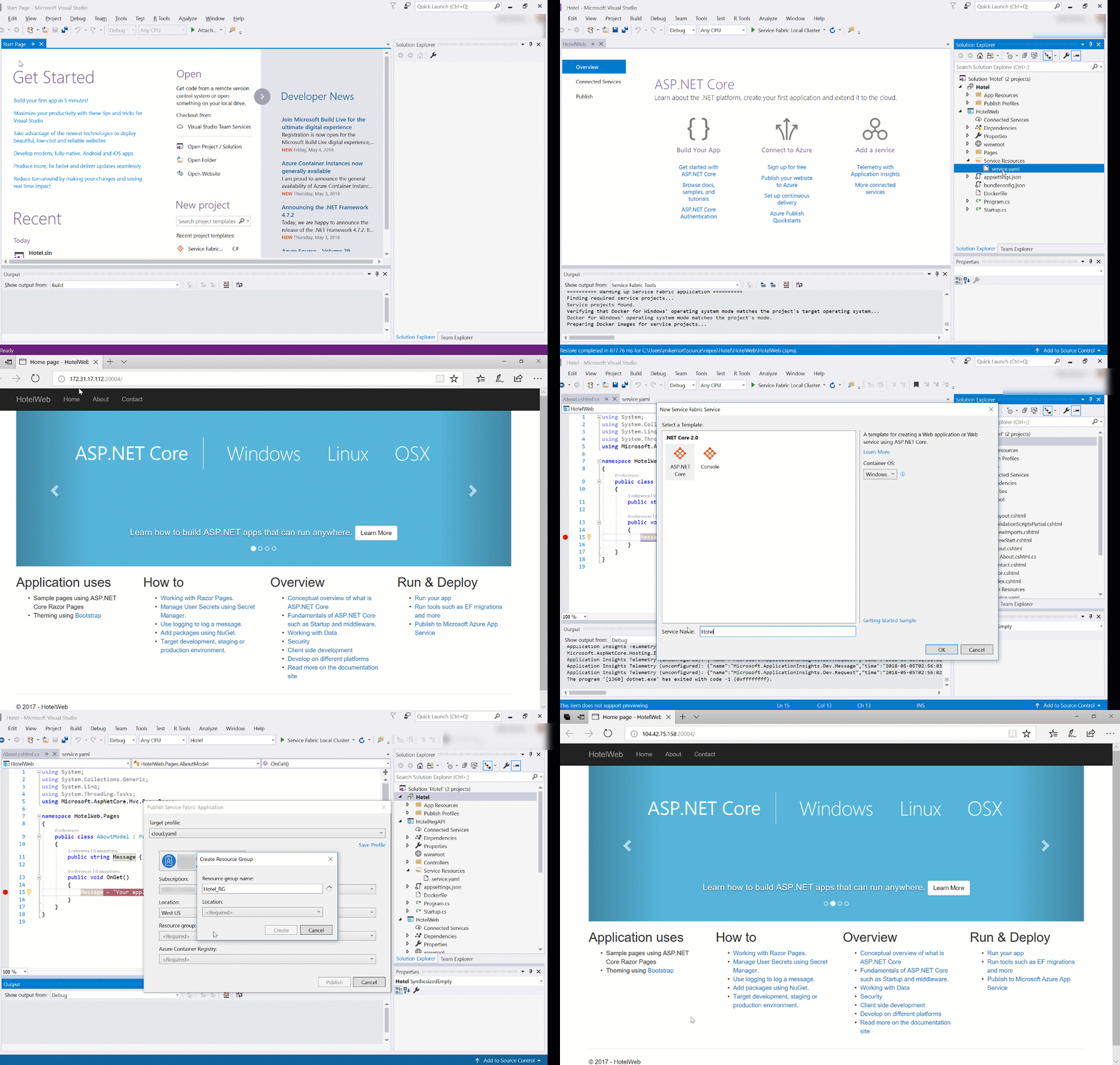
You can sign up for the private preview, with a public preview planned in the upcoming weeks.
Enhancements to Service Fabric Clusters
We recently rolled out the 6.2 release of Service Fabric providing general availability for .NET Core and Java runtimes on Linux, along with preview support for RHEL as the operating system to augment the Windows based cluster offerings.
We’ll be releasing the next update of Service Fabric (v6.3), which will provide an integrated development experience to target your choice of Service Fabric environment, be that having more control through Service Fabric Clusters in Azure, running on-premises with Service Fabric Standalone, or letting Azure fully manage the infrastructure and orchestration through Service Fabric Mesh. This release of Service Fabric will also have many customer-requested enhancements including secret management and isolated networks.
Manage Service Fabric on-premises clusters through Azure
As the world demands hybrid flexibility, Service Fabric offers hybrid microservices platform, giving developers the option to deploy on-premises. It’s free and supported by Microsoft. Now, we’re making it even easier to create and manage these standalone clusters running anywhere.
We are working on supporting the creation and management of Service Fabric Standalone clusters through Azure (Portal and the CLI) together with other Service Fabric deployments, enabling hybrid cluster deployments across on-premises, Azure or even other clouds. Furthermore, we’ll be adding Linux support (Ubuntu & RHEL) to the Service Fabric Standalone offering.
Resilient IoT Edge with Service Fabric
Building on the on-premises support of Service Fabric, we’re working on extending Service Fabric support to IoT Edge devices. You can use Service Fabric deployed on IoT edge devices to create local clusters. Service Fabric powers highly reliable IoT edge applications which can then be managed through Azure IoT Hub.You can see a demo of this exciting capability and more at Mark Russinovich’s //Build session – Inside Azure Datacenter Architecture talk.
Come and meet us
We’d love to hear from you. If you are at //Build, visit the Service Fabric booth in the Expo hall, give us feedback, have a design discussion, or see some of our cool demos. You can also search “Service Fabric” and find our session stream or recordings. For example, you will learn:
- More about Azure Server Fabric Mesh from BRK2111 Azure Service Fabric: The road ahead for microservices.
- How we enable modernization scenarios through BRK2102 App Modernization with Microsoft Azure, BRK2149 Modernize your Windows Server applications with containers and BRK3810 Modernizing existing .NET applications with Windows Containers and Azure cloud.
- What you can build with Service Fabric directly from our customers through THR2034 Accenture: Modernize applications and reduce TCO with Windows containers on Service Fabric, THR2011 How Honeywell migrated their smart thermostat application to Service Fabric and THR2513 ASOS.com: Improving cloud utilization with Service Fabric.
We invite you to reimagine the microservices platform together with us by joining our open source project and sign up for the private preview of Service Fabric Mesh.