There are many optimization problems in finance, logistics, biotechnology, and AI where you need to find the best combination from an enormous range of choices. Combinatorial optimization problems such as these are difficult to solve at high speed and at a reasonable computational cost with existing computers because the number of combinatorial patterns increases exponentially as the scale of the problem grows.
One way to tackle these combinatorial optimization problems is to map them to a binary representation called an Ising model, and then use a specialized optimizer to find the ground state of this Ising system.
Toshiba’s new Simulated Quantum Bifurcation Machine+ (SQBM+) on Azure Quantum, based on its Simulated Bifurcation Machine (SBM), is an Ising model solver that can solve complex and large-scale combinatorial optimization problems with up to 100,000 variables at high speed.
Toshiba has adopted a new approach, inspired by their quantum computing research, that significantly improves the speed, accuracy, and scale of their SBM. There are two algorithms available through the SQBM+ provider in Azure Quantum: the high-speed Ballistic Simulated Bifurcation algorithm (bSB) designed to find a good solution in a short time; and the high-accuracy Discrete Simulated Bifurcation algorithm (dSB) which finds more accurate solutions at a calculation speed that surpasses that of other machines (both classical and quantum). An auto-tune function has also been implemented that will auto-select which algorithm to use based on the problem submitted. These algorithms are optimized automatically to provide the best performance on GPU hardware deployed in the Azure cloud.
Users can select one of these algorithms specifically, or simply allow the auto selection function to choose on their behalf. This choice is made by supplying values for the “algo” and “auto” parameters during solver instantiation using the Azure Quantum Python SDK. More information is available in the Toshiba SQBM+ provider documentation, and a sample showing how to choose between the different algorithm options can be found at the qio-samples repo.
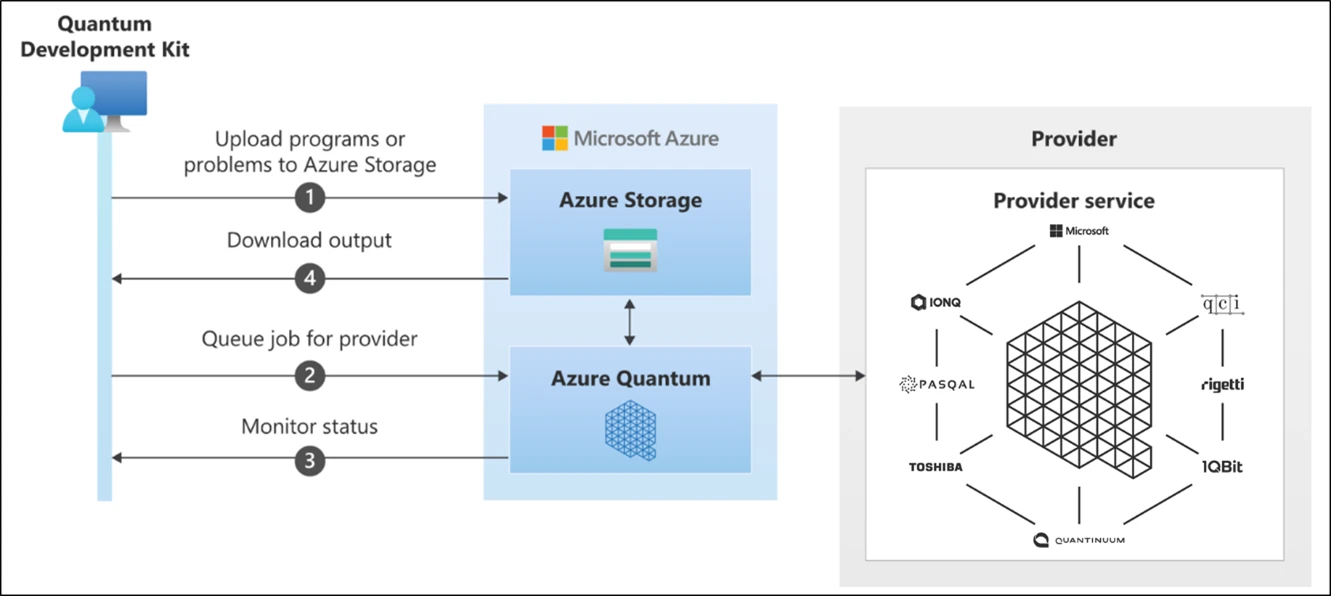
“The core technology of SQBM+ is SBM, which is software that utilizes currently available computers and achieves high-accuracy approximate solutions for complex and large-scale problems in a short amount of time. The outcome is the ability to solve Ising problems of up to 100,000 variables—at approximately a 10X improvement over our existing PoC service. And this is now all easily accessed through the Azure Quantum cloud platform,“—Shunsuke Okada, Corporate Senior Vice President and Chief Digital Officer of Toshiba.
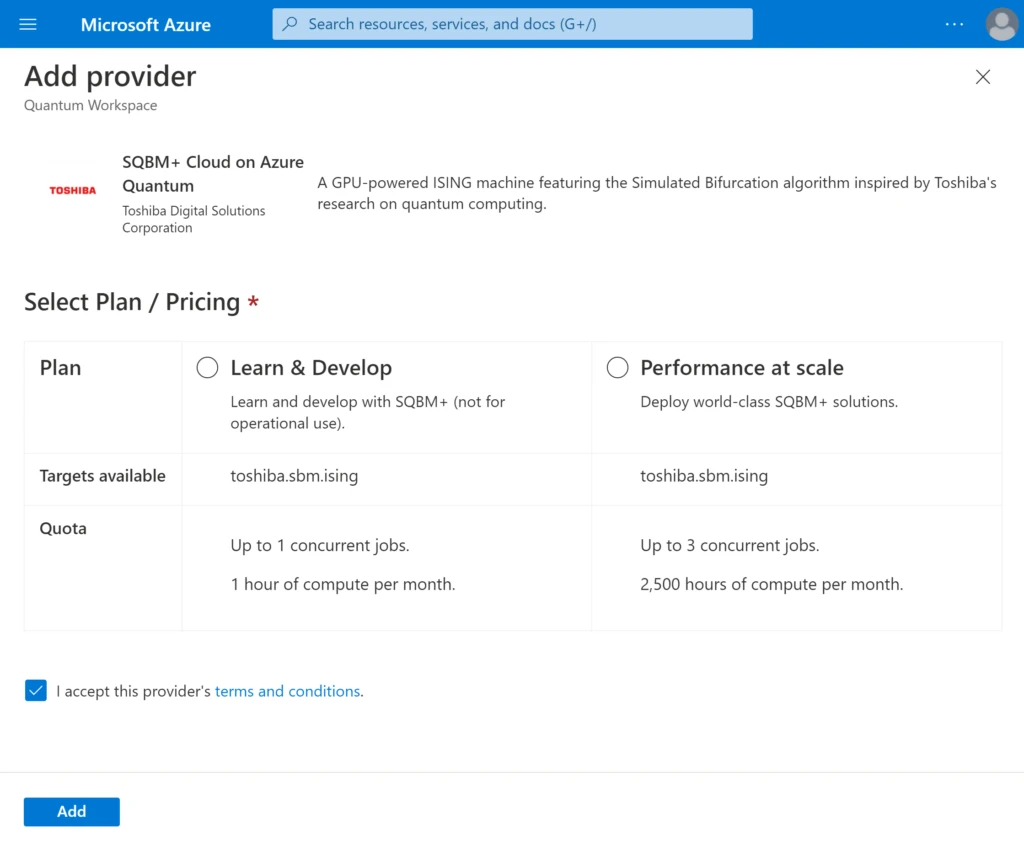
Azure Quantum customers can access SQBM+ by adding the provider to their Quantum Workspace and selecting one of the available pricing plans: “Learn & Develop” (experimentation) and “Performance at scale” (commercial use).
Since joining the Azure Quantum Network in September 2020, Toshiba has continuously improved its quantum-inspired optimization solvers technology. Customers who want to solve combinatorial optimization problems including dynamic portfolio and risk management, molecular design, and optimizing routing, partitioning, and scheduling in a range of fields can apply SQBM+ today, harnessing the GPU resources in the Azure cloud through Azure Quantum.
Learn more and get started today with Toshiba’s SQBM+ on Azure Quantum.