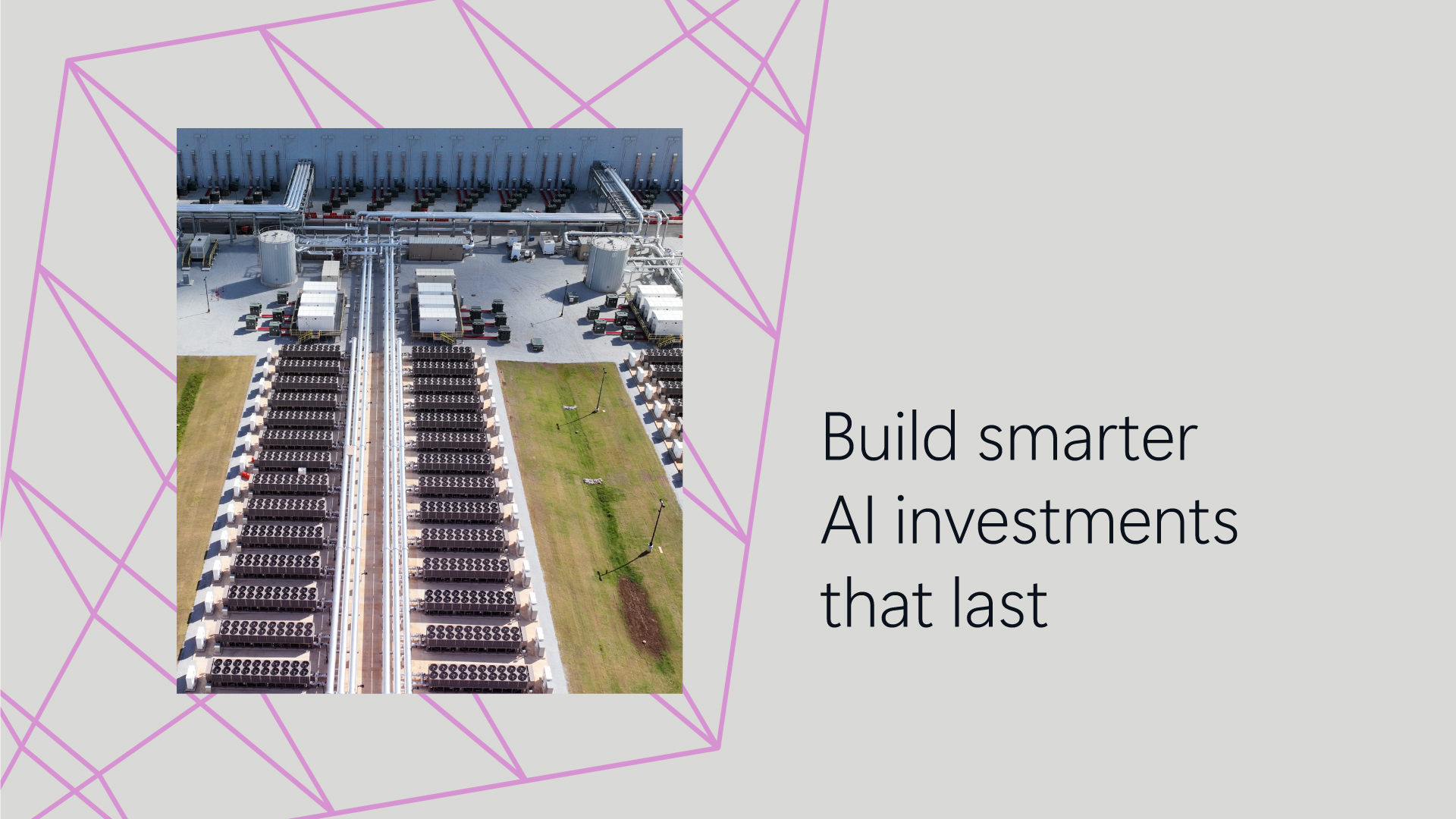

This blog post is the second in a multi-part series called Cloud Cost Optimization. Throughout this series, we’ll share practical strategies, best practices, and actionable guidance to help you plan, design, and manage AI investments for sustainable value and efficiency.
Cloud cost optimization continues to be a top priority for organizations of every size. As cloud environments grow and workloads scale, leaders are under constant pressure to control spend, reduce waste, and ensure that resources are being used efficiently. What was once a secondary operational concern has become a strategic capability tied directly to business performance, resilience, and long‑term growth.
At the same time, the rapid growth of AI workloads is adding a new layer of complexity to managing cloud costs. AI‑powered workloads and evolving usage patterns are transforming how organizations approach cloud optimization and investment planning. However, these changes do not replace the need for strong cost optimization practices. Instead, they make cloud cost optimization and AI cost management more critical than ever.
This article provides a practical, evergreen overview of cloud cost optimization, how AI changes the cost landscape, and the principles organizations can apply to optimize cloud and AI workloads over time.
What is cloud cost optimization and why does it still matter?
Cloud cost optimization refers to the ongoing practice of analyzing cloud usage and making informed decisions to reduce unnecessary spend while maintaining performance, reliability, and scalability. It is not about cutting costs indiscriminately, but about ensuring that cloud resources are aligned to real workload demand and business value.
Unlike traditional IT environments, cloud platforms operate on consumption‑based pricing models. This means costs are directly tied to how resources are used, not just what is deployed. As a result, cost optimization is not a one‑time exercise. It requires continuous attention as environments evolve, workloads change, and new services are introduced.
Organizations that invest in cloud cost optimization benefit from:
- Improved visibility into where cloud spend is going.
- Reduced waste from underutilized or idle resources.
- Better alignment between cloud usage and business needs.
- Greater confidence when scaling workloads.
As cloud environments grow more complex (spanning multiple services, regions, and architectures), the importance of structured cloud cost management and optimization only increases. For organizations operating in the cloud, this makes cost optimization a foundational capability rather than an operational afterthought.
How AI workloads change traditional cost optimization
AI workloads introduce new cost dynamics that can challenge traditional cloud cost optimization approaches. While many principles still apply, the pace and variability of AI usage amplify the need for strong cost governance.
- AI consumption patterns are often less predictable. Training models, running inference, and experimenting with different architectures can cause rapid fluctuations in compute and storage usage. Costs may spike during experimentation phases and stabilize later in production or shift again as models evolve.
- AI development typically involves a higher degree of iteration. Teams may test multiple models, datasets, or configurations before settling on a production approach. Without strong visibility and controls, these experiments can quietly drive significant cloud costs and complicate efforts to optimize cloud costs effectively.
- AI workloads often rely on specialized infrastructure and services that increase cost sensitivity. As a result, maintaining visibility and control requires intentional AI cost optimization and disciplined cloud cost management practices.
This makes cloud cost optimization even more critical in AI‑powered environments, not optional.
Cloud cost optimization best practices for AI and modern workloads
While technologies change, many cloud cost optimization best practices remain consistent across traditional and AI workloads. The key is applying them continuously and adapting them to modern usage patterns.
Visibility and usage awareness
Effective cost optimization starts with understanding how resources are being consumed. Organizations need clear insight into usage patterns across environments, workloads, and services to identify inefficiencies and optimization opportunities. Visibility is the foundation of both cloud cost management and AI cost management.
Governance guardrails
Guardrails help prevent unnecessary spend before it occurs. These can include usage boundaries, policy‑driven controls, and standardized approaches that encourage efficient resource consumption without slowing innovation. Strong governance supports sustainable cost optimization as environments scale.
Rightsizing and lifecycle thinking
Workloads change over time. Resources that were appropriate during development may be inefficient in production, or vice versa. Rightsizing and lifecycle awareness help ensure resources match actual needs at every stage, which is essential to optimizing cloud costs over the long term.
Continuous review and iteration
Cloud cost optimization is not static. Regular review cycles allow teams to adapt to changing usage patterns, new workloads, and evolving priorities, especially as AI solutions move from experimentation to scale.
These cloud cost optimization best practices apply whether organizations are optimizing traditional applications, data platforms, or AI workloads running at scale.
Cloud cost management versus cost optimization
Cloud cost management and cost optimization are closely related, but not the same.
Cloud cost management focuses on tracking, reporting, and understanding cloud spend. It answers questions like:
- Where is money being spent?
- How is usage trending over time?
- Which workloads or services are driving costs?
Cloud cost optimization, on the other hand, is about action and decision‑making. It builds on cost management insights to determine:
- Where inefficiencies exist.
- What changes can reduce waste.
- How to improve efficiency without compromising outcomes.
Organizations need both. Cloud cost management provides visibility, while cost optimization turns that visibility into informed decisions that improve efficiency, scalability, and resiliency (especially in AI‑heavy environments).
Measuring value alongside cloud cost optimization
Reducing cloud costs alone is rarely the goal. The real objective is ensuring that cloud and AI investments deliver sustainable value over time.
Effective cost optimization balances efficiency with outcomes. This means considering how resources contribute to workload performance, reliability, and long‑term viability (not just minimizing spend). For AI workloads, this balance is particularly important, as experimentation and innovation are essential but must still be managed responsibly.
By measuring efficiency and aligning cloud cost optimization and AI cost optimization efforts with workload value, organizations can avoid short‑term savings that undermine long‑term success. This value‑driven approach to managing cloud costs ensures optimization supports growth rather than constraining it.
Next steps for cloud cost optimization on Azure
Azure provides a broad set of resources designed to help organizations manage and optimize cloud and AI costs over time.
To explore guidance, best practices, and curated resources that support cost optimization across cloud and AI workloads, visit the solutions pages:
For deeper perspectives on related topics, you may also find these resources helpful:
- Defining roles and responsibilities for cloud cost optimization.
- Optimize your Azure costs to help meet your financial objectives.
Cost optimization is a continuous journey, one that becomes even more important as AI adoption accelerates. By applying durable principles and maintaining ongoing visibility and control, organizations can scale cloud and AI investments responsibly while maximizing long‑term value.
To go deeper, explore the Cloud Cost Optimization series for best practices and guidance on optimizing cloud and AI investments for long-term business impact.
Did you miss these posts in the Cloud Cost Optimization series?