Skip to main content Explore View all products (200+) Microsoft Foundry Azure Copilot GitHub Copilot Azure Kubernetes Service (AKS) Azure Cosmos DB Azure Database for PostgreSQL Azure Arc Microsoft Fabric Linux virtual machines in Azure Foundry Models Foundry Agent Service Foundry IQ Foundry Tools Foundry Control Plane Observability in Foundry Control Plane Azure OpenAI in Foundry Models Azure Speech in Foundry Tools Azure Machine Learning View all databases Azure Cosmos DB Azure DocumentDB Azure SQL Azure Database for PostgreSQL Azure Managed Redis Microsoft Fabric Azure Databricks Linux virtual machines in Azure Windows Server on Azure Azure Functions Azure Virtual Machine Scale Sets Azure API Management Azure Container Apps Azure Kubernetes Service (AKS) Azure Kubernetes Fleet Manager Azure Container Registry Azure Red Hat OpenShift Azure Container Instances Azure Container Storage Azure Arc Azure Local Microsoft Defender for Cloud Azure Monitor Microsoft Sentinel Azure Migrate View all solutions (40+) Cloud solutions for small and medium businesses Cloud migration and modernization center Data analytics for AI Azure Databases AI apps and agents Microsoft Marketplace Microsoft Sovereign Cloud AI apps and agents Responsible AI with Azure AI Infrastructure Data analytics for AI Machine learning operations (MLOps) Low-code application development on Azure Integration Services Serverless computing DevOps Migration and modernization center .NET apps migration Databases on Azure Linux on Azure Oracle on Azure SAP on the Microsoft Cloud Adaptive cloud High-performance computing (HPC) Infrastructure as a service (IaaS) Resiliency Azure Essentials Frontier Accelerate for Azure FinOps on Azure Microsoft Marketplace Azure pricing overview Create an Azure account Free Azure services Flexible purchase options Pricing calculator FinOps on Azure Maximize ROI from AI Azure savings plans Azure reservations Azure Hybrid Benefit Virtual Machines Azure SQL Microsoft Foundry Microsoft Fabric Azure Kubernetes Service (AKS) Microsoft Defender for Cloud View more Software Development Companies Microsoft Marketplace Find a partner Resources for Azure partners Get started with Azure Customer stories Analyst reports, white papers, and e-books Videos Learn more about cloud computing Documentation Explore Azure portal Developer resources Quickstart templates Resources for startups Developer community Students Azure for partners Blog Events and Webinars Learn Support Contact Sales Get started with Azure Sign in

Diagnosing network connectivity and performance issues in the cloud can be a challenge as your network evolves in complexity. We are pleased to announce the preview of a new feature to check network connectivity in a variety of scenarios when using VM.

The Azure Network Watcher Connectivity Check feature helps to drastically reduce the amount of time needed to find and detect connectivity issues in the infrastructure. The results returned can provide valuable insights to whether a connectivity issue is due to a platform or a potential user configuration. Network Watcher Connectivity Check can be used from the Azure portal, using PowerShell, Azure CLI, and REST API.

Connectivity Check is supported in a variety of scenarios – VM to a VM, VM to an external endpoint, and VM to an on-premise endpoint. Leveraging a common and typical network topology, the example below illustrates how Connectivity Check can help resolve network reachability issues using the Azure portal. There is a VNet hosting a multi-tier web application and four subnets, amongst which are an application subnet and a database subnet.
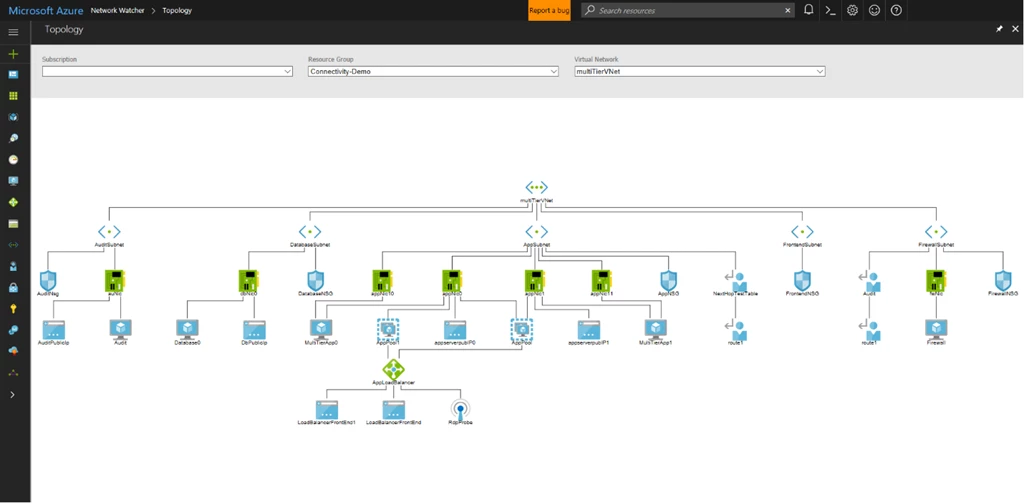
Figure 1 – Multi-tier web application

Figure 1 – Multi-tier web application

On the Azure portal, navigate to Azure Network Watcher and under Network Diagnostic Tools click on Connectivity Check. Once there, you can specify the Source and Destination VM and click the “Check” button to begin the connectivity check.

A status indicating reachable or unreachable is returned once the connectivity check completes. The number of hops, the minimum, average and maximum latency to reach the destination are also returned.
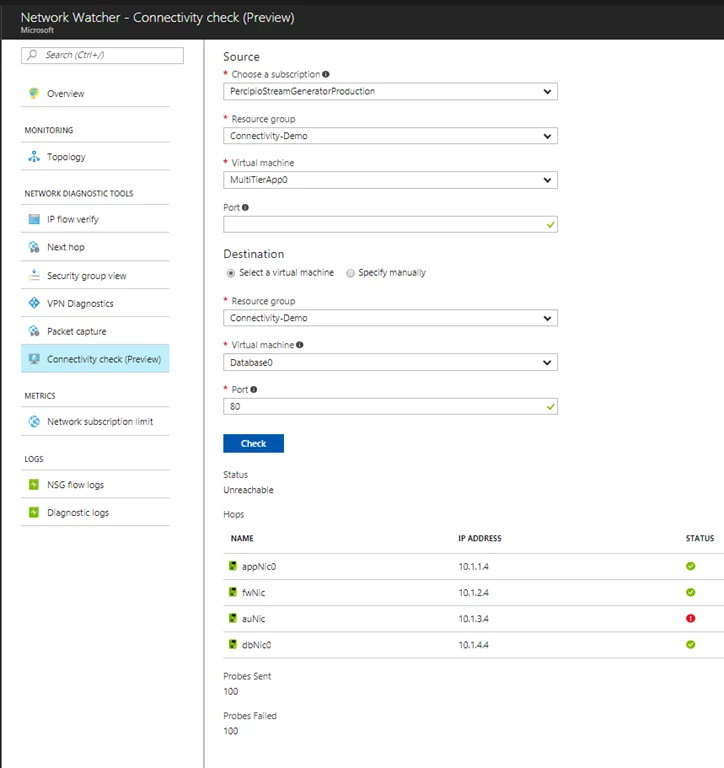
graphical user interface

Figure 2 – Connectivity Check – access from portal

In this example, a connectivity check was done from the VM running the application tier to the VM running the database tier. The status is returned as unreachable, and it’s important to note, one of the hops indicated a red status. Clicking on the hop indicates the presence of an NSG rule that is blocking all traffic, thereby blocking end-to-end connectivity.
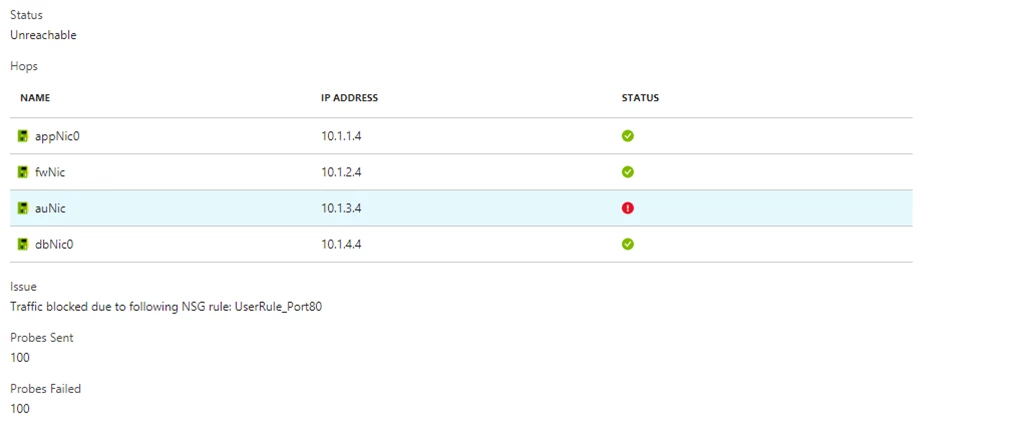
Figure 3- Unreachable statusFigure 3 – Unreachable status

The NSG rule configuration error was rectified and a connectivity check was repeated as illustrated below, where the results now indicate an end-to-end connectivity. The network latency between source and destination, along with hop information is also provided.
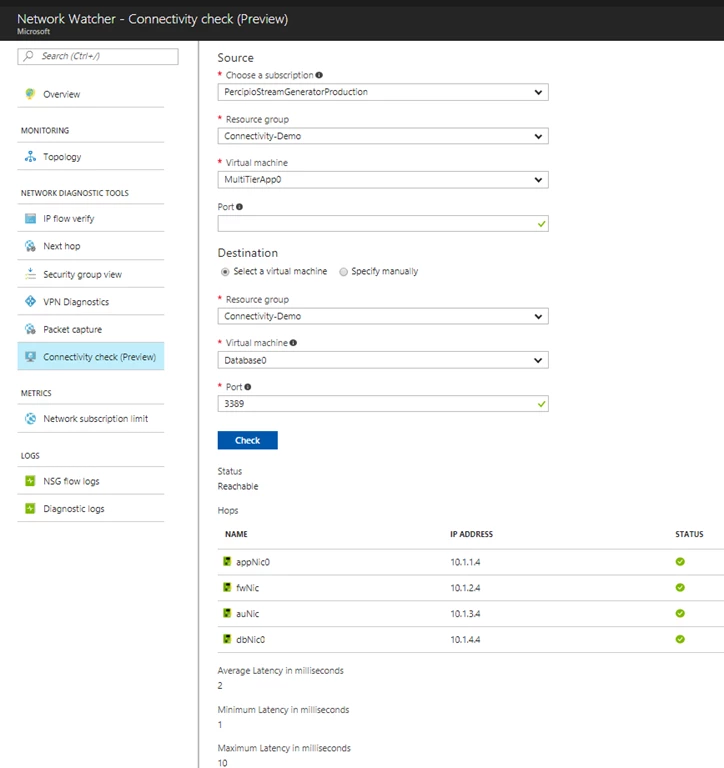
Figure 4 – Reachable status

Figure 4 – Reachable status

The destination for Connectivity Check can be an IP address, an FQDN, or an ARM URI.

We believe the Connectivity Check feature will give you deeper insights to network performance in Azure. We welcome you to reach out, as your feedback from using Network Watcher is crucial to help steer the product development and eco system growth.


WE ARE MICROSOFT

Explore Microsoft Foundry

The future of AI starts here. Envision your next great AI app with the latest technologies. Get started with Azure.